
In commercial interior architecture, the deployment of white office furniture is a highly deliberate strategy used to manipulate spatial perception and energy consumption. From an environmental engineering perspective, white architectural surfaces and furnishings possess a Light Reflectance Value (LRV) between 80% and 90%. This high LRV bounces ambient natural light deeper into constrained floor plans, visually expanding the space and measurably lowering the facility's dependency on artificial kilowatt-hour illumination. However, for corporate procurement officers and facility managers, specifying white assets introduces a critical operational risk profile.
Without rigorous material vetting, white furniture rapidly succumbs to ultraviolet-induced yellowing, localized chemical staining, and structural discoloration. What begins as an aesthetic statement of modern minimalism can quickly degrade into a visual liability that undermines the corporate brand. This technical guide outlines the precise material science, durability metrics, textile testing standards, and janitorial maintenance protocols required to successfully source and deploy white commercial furniture at scale without sacrificing long-term return on investment.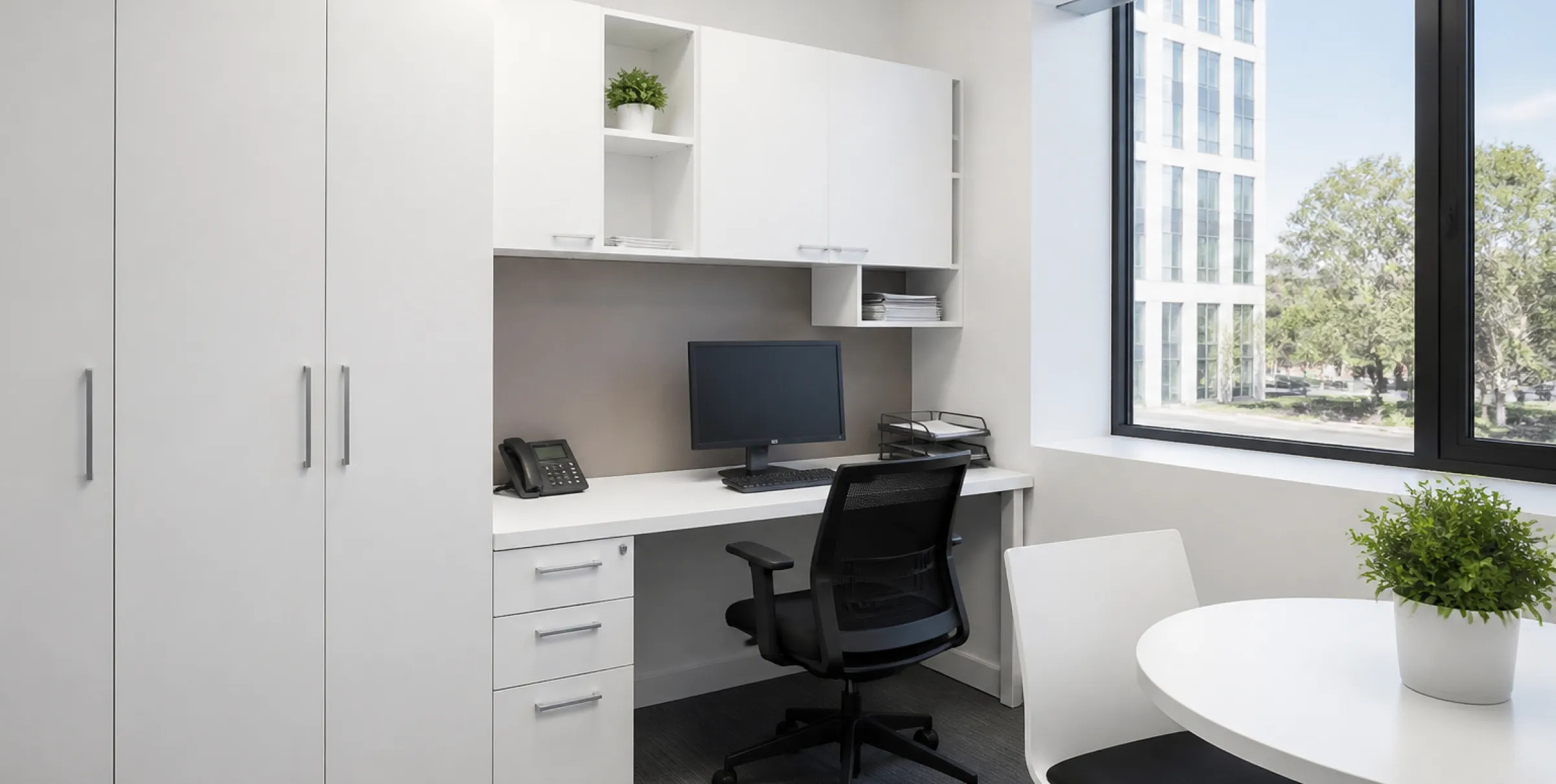
The Material Science of Discoloration: Understanding Polymer Breakdown
The primary enemy of white office furniture is not localized dirt, but photochemical degradation. When specifying plastics, laminates, and hard surfaces, procurement teams must differentiate between temporary physical soiling and permanent chemical shifts within the substrate.
Photochemical Degradation and Chain Scission in Plastics
When untreated polymers are exposed to continuous ultraviolet (UV) radiation from sunlight or high-intensity fluorescent lighting, the plastic undergoes a process known as chain scission. This molecular breakdown causes the white pigment to oxidize, resulting in an irreversible amber or yellow tint. When sourcing a bulk deployment of white office chairs, facility managers must demand technical documentation proving the inclusion of UV-stabilizing additives within the polymer matrix.
High-grade commercial white plastics achieve their pristine color through the heavy integration of Titanium Dioxide ($TiO_2$). This compound acts as a physical sunblock, scattering UV light before it can penetrate the polymer chains. For non-upholstered architectural seating, consult our comprehensive polypropylene shell chairs buyers guide to understand how fiberglass reinforcement paired with UV inhibitors prevents both structural embrittlement and surface discoloration across years of commercial exposure.
Laminates vs. Painted MDF for Desk and Counter Surfaces
For high-wear horizontal surfaces, such as workstations or a high-traffic custom reception desk, the substrate material dictates the asset's lifespan. Painted Medium Density Fiberboard (MDF) is categorically unsuitable for white commercial surfaces; it is highly susceptible to UV yellowing and chips upon minor impact, exposing the dark, fibrous core beneath.
Commercial specifications should strictly mandate High-Pressure Laminate (HPL) or Thermally Fused Laminate (TFL) capped with a non-porous white melamine overlay. These engineered synthetic barriers are chemically impervious to UV shifts and block the molecular absorption of ink, coffee, and human skin oils. A premium HPL surface will maintain a pure, clinical white aesthetic decades longer than any painted wood alternative.
Upholstery Specifications for High-Traffic White Seating
White upholstery requires the strictest adherence to commercial grading. A residential-grade white fabric will exhibit irreversible dinginess and fiber crushing within 90 days of corporate, multi-shift use.
Evaluating White Mesh and Elastomeric Suspensions
A white mesh office chair offers superior thermal regulation and a lightweight visual footprint that prevents open-plan offices from feeling cluttered. Because commercial-grade mesh is woven from extruded nylon and elastomeric monofilaments, it is inherently hydrophobic. It does not absorb liquid spills in the manner of cotton or wool.
However, the open-matrix design of mesh can trap airborne silica dust and experience severe dye-transfer from clothing. Procurement teams must specify high-tension mesh treated with a fluorocarbon-based stain repellent. This treatment lowers the surface energy of the mesh, causing liquids to bead up instantly and preventing microscopic particulates from embedding within the woven intersections.
Tackling Dye-Transfer: The AATCC Crocking Standards
The most frequent cause of white upholstery failure is "crocking"—the physical transfer of dye from an employee's clothing (specifically blue denim) onto the white chair via friction. When specifying white leather office desk chairs or fabric alternatives, buyers must require passing results on the AATCC 8 (American Association of Textile Chemists and Colorists) Crockmeter test. A commercial white fabric or leather must achieve a Grade 4 or Grade 5 rating for both wet and dry crocking to guarantee resistance against daily clothing friction.
PU Leather vs. Genuine Leather Stain Tolerances
While genuine top-grain leather is the traditional hallmark of the executive suite, pure white genuine leather requires heavy, synthetic topcoats to maintain its color, which inherently reduces the hide's natural breathability. In high-turnover environments like clinics, boardrooms, or collaborative hubs, commercial-grade Polyurethane (PU) leather or silicone-based faux leathers are structurally superior. These synthetic textiles are non-porous, inherently antimicrobial, and can endure harsh, daily chemical sanitization protocols without the cracking, peeling, or yellowing associated with over-processed genuine white leather.
Facility Maintenance Protocols for White Assets
The aesthetic lifespan of white furniture is entirely dictated by the facility's janitorial protocols. Deploying the incorrect cleaning agents will strip protective chemical coatings, accelerating both UV degradation and physical abrasion.
Standardizing Janitorial Solvents and Cleaning Codes
Facility managers must align outsourced cleaning staff directly with the manufacturer's upholstery tags. As detailed in our technical brief on how to clean sofa fabric, commercial textiles are strictly categorized by cleaning codes (W, S, WS, X). Applying a water-based cleaner to an "S" (Solvent-only) coded white fabric will leave permanent, oxidized water rings.
For executive seating and lobby couches, our dedicated guide on how to clean leather sofa surfaces emphasizes the absolute prohibition of ammonia or bleach-based solvents. While janitorial staff often default to bleach for white surfaces, bleach chemically burns the topcoat of faux and genuine leathers, causing the material to yellow instantly and flake off within weeks.
The Microfiber Mandate
The physical tool used for cleaning is just as critical as the solvent. Standard cotton rags or paper towels act as micro-abrasives; they push dirt deeper into the texture of white leather or laminate while scratching the clear coat. Facilities must mandate the use of high-GSM (grams per square meter) split-microfiber cloths. The electrostatic properties of microfiber physically lift and trap particulate matter away from the white surface without abrasive dragging.
Procurement Logistics: TCO and Warranty Verification
When executing a bulk purchase of white corporate furniture, the Total Cost of Ownership (TCO) calculation must incorporate an elevated budget for preventative maintenance and periodic deep-extraction cleaning.
Furthermore, the manufacturer's Service Level Agreement (SLA) must explicitly cover photochemical degradation. Standard, boilerplate warranties frequently exclude "colorfastness," "fading," or "discoloration," categorizing them as normal wear and tear. Procurement officers must negotiate specific contractual clauses that guarantee asset replacement if the white laminate, PP shells, or structural plastics exhibit severe yellowing (measured by spectrophotometer deviations) within the first 3 to 5 years of indoor commercial deployment. By enforcing strict AATCC crocking standards, mandating $TiO_2$ UV stabilization, and standardizing pH-neutral maintenance, facilities can confidently leverage the aesthetic power of white furniture without compromising operational longevity.
Frequently Asked Questions
Why does white plastic office furniture turn yellow over time?
Yellowing is primarily caused by photochemical degradation (chain scission). When unprotected polymers are exposed to UV radiation from sunlight or high-intensity office lighting, the molecular chains break down and oxidize, creating an irreversible amber or yellow tint. Commercial plastics must be engineered with UV stabilizers like Titanium Dioxide to prevent this.
Can a yellowed white office chair be cleaned and restored?
If the yellowing is chemical (caused by UV degradation or bleach burns) rather than surface dirt, it is structurally irreversible. Cleaning agents cannot reverse polymer oxidation. This is why procuring furniture with factory-integrated UV inhibitors is a mandatory upfront requirement.
Is a white mesh chair difficult to keep clean in a commercial office?
High-quality commercial mesh is woven from nylon and elastomer, making it inherently hydrophobic (it resists absorbing liquid spills). However, the open weave can trap dust and experience dye-transfer from dark clothing. Regular vacuuming with a soft brush attachment and spot cleaning with mild, pH-neutral detergent prevents buildup.
What is "crocking" and why does it matter for white furniture?
Crocking is the physical transfer of dye from an employee's clothing (such as dark denim) onto the chair's upholstery via friction. For white furniture, buyers must specify materials that pass the AATCC 8 Crockmeter test with a Grade 4 or 5 rating to ensure the chair will not permanently absorb clothing dyes.
What is the best upholstery material for a white executive office chair?
For high-traffic or multi-shift corporate use, commercial-grade Polyurethane (PU) or silicone-based faux leather is optimal. It provides the premium aesthetic of leather but is completely non-porous, highly resistant to staining, and can withstand frequent chemical sanitization without degrading or yellowing.
What cleaning agents should be strictly avoided on white office furniture?
Never use ammonia, bleach, or abrasive scouring powders. Bleach chemically burns the protective topcoats of laminates and leathers, leading to rapid yellowing and cracking. Ammonia dissolves clear coats and causes material hazing. Facilities must exclusively utilize pH-neutral, material-specific commercial cleaners.
