
Buying polypropylene shell chairs in bulk has almost nothing in common with picking a single dining chair off a retail site. A 500-unit order for a corporate training campus turns on specs nobody asks about at retail volume: shell wall thickness, fiberglass loading, frame gauge, stack height per linear meter of storage. Once the order scales, those details start running the procurement decision.
This guide is written from the factory floor. At Aston, we run injection molds that produce roughly 200,000 chair units a year and ship to distributors and project contractors in 50+ countries. The goal here is to give procurement teams, facility planners, and interior fit-out specifiers a working technical reference that cuts past marketing copy and helps them spec the right chair for the right room.
What follows covers everything from how a PP shell is actually built, through frame configurations and application-fit decisions, to the testing standards a real commercial chair needs to pass before it ships.
1. What Polypropylene Shell Chairs Actually Are
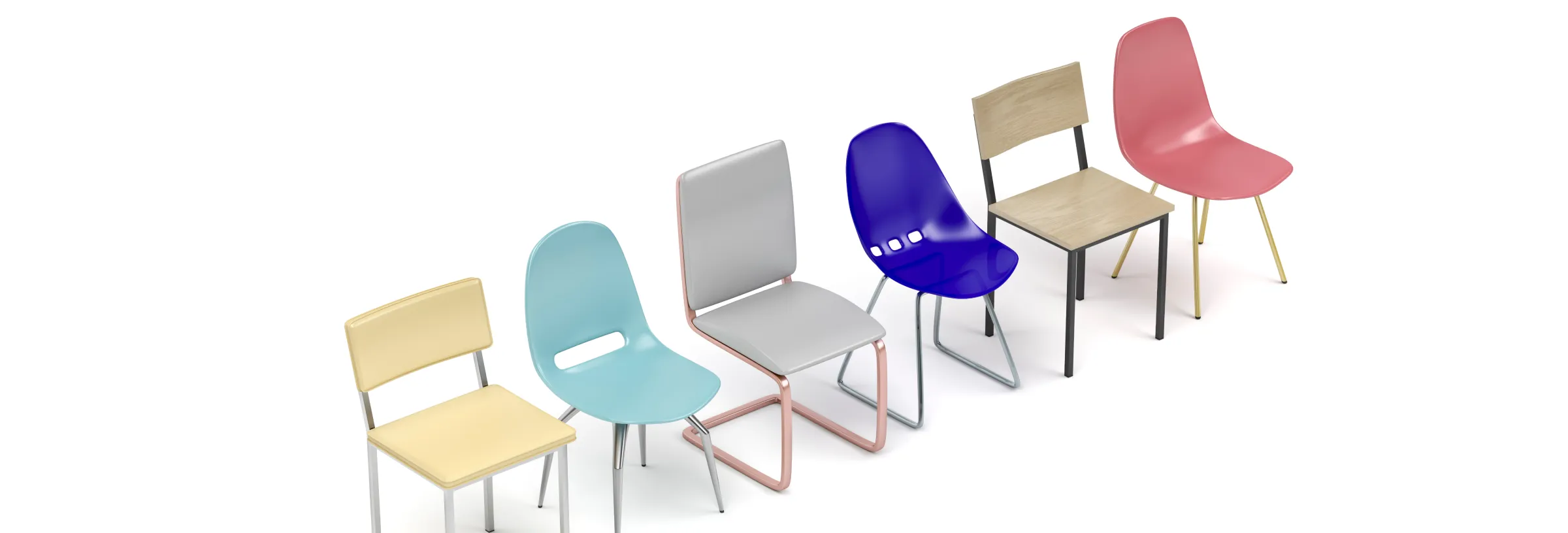
A polypropylene shell chair is defined by one feature: a single-piece, injection-molded seat-and-back unit that carries the seated load independently of the frame. The shell is the structural part. The frame transfers load to the floor. Everything else — color, leg style, optional tablet arm — is configuration around those two elements.
Wall thickness on a commercial-grade PP shell typically runs 3.5 to 4.5 mm, with reinforcing ribs molded into the underside of the seat pan. Those ribs are what keep the shell from flex-deforming when someone drops into the chair. They're also a big part of why a serious commercial PP shell rates for 880 lbs while a residential lookalike might be rated for 250.
The shell attaches to the frame through recessed mounting inserts molded into the shell wall — not surface-mounted bolts. This matters because the insert distributes clamping load across a wider contact area. Without it, the polypropylene cracks at the bolt hole after a few years of repeated stress cycling.
Polypropylene itself is a thermoplastic polymer that's been used commercially since the mid-1950s. For seating, it brings a useful combination of properties: low density (around 0.90 g/cm³), strong flexural recovery, good impact resistance, chemical resistance against most cleaners, and a melting point near 165°C. Color is pigmented through-body during molding, so the color sits inside the wall rather than as a surface coating. Daily abrasion doesn't expose a different shade underneath.
The category covers a wide price range — from cheap stackable café seating to designer shells specified into corporate HQs. The underlying materials science is similar across tiers. Real quality differences sit in shell wall thickness, fiber reinforcement, frame gauge, and the testing the manufacturer actually runs.
For a full catalog of frame configurations Aston produces, see our polypropylene shell chair lineup.
2. How Plastic Shell Seating Is Built: The Injection Molding Process
The shell of a PP chair comes out of one process: closed-mold injection molding. Virgin polypropylene granules — sometimes blended with fiberglass — get fed into an injection unit, heated until molten, and forced into a steel mold under pressure of roughly 800 to 1,200 bar. The mold determines everything about the finished shell: contour radius, wall thickness distribution, mounting hole position, and surface texture.
Once tooling is dialed in, dimensional variance between units holds within about ±0.5 mm across an entire production run. This is why injection-molded polypropylene chairs assemble cleanly when shells and frames come from separate production batches. For procurement teams ordering thousands of units across multiple shipments, that consistency is the whole reason this product category exists.
Several process variables drive end-product quality:
• Injection pressure — too low and you get sink marks on the shell surface; too high and you get flash at the parting line.
• Melt temperature — typically 200–230°C for PP. Outside that range causes weak weld lines or surface scorching.
• Mold cooling time — too short and the shell warps after ejection; too long and cycle time drives up unit cost.
• Material moisture content — PP granules must be dried before molding, or you get steam voids inside the wall that weaken the shell structure.
When buyers evaluate suppliers, asking about shell rejection rate and how molding parameters are logged is more useful than reading a brochure. A factory running closed-mold injection without parameter logging can't guarantee batch-to-batch consistency.
Two grades of polypropylene compound show up in commercial PP shell production: standard virgin PP and PP with fiberglass loading at 10–30% by weight. The second one matters enough that it gets its own section below.
3. Standard PP vs PP+Fiberglass: Picking the Right Polyprop Shell Material
The biggest material spec decision on polypropylene shell chairs is whether the shell is standard PP or PP+fiberglass composite. The two look identical from the outside. The difference shows up in flexural strength, lifetime under cyclic load, and price.
Standard PP shells are sufficient for most commercial seating: offices, light-use training rooms, breakout spaces, low-density cafeterias. They handle the load and typical use cycle without issue.
PP+fiberglass composite shells get specified where higher flexural strength matters: high-density classrooms, large conference and lecture facilities, venues with continuous daily occupancy. The fiberglass reinforcement raises the shell's resistance to lateral flex and impact while adding almost no weight. For tender submissions where structural longevity is graded, PP+fiberglass is usually the right answer.
Here's how the two compare across the specs that actually matter on a quote:
| Property | Standard PP | PP+Fiberglass Composite |
| Typical wall thickness | 3.5–4.5 mm | 3.5–4.0 mm |
| Flexural modulus | ~1,300 MPa | ~3,000–4,500 MPa |
| Impact resistance | High at room temperature | High, less brittle in cold |
| Color range | Full pigment range | Full pigment range |
| Surface finish | Smooth, matte or glossy | Smooth (fiber not visible) |
| Recommended cycle rating | Moderate-traffic commercial | High-traffic institutional |
| Best for | Offices, light cafeterias, lounges | Classrooms, lecture halls, training centers |
| Price differential | Baseline | ~10–20% higher |
A note on testing. Aston shells across both grades pass 120,000-cycle backrest pull testing before production release — the threshold we consider necessary for a chair to survive 7–10 years of commercial service. If a supplier can't share a test cycle count, treat the chair as a residential product regardless of how the catalog describes it.
4. Frame Configurations for Polypropylene Stacking Chairs and Static Variants
The shell is interchangeable. The frame is what determines where the chair fits, how it stores, and how it moves. Six frame configurations cover the vast majority of commercial polypropylene shell chair deployments.
Sled base
A continuous steel runner connects the front and rear legs into a single closed loop. The continuous floor contact distributes weight more evenly than individual leg tips and reduces floor marking under repeated drag. Sled-base PP chairs stack vertically. This is the most commonly specified frame for training rooms and conference spaces.
Four-leg
Four independent legs with replaceable floor glides. Standard configuration for dining areas, cafeterias, and general office work where daily stacking isn't a priority. Floor glides are user-replaceable, which extends frame service life without replacing the chair.
Cantilever (C-base)
A single continuous steel loop runs from the front leg, under the seat, and up to support the back — with no rear floor contact directly under the seat. The frame flexes slightly under seated load, which reduces fatigue during long sessions. Stackable. Common in lecture halls and seminar rooms.
Caster-mounted
Four 50mm nylon twin-wheel castors on each leg, allowing repositioning without lifting. Standard for agile training rooms and collaborative spaces where seating layout changes inside a single session. Not stackable.
Solid wood leg
Steel tube replaced with a hardwood leg assembly, keeping the same PP shell. Used in office lounges, hospitality spaces, and upscale cafeterias where a softer aesthetic matters more than stack-and-store efficiency.
Bar height
Sled base extended to put the seat at 650–750 mm — counter or bar level. Same shell. Specified for standing-height meeting tables and food service counters.
Quick reference:
| Frame | Stackable | Mobile | Best for |
| Sled base | Yes (8–10 high) | No | Training rooms, conference halls |
| 4-leg | Yes (6–8 high) | No | Cafeterias, general dining |
| Cantilever | Yes (4–5 high) | No | Lecture halls, seminar rooms |
| Caster | No | Yes | Agile training, collaborative work |
| Wood leg | Limited | No | Lounges, hospitality, upscale cafeterias |
| Bar height | Limited | No | Counter seating, standing tables |
Stack height per unit on sled and 4-leg frames typically adds 90–120 mm. A deeper-bucket shell stacks less efficiently than a flatter shell — useful to know if storage space is a real constraint.
5. Where Molded Polypropylene Seating Performs Best
Polypropylene shell chairs cover a wider range of commercial environments than almost any other single product category in office furniture. The reasons are practical: low unit cost, easy cleaning, ergonomic shell geometry, and stack-for-storage capability. Here's where they earn their spot.
Training rooms and corporate seminar spaces
Sled base and caster-mounted PP shells are the default. Caster frames allow rapid room reconfiguration; sled frames stack between sessions. Writing tablet variants — a foldable, 360-rotating work surface mounted to the chair — turn the unit into a one-person workstation without needing fixed desk infrastructure.
Classrooms and educational facilities
PP+fiberglass composite shells get widely specified for K-12 classrooms, university lecture halls, and library reading areas because the use cycle is brutal: chairs get dragged, sat on backwards, leaned against walls, and stacked at the end of every day. The 120K backrest pull rating covers this kind of usage.
Cafeterias and staff dining
Stackable PP shell chairs outperform upholstered seating in high-turnover dining because the non-porous shell wipes clean instantly and doesn't trap food residue or odor. Six standard colors let facility managers coordinate seating with brand schemes.
Office breakout and lounge zones
Wood-leg PP shells fit informal meeting areas, reception lounges, and design-conscious breakout spaces. Same shell as training-room variants, softer aesthetic.
Hospitality — hotels, conference centers, banquet halls
Stackable PP shell chairs are the practical pick for venues that flip between configurations daily. They store compactly on chair dollies and survive hundreds of housekeeping moves a year without showing wear at the joints.
Restaurants and commercial dining
Both all-PP one-piece chairs (legs molded as part of the shell) and PP shell-on-metal-frame variants get used here. All-PP designs work better outdoors because there are no joints where moisture can wick in.
Outdoor and semi-outdoor use
PP shells handle weather better than wood, fabric, or many metal finishes. Two cautions: standard PP yellows under prolonged UV exposure, so for continuously sunlit installations, specify UV-stabilized compound; and metal frames in outdoor use should have a marine-grade powder coat or stainless construction to resist corrosion.
Projects that mix several of the above — say, a campus needing training rooms, classrooms, and a cafeteria — benefit from sourcing a single PP shell across multiple frame types. That gives visual consistency without duplicating product lines. See our wholesale program for project-level pricing on mixed-frame orders.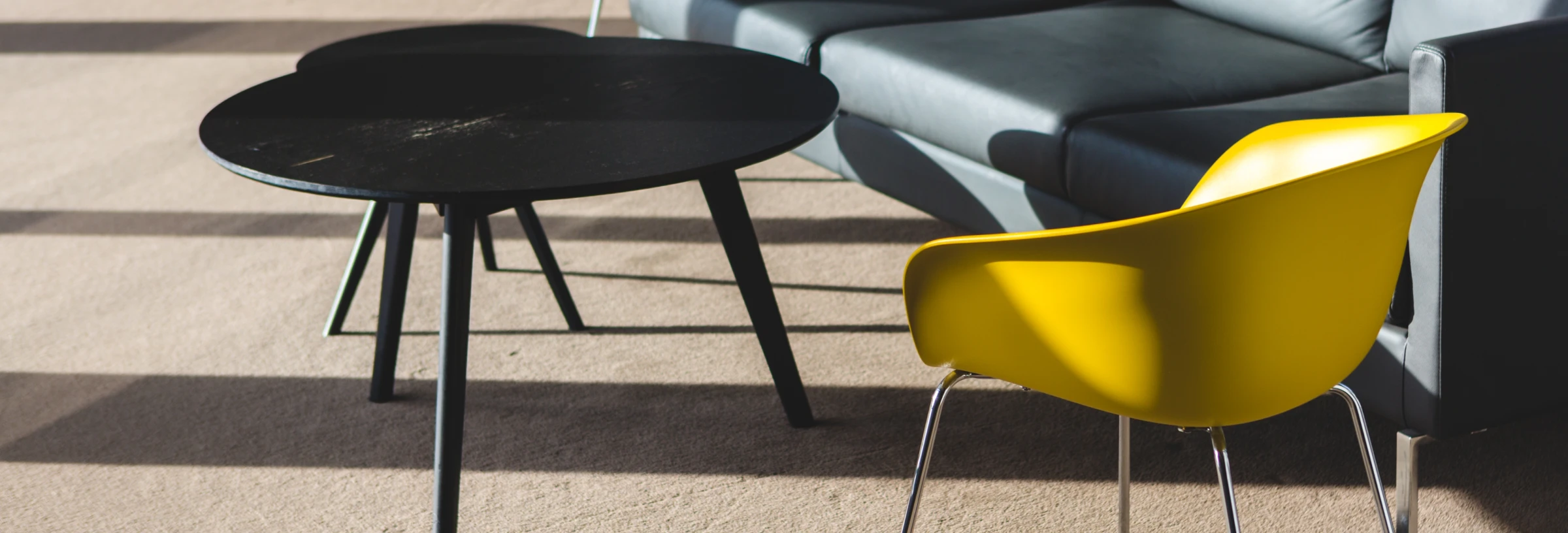
6. Quality Standards and Testing for Commercial PP Shell Chairs
A polypropylene shell chair that survives 10 years of institutional use isn't a different design from one that fails in 18 months — the design might look identical. The difference is in materials, manufacturing tolerances, and what the manufacturer actually tests.
Procurement teams should know these reference standards:
• ANSI/BIFMA X5.1 — General-purpose office chair durability. Covers static load, drop, durability cycle, and stability tests. Standard requirement for chairs sold into US commercial markets.
• ANSI/BIFMA X5.4 — Durability tests for lounge and public seating, including stackable chairs.
• ASTM F1561 — Safety standard for plastic chairs. Class B covers commercial-grade outdoor seating.
• EN 16139 / EN 1728 — European durability and strength testing for non-domestic seating.
• GREENGUARD / GREENGUARD Gold — Indoor air quality emissions standard. Increasingly required for education tenders.
Beyond third-party standards, the two internal tests that matter most for PP shell chairs:
Backrest pull cycle testing. A loaded actuator pulls the backrest forward and releases, repeating tens of thousands of times. The cycle count before failure is the number that matters. 60K cycles is residential-grade. 120K is commercial-grade. Aston tests every shell design to 120K before production sign-off.
Static load testing. Sandbags or hydraulic actuators apply weight to the seat pan to determine maximum static load. A serious commercial PP shell chair will rate at 300 lbs minimum; high-end models test to 880 lbs (around 400 kg).
A few more spec details worth checking on a quote:
• Frame gauge. Steel tube wall thickness drives frame longevity more than tube diameter. A 19mm tube at 1.5mm wall (Φ19×T1.5) is stiffer than a 22mm tube at 1.0mm wall.
• Powder coat curing temperature. A real electrostatic powder coat is baked at 200–220°C. Air-dried 'powder coat' is paint, and it chips within a year of stack-and-restack use.
• Weld type. Automated MIG or TIG welding on a fixture produces consistent joints. Hand welding without a fixture produces inconsistent ones.
The point isn't to overload the procurement spec. It's to ask the right questions before issuing PO, so what arrives matches what was promised. Aston's quality documentation is available on tender request — see our quality control page for the standard test protocols we run before pre-shipment release.
7. How to Specify Plastic Shell Chairs for Bulk Procurement
Specifying a polypropylene shell chair for a 500-unit order takes more than picking a model number from a catalog. The procurement spec should pin down material, frame, finish, certification, and lead time before the quote is locked. Here's the working checklist most experienced buyers use.
Shell specification
• Standard PP or PP+fiberglass composite?
• Shell color (standard 6-color range or custom Pantone match?)
• UV stabilization required? (Yes for any installation with direct sunlight.)
• Add-ons: writing tablet, book rack, seat cushion?
Frame specification
• Frame type: sled base, 4-leg, cantilever, caster, wood, or bar height
• Frame gauge: Φ16×T2.0 standard, Φ19×T1.5 heavy-duty
• Surface finish: powder coat color, electroplated, or special
• Floor glide type: felt, nylon, or non-marking rubber
Testing and certification
• BIFMA / ANSI / EN compliance required?
• GREENGUARD certification needed for education tenders?
• Backrest pull cycle count documentation?
• Static load rating in writing?
Order parameters
• MOQ — Aston runs 10 units per model on standard configurations; OEM custom runs from a higher minimum
• Lead time — 15–20 working days for standard; 30–45 for OEM custom
• Packaging — bulk box or individual carton with branded labeling
• Container loading — 20'GP vs 40'HQ; chair count varies by frame type and stack height
• Incoterms — FOB Foshan / CIF destination port
A common mistake on first orders: buyers spec the shell carefully and accept a default frame. The frame is what fails first in commercial use. A flexed shell still functions; a broken frame is a write-off. Spec the frame with the same rigor as the shell.
For complex projects mixing several frame types, request a sample of each configuration before bulk PO. Inspecting one sample reveals more about manufacturer consistency than a full catalog of spec sheets. Sample lead time on standard configurations is generally 7–10 days.
If you're sourcing for a project tender, our team can build a configured quotation with all spec lines documented. Send your project requirements and we'll respond with line-item pricing and lead time within one working day.
8. Maintenance, Lifespan, and PP Shell Chair Comparison vs Alternatives
Once specified and delivered, polypropylene shell chairs need very little care. The non-porous shell wipes clean with mild detergent and warm water. For tougher residue, a melamine sponge (magic-eraser type) handles most surface scuffs. A few cautions:
• Don't use bleach or abrasive cleaners on the shell — bleach over time makes PP brittle.
• Avoid ammonia-based cleaners on glossy shells — risks micro-fogging the surface finish.
• Don't power-wash high-pressure jets directly at frame welds — repeated water intrusion accelerates corrosion at any pinhole defect.
• For caster frames, vacuum debris out of the wheel housings quarterly. Hair and lint wrapped around the axle is the most common cause of caster failure.
Realistic service life on a properly specified commercial PP shell chair runs 7–10 years in education and training use, 10–15 years in office environments, and 5–7 years in restaurant or hospitality settings. The shell rarely fails first — the frame, floor glides, or upholstery (on cushioned variants) tend to wear out before the shell does. Aston ships replacement glides and casters separately, which extends total chair life with minimal overhead.
Comparison with alternative seating materials
| Criterion | PP Shell | Polycarbonate Shell | Wood | Upholstered |
| Unit cost | Low–mid | Mid–high | Mid–high | Mid–high |
| Weight (w/ frame) | Light (5–8 kg) | Light | Heavy | Mid |
| UV stability | Moderate (high w/ stabilizer) | Excellent | Moderate | Variable |
| Stain resistance | Excellent | Excellent | Poor | Poor w/o treatment |
| Stackability | Excellent | Good | Limited | Limited |
| Recyclability | High (fully recyclable) | High | High | Low |
| Indoor / outdoor | Both (w/ UV grade) | Both | Indoor mostly | Indoor mostly |
| Replaceable parts | Glides, casters, frame | Same | Limited | Upholstery, foam |
For most institutional and commercial procurement, the real trade-off comes down to PP shell vs upholstered. PP wins on maintenance and unit cost. Upholstered wins on perceived comfort during long seated periods. The harder bracket is office breakout — where volume is modest but visual aesthetic carries weight. Wood-leg PP shells often win that bracket, giving the look of designer seating with the lifecycle cost of a commercial chair.
If you're weighing PP shells against fully upholstered alternatives for the same use case, our office chair wholesale catalog covers ergonomic mesh and leather options on the same factory production line.
Ready to Source Polypropylene Shell Chairs for Your Next Project?
Aston runs in-house tooling, injection molding, and frame fabrication dedicated to PP shell chair production. We supply distributors, contractors, and project specifiers in 50+ countries with configurations covering training rooms, classrooms, cafeterias, lecture halls, and hospitality spaces.
What we can do for your next order:
• 6 standard shell colors in stock; full custom color matching on OEM runs
• All frame configurations (sled, 4-leg, cantilever, caster, wood, bar height) available on the same shell
• 120K-cycle backrest pull tested before pre-shipment QC release
• 15–20 day lead time on standard configurations
• OEM/ODM private labeling and packaging
• Sample units in 7–10 days for evaluation before bulk PO
Send your project specs to our team via our contact page and we'll respond within one working day with quoted pricing, lead time, and sample availability.
Frequently Asked Questions
Are polypropylene shell chairs durable enough for daily commercial use?
Yes, provided the shell is specified for commercial-grade duty. A commercial PP shell chair tested to 120K backrest pull cycles and rated for 300+ lb static load will hold up through 7–10 years of daily institutional use. Residential-grade PP chairs, often tested only to 30–60K cycles, won't last that long under heavy traffic. The key is asking for documented test cycle counts before order, not relying on listing claims.
How much weight can a polypropylene shell chair hold?
Static load ratings on commercial PP shell chairs typically run between 300 lbs and 880 lbs. Most education and office models rate 300–500 lbs. Heavy-duty stack chairs designed for venue and event use rate up to 880 lbs (around 400 kg). Static and dynamic load ratings differ — confirm both with the manufacturer for high-traffic deployments.
Can polypropylene shell chairs be used outdoors?
Yes, with two specifications. The PP compound must be UV-stabilized — standard PP yellows and becomes brittle under months of direct sun exposure. The metal frame, if any, needs a marine-grade powder coat or stainless construction. All-PP one-piece chairs (legs molded as part of the shell) work especially well outdoors because there are no joints where water can wick in.
What's the difference between PP and PP+fiberglass shells?
PP+fiberglass composite shells have roughly 2–3× the flexural modulus of standard PP, which translates to less flex under load and longer service life in high-traffic environments. Added cost is typically 10–20%. For dense classrooms, lecture halls, and continuous-occupancy seating, PP+fiberglass is the right call. For offices and light-use training rooms, standard PP performs fine.
How do you clean polypropylene shell chairs?
Wipe with a soft cloth dampened in mild soap and warm water for daily cleaning. For tough scuffs, use a melamine sponge on the shell surface. Avoid bleach, ammonia, and abrasive scrub pads — all of these damage the shell over time. For high-density commercial sanitization, diluted quat-based wipes or 70% alcohol work without surface damage.
What's the typical lead time for bulk orders?
Standard stock configurations (6 standard colors, standard frame types) ship in 15–20 working days. OEM custom orders involving color matching, private label packaging, or frame modifications run 30–45 working days depending on volume. For project-critical timelines, confirm lead time at the order point and request a production schedule confirmation.
Are polypropylene shell chairs stackable?
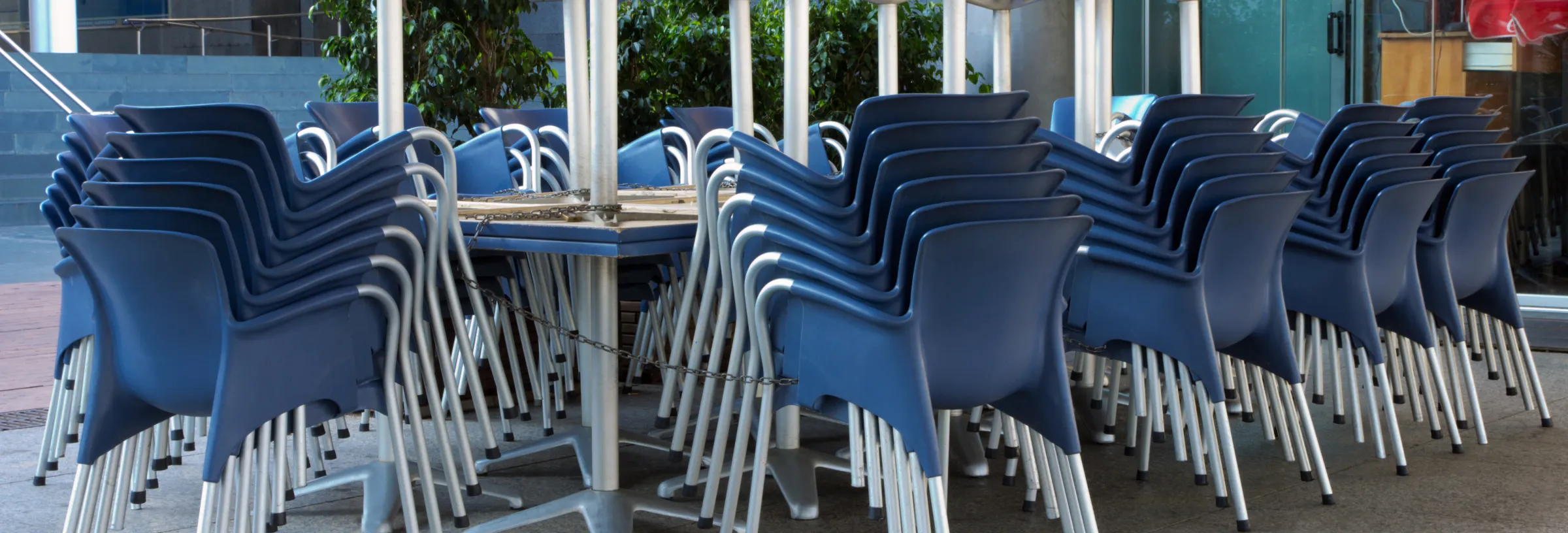
Sled base and 4-leg PP shell chairs stack. Sled base typically stacks 8–10 high; 4-leg stacks 6–8 high. Cantilever variants stack 4–5 high. Caster-mounted and wood-leg variants generally do not stack. Each unit adds about 90–120 mm to total stack height, with deeper-bucket shells stacking less efficiently than flatter designs.
What's the MOQ on wholesale orders?
Aston runs a 10-unit MOQ on standard stock configurations, which keeps the product accessible to smaller distributors and project samples. Custom OEM orders involving color matching or tooling modifications typically need a higher minimum run — usually 100–300 units depending on customization scope. Browse the full Aston PP shell chair catalog or contact us with your specs for exact MOQ confirmation.
Do polypropylene shell chairs meet fire safety standards?
Standard PP shells are flammable but self-extinguishing in many commercial grades. For installations requiring fire-rated seating — schools in certain jurisdictions, hospitality with specific code requirements, transit and waiting areas — request fire-retardant PP compound specification. Aston runs FR-grade PP as an OEM option for tenders that require CAL TB133 or similar fire-performance certification.
Can the shell color be custom-matched to a brand palette?
Yes. Pantone matching is available on OEM orders. Because the pigment is compounded into the PP granules before molding, color is consistent throughout the wall thickness rather than as a surface coating. Minimum run for a custom color is typically 100–300 units depending on shade. Branded silkscreen, embossing, or laser etching on the shell is also available on private-label OEM orders.
