
Two executive chairs can both be invoiced as "genuine leather" and differ by a factor of five in material cost and a decade in service life. The label is legally accurate in most markets and technically meaningless at the same time, because it covers everything from the strongest outer layer of the hide to coated splits and reconstituted fiber sheets. For distributors, dealers, and project buyers, leather grade is a specification decision with direct consequences for warranty claims, replacement cycles, and brand reputation.
This guide maps the five material categories that actually appear in commercial seating quotations—full-grain, top-grain, split, bonded, and PU—against the test metrics that predict field performance. The benchmarks below are the same ones Aston Office applies when engineering genuine leather executive chairs and coated-fabric seating for contract programs.
Why the Label "Genuine Leather" Tells Buyers Almost Nothing
In most export markets, any material containing real hide fiber can be sold as genuine leather. That includes top-grain hides and, equally, split leather with a heavy polyurethane coating and bonded sheets made from ground leather scrap. The term describes origin, not quality. Procurement documents that specify only "genuine leather" hand the grading decision to the supplier, and suppliers under price pressure resolve that ambiguity downward.
The practical fix is simple: specify the hide layer, the surface treatment, and the test data instead of the marketing term. A quotation that cannot name the grade should be treated as a split or bonded quotation until proven otherwise.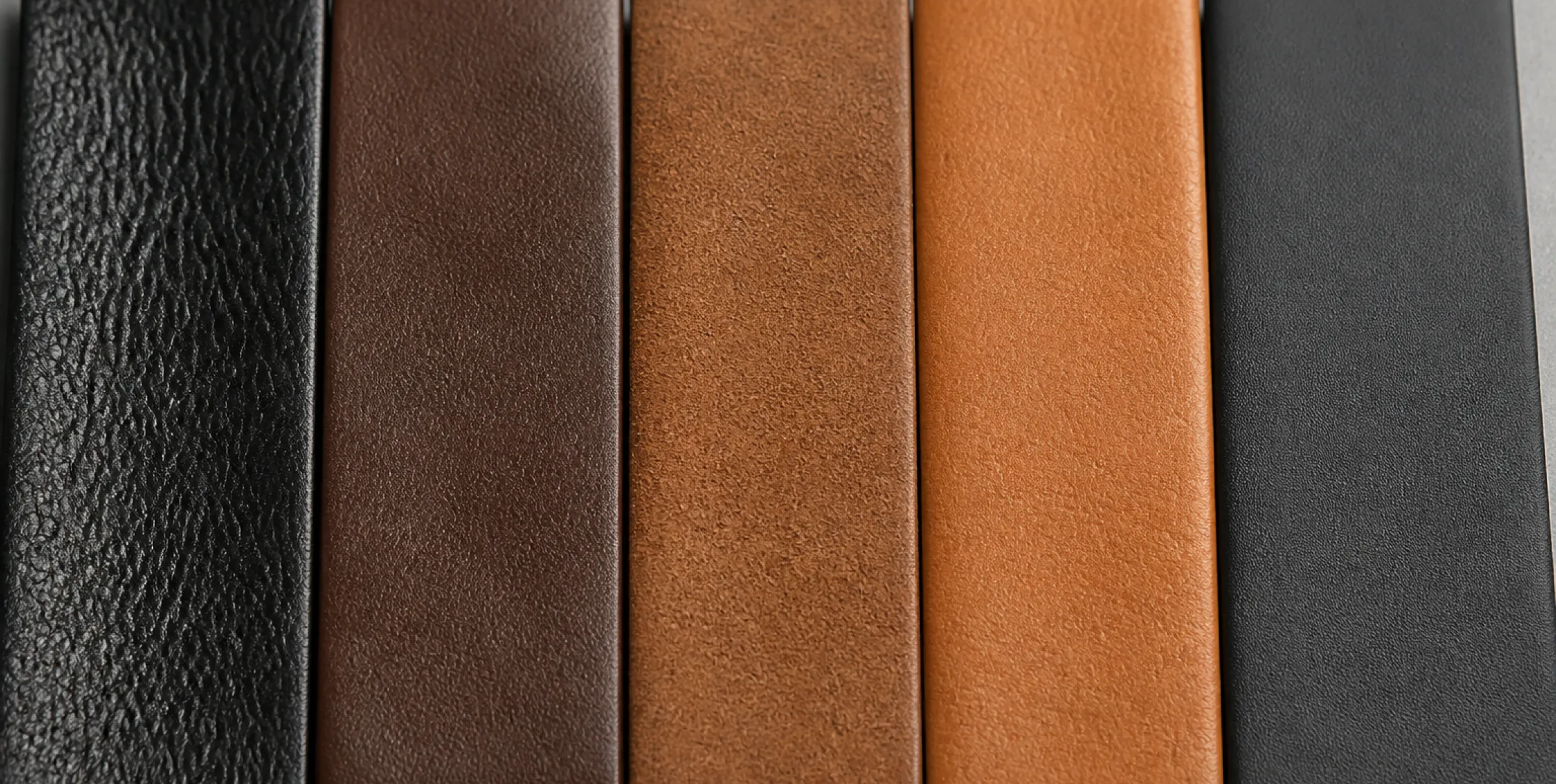
The Hide Cross-Section: Full-Grain, Top-Grain, and Split Leather
Full-Grain and Top-Grain: The Grain Layer
The grain layer—the outer surface of the hide—carries the densest fiber structure and the highest tensile strength. Full-grain leather retains this surface intact, including natural markings, and develops a patina over years of use. Top-grain leather comes from the same layer but is sanded to remove scars and insect damage, then embossed with a uniform grain and finished with a protective pigment coat. For commercial seating, top-grain is the standard premium choice: it sacrifices a small margin of fiber strength for the color consistency and stain resistance that multi-site installations require. A properly finished top-grain hide in the 0.9 to 1.2 mm upholstery thickness range will outlast the mechanism and foam of the chair it covers.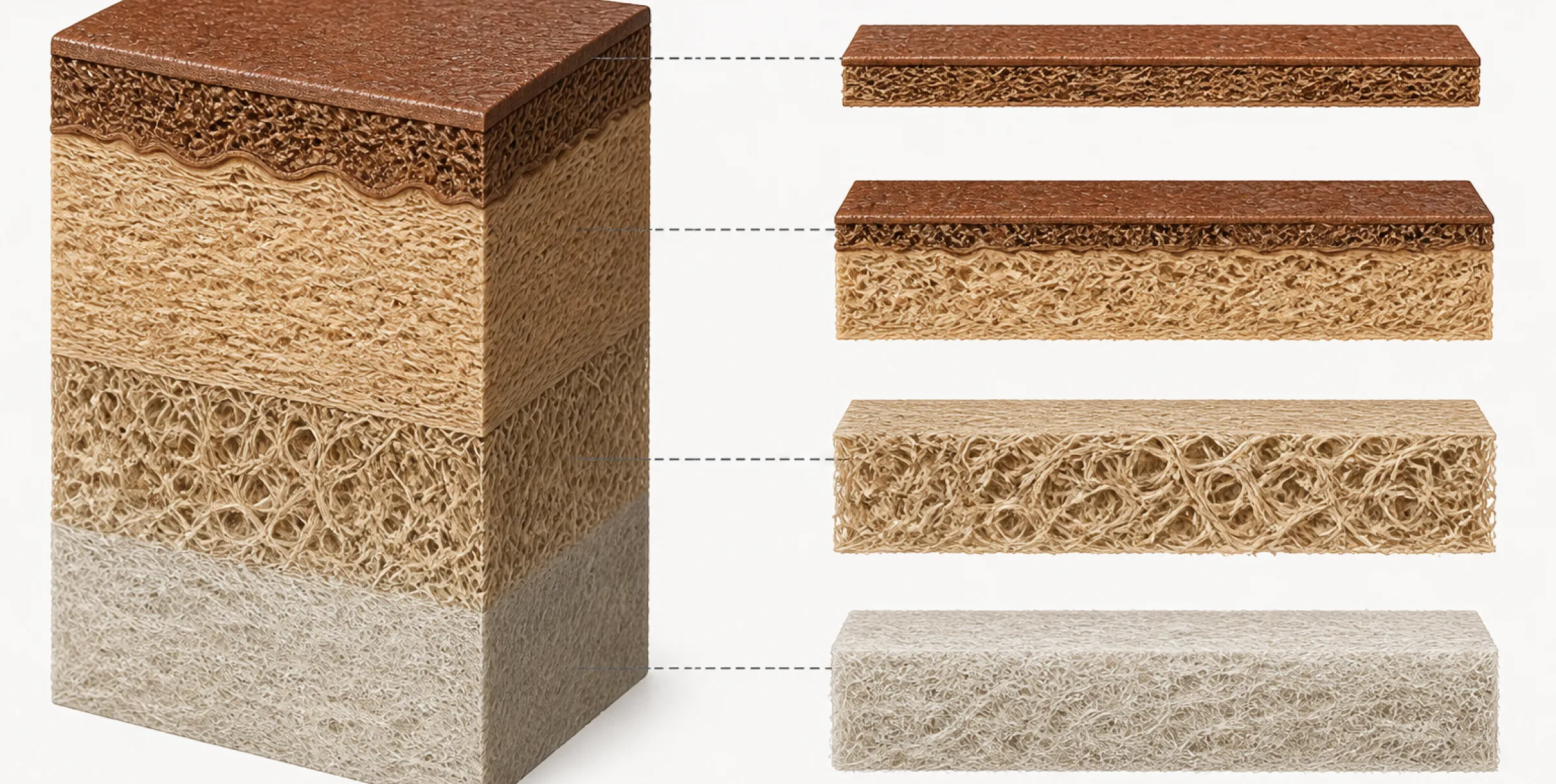
Split Leather and Bicast
When a hide is split horizontally, the lower corium layer becomes split leather. Its fiber structure is looser and weaker, so it depends on a heavy applied coating—embossed PU or a laminated film, in which case it is called bicast—to look like grain leather. That coating is the failure point: it peels and flakes under flexing, typically within three to five years of daily commercial use. Split leather has legitimate applications on low-stress surfaces such as chair backs and side panels, which is the basis of leather-match construction discussed below. Specifying it for seat pans and armrests in contract environments is where warranty programs go to die.
Bonded Leather
Bonded leather is a sheet of ground leather fibers—often only 10 to 20 percent of the total content—bound in a polyurethane matrix and embossed to imitate grain. The polyurethane binder is the structural matrix, and it abrades, hydrolyzes, and delaminates faster than any continuous hide layer. Industry abrasion data puts bonded constructions in the 30,000 to 100,000 Wyzenbeek double-rub range, with delamination failures arriving well before surface wear. Bonded leather belongs in residential price points, not in any seating expected to survive a five-year commercial depreciation schedule.
PU Faux Leather as a Contract Material: Resin Grades and Hydrolysis
Dismissing all faux leather as inferior is as inaccurate as trusting the genuine leather label. Contract-grade polyurethane upholstery is an engineered material whose performance is set almost entirely by its resin chemistry, and three resin families dominate the market:
- Polycarbonate-based PU: the contract standard, with hydrolysis resistance rated at seven years or more and strong resistance to heat, humidity, and UV. Suitable for high-traffic commercial seating.
- Polyether-based PU: mid-range performance at three to five years of hydrolysis resistance; acceptable for moderate-traffic offices in temperate climates.
- Polyester-based PU: budget material rated at one to two years before hydrolytic breakdown; it is the source of the peeling reputation that PU carries, and it has no place in contract specifications.
Hydrolysis—the chemical breakdown of polyurethane chains by water and humidity—is the dominant failure mode for coated fabrics, particularly in tropical markets and in facilities with aggressive disinfection regimes. A chair can show zero abrasion wear and still shed its surface after three years if the resin was under-specified. The verification tool is accelerated aging per ISO 1419 Method C (70 °C, 95 percent relative humidity): a minimum of five weeks without surface degradation is the accepted threshold for general contract upholstery, and there is no reliable conversion from test weeks to service years, so the test report itself must be collected per batch. A quality faux leather desk chair built on polycarbonate PU will routinely outlast a poorly tanned split hide in high-traffic use, which is why the mesh-versus-leather decision in our chair upholstery comparison starts from duty cycle rather than material prestige.
Specification Benchmarks: Abrasion, Thickness, and Test Standards
Grade names vary by supplier; test numbers do not. The following thresholds separate contract-viable materials from residential ones, regardless of what the material is called.
| Metric | Test Method | Contract Minimum | What It Predicts |
|---|---|---|---|
| Abrasion resistance | ASTM D4157 (Wyzenbeek) | 50,000 double rubs; 100,000+ for high-traffic | Surface wear-through under daily friction |
| Abrasion resistance (EU) | EN ISO 12947-2 (Martindale) | 40,000+ rubs heavy duty | Same metric, European reporting |
| Hydrolysis resistance (PU) | ISO 1419 Method C, 70 °C / 95% RH | 5 weeks minimum; 7+ year resin rating preferred | Peeling and delamination in humid climates |
| Material thickness | Supplier data sheet | 0.9–1.2 mm genuine; 1.0–1.4 mm PU (1.4–1.8 mm heavy duty) | Crack resistance at seams and flex points |
| Flammability | CAL TB 117-2013 / NFPA 260 | Pass with certificate per batch | Facility inspection and insurance compliance |
Two application notes matter here. First, thickness requirements shift with geometry: curved surfaces and tight radius wraps favor the thinner end of the range, while flat seat pans in canteen or 24/7 environments justify 1.4 mm and above. Second, genuine leather's legendary lifespan is a residential figure; in high-contact commercial use, body oils, staining, and abrasion can wear a genuine hide faster than a polycarbonate PU, which is one reason the ROI math in our leather chair lifecycle analysis separates executive suites from general task seating.
Leather-Match Construction: Where the Cost Engineering Happens
Most commercial leather seating is not upholstered in a single material. Leather-match construction places genuine top-grain leather on the touch surfaces—seat, inner back, and armrests—and a color-matched vinyl or PU on the outer back and side panels. Done transparently, this is sound engineering: it puts the expensive material where wear occurs and can cut upholstery cost by 30 to 40 percent with no user-facing compromise. Done silently, it is how chairs quoted as leather arrive with bicast splits on every surface.
The procurement control is a surface map. Require the supplier to mark, panel by panel, which material covers which component, and to state the grade of each. A luxury leather office chair quoted for an executive program should map full-grain or top-grain across all contact surfaces at minimum; a volume task program in leather office chairs can carry leather-match construction if the map is disclosed and priced accordingly.
Sourcing Leather Seating at Program Scale
Leather grading becomes a supply-chain problem at scale. Hides vary by batch in color and grain even within one grade, and coated fabrics vary by resin lot. Program buyers should lock three things at the sampling stage: the exact grade and thickness per surface, retained swatches signed by both parties as the batch reference, and per-lot test reports for abrasion, hydrolysis, and flammability. Care instructions should ship with the goods, since maintenance chemistry differs by finish—our guide on cleaning leather upholstery covers the protocols end users will actually follow.
At Aston Office, leather and coated-fabric programs are quoted with a disclosed surface map, retained reference swatches, and batch-level test documentation, with top-grain, leather-match, and polycarbonate-PU configurations priced side by side so the grade decision is made on numbers. Send your seating schedule and target markets to our team through the wholesale office furniture channel, and we will return a graded material proposal with per-surface specifications and landed pricing.
Frequently Asked Questions
What is the difference between top-grain and full-grain leather?
Both come from the strong outer grain layer of the hide. Full-grain keeps the natural surface intact and develops a patina with age. Top-grain is sanded to remove natural marks, then embossed and pigment-finished for uniform color and better stain resistance. For commercial seating, top-grain is the standard premium grade because multi-site installations require color consistency across batches.
Is bonded leather real leather?
Only partially. Bonded leather is a sheet of ground leather fibers, often just 10 to 20 percent of the content, bound in a polyurethane matrix. It can legally be marketed as leather in many regions, but the PU binder fails by peeling and delamination, typically within a few years of commercial use. It is unsuitable for contract seating.
What is bicast leather?
Bicast is split leather—the weaker lower layer of the hide—laminated with a polyurethane film and embossed to imitate grain leather. It looks consistent and costs far less than top-grain, but the surface film peels under flexing. It is acceptable on low-stress panels such as outer chair backs, not on seats or armrests.
Can PU leather be better than genuine leather for office chairs?
Yes, in high-traffic commercial use. A polycarbonate-resin PU rated at seven or more years of hydrolysis resistance and 50,000+ Wyzenbeek double rubs resists body oils, staining, and disinfectants better than a poorly tanned split hide, and costs a fraction of top-grain. In low-contact executive settings, genuine top-grain still wins on longevity and aging character.
What does hydrolysis resistance mean on a PU data sheet?
It rates how long the polyurethane resists chemical breakdown from heat and humidity before peeling or delaminating. Resin grades run from one to two years (polyester-based) to seven-plus years (polycarbonate-based). Verify it with an ISO 1419 Method C accelerated aging report—five weeks at 70 °C and 95 percent humidity is the contract minimum.
What is leather-match construction?
Leather-match combines genuine leather on contact surfaces—seat, inner back, armrests—with color-matched vinyl or PU on outer panels. It reduces upholstery cost by roughly 30 to 40 percent without user-facing compromise, provided the supplier discloses a surface map naming the material and grade on every panel.
What abrasion rating should commercial leather seating meet?
Specify a minimum of 50,000 Wyzenbeek double rubs (ASTM D4157), or 100,000+ for high-traffic environments; the European equivalent is 40,000+ Martindale rubs for heavy duty. Collect the test report per batch rather than accepting a generic data sheet, since coated fabrics vary by resin lot.
