
When corporate procurement officers evaluate seating options for an enterprise-wide deployment, the checklist frequently begins and ends with visual aesthetics and headline price tags. However, in the high-performance commercial workspace, a chair is an active biomechanical instrument. Inadequate mechanical adjustability directly precipitates physical fatigue, musculoskeletal disorders (MSDs), and subsequent drops in daily productivity. Discerning the engineering distinction between consumer-grade task chairs and true ergonomic assets requires looking beneath the seat pan.
At Aston Office, our OEM engineering teams design commercial seating rooted in rigorous human-factors engineering. This technical guide dissects the mechanics of advanced adjustability, exploring how 4D armrests and synchronized tilt mechanisms function as critical defenses against repetitive strain injuries and long-term ergonomic degradation.
The Mechanics of Upper Limb Support: The 4D Armrest Imperative
Upper limb support is one of the most frequently compromised aspects of workspace ergonomics. When an employee is typing, writing, or navigating a dual-monitor array, their arms require continuous, stable micro-support. If a chair features static, non-adjustable armrests—or restricted vertical-only adjustment—the user is forced to compromise their posture.
To eliminate shoulder elevation and carpal tunnel strain, commercial seating must be specified with fully articulating armrests. When reviewing what to look for when buying an office chair, facility managers should mandate 4D armrest architecture, which provides four independent axes of movement: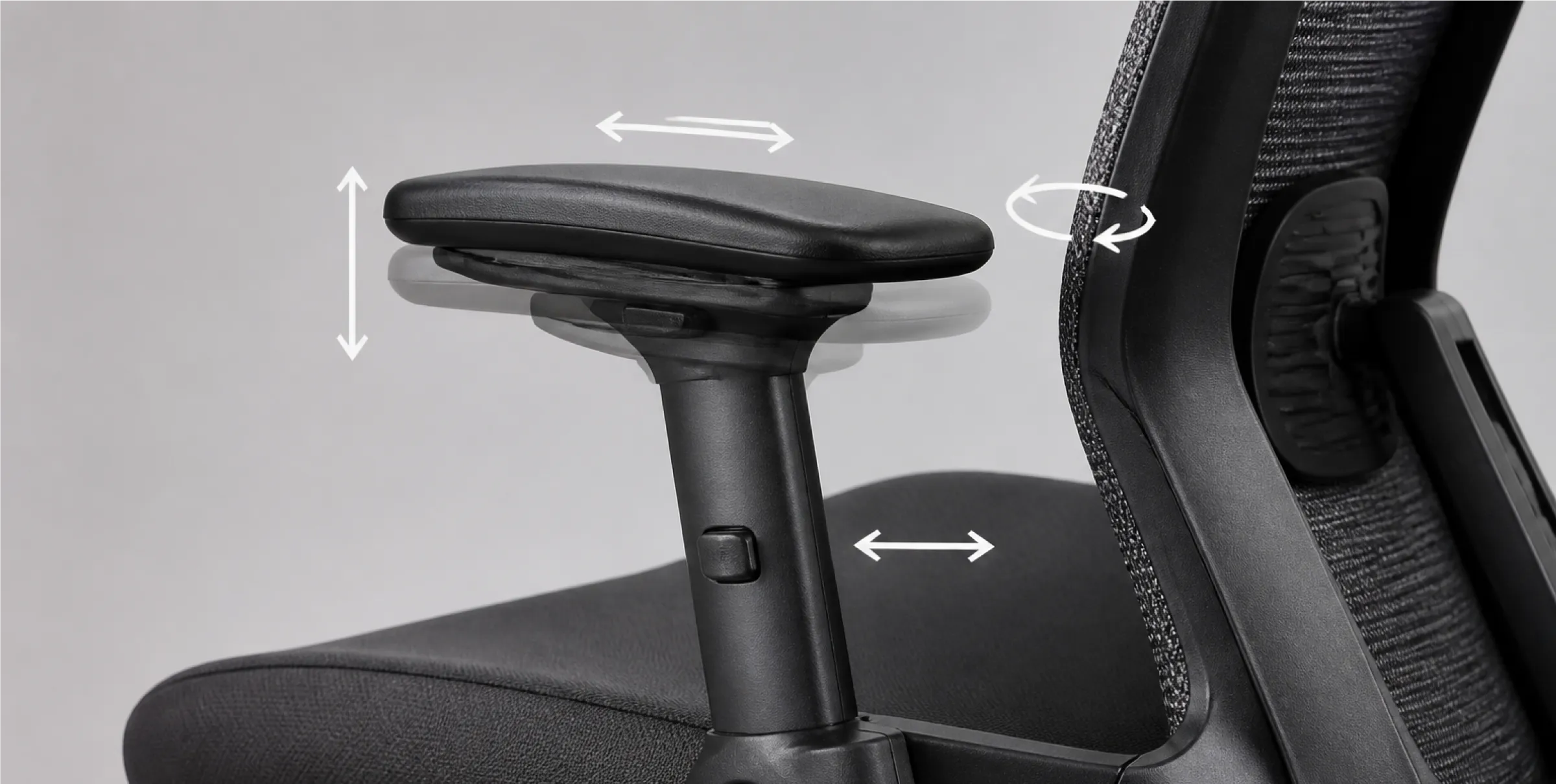
- Height Adjustment: Allows the user to align the armrest precisely with the desk surface, keeping the elbows at a neutral 90-to-100-degree angle and preventing trapezius muscle tension.
- Width (Lateral) Adjustment: Accommodates varying shoulder widths, ensuring the arms hang naturally from the shoulder joint rather than splaying outward.
- Depth (Fore/Aft) Adjustment: Slides the armpad forward or backward to support the forearm regardless of the user's preferred typing posture or desk depth.
- Pivot (Angle) Adjustment: Rotates inward or outward to support the forearms during narrow keyboard tasks or wide document navigation.
The Physics of Dynamic Posture: Understanding Synchro-Tilt Mechanisms
The human spine is not designed to remain locked in a rigid, 90-degree vertical position for an 8-hour workday. Dynamic movement is vital for intervertebral disc health, as it pumps nutrient-rich fluids through spinal tissues. However, when a worker reclines in a standard consumer chair, the front edge of the seat pan frequently lifts off the floor, cutting off circulation behind the knees and forcing the user to strain their neck to view the monitor.
True ergonomic engineering solves this through a synchronized tilt mechanism. When studying how office chairs work, procurement teams will find that a commercial-grade synchro-tilt mechanism connects the backrest and the seat pan in a proportional ratio—typically moving the backrest backward by 2 degrees for every 1 degree of rearward seat tilt.
This precise ratio ensures that the user's feet remain planted flat on the floor, the popliteal fold behind the knee is never compressed, and the natural lordotic curve of the lower lumbar spine is continuously supported throughout the recline cycle.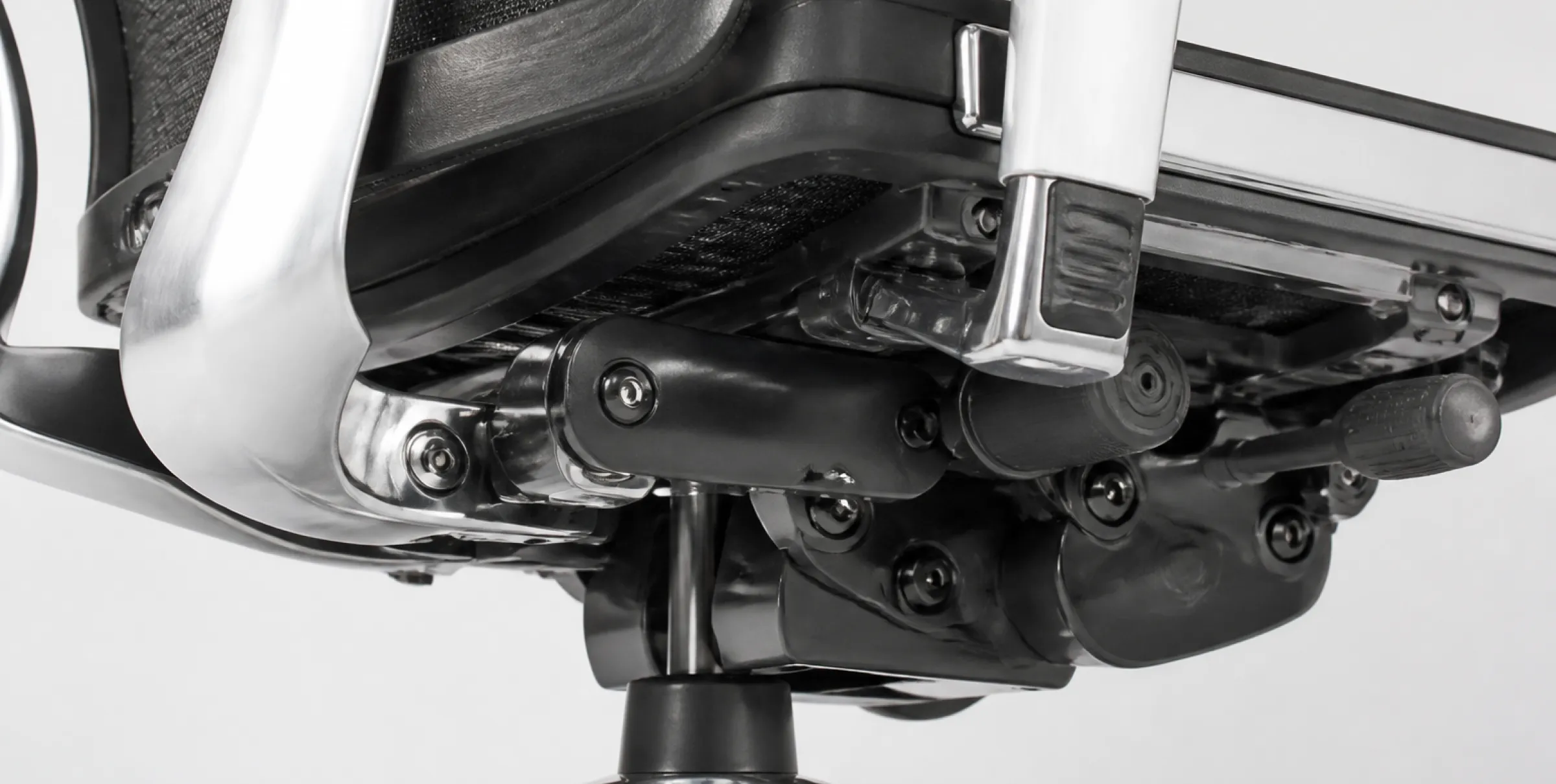
Integration: Pairing Adjustability with Mesh Suspension
Mechanical adjustability cannot perform in isolation; it must be synchronized with the chair's upholstery and suspension matrix. When enterprise environments demand intensive, multi-hour focus sessions, pairing complex 4D armrests and synchro-tilt mechanisms with ergonomic mesh office chairs delivers the ultimate biomechanical solution.
The high-tension elastomeric mesh conforms dynamically to the user's spinal contours while working in tandem with the heavy-duty steel chassis. This combination eliminates pressure points, provides passive thermal regulation, and allows the operator to adjust every contact point of the chair to match their unique anthropometric profile.
Strategic Procurement and Enterprise Standardization
Outfitting a modern enterprise requires balancing individual employee ergonomic health with facility management simplicity. Purchasing fragmented, highly complex chairs from multiple retail channels introduces massive maintenance headaches for internal facilities teams.
By partnering directly with an OEM manufacturer like Aston Office for your wholesale office furniture procurement, organizations can standardize around high-performance, fully adjustable task seating. Sourcing factory-direct ensures that every chair delivered to your corporate headquarters features certified 4D mechanisms, hardened steel synchro-tilt plates, and robust BIFMA-tested durability—protecting both your workforce and your long-term capital expenditure.
Frequently Asked Questions
What is a 4D office chair armrest?
A 4D armrest provides four distinct directions of adjustment: height (vertical), width (lateral), depth (forward and backward), and pivot (angle rotation). This ensures customized forearm support for any user, completely eliminating shoulder strain and repetitive wrist fatigue.
How does a synchro-tilt mechanism protect the lower back?
A synchro-tilt mechanism reclines the backrest and the seat pan at different, proportional speeds (usually a 2:1 ratio). This keeps the user's feet flat on the floor, maintains an open hip angle, and preserves the lower spine's natural curve while reclining, preventing lumbar compression.
Why are cheap office chairs bad for long-term health?
Cheap retail chairs typically feature static armrests, rigid tilt mechanisms, and low-density foam. This forces the human body into unnatural, static postures, accelerating muscle fatigue, restricting blood circulation, and contributing to chronic musculoskeletal disorders over time.
How do I specify ergonomic seating for a diverse workforce?
To accommodate diverse body types across a corporate workforce, procurement teams should specify fully adjustable task seating equipped with seat sliders, height-adjustable lumbar support, 4D armrests, and weight-activated or tension-adjustable synchro-tilt mechanisms.
