
The corporate workplace has undergone a structural metamorphosis. Driven by the permanent integration of hybrid work models, the traditional row-and-cubicle layout has sharply contracted, making room for a new architectural imperative: the informal collaboration zone, or "breakout space." Modern enterprises no longer view the office primarily as a place for tethered, individual desk work; instead, the office serves as a dynamic hub for team cohesion, spontaneous brainstorming, and cultural connection.
At Aston Office, our OEM spatial design teams assist facility directors and workplace strategists in engineering agile environments that balance individual focus with collaborative agility. This technical guide explores the workplace strategy behind breakout spaces, detailing how facility managers can leverage modular soft seating and adaptable furniture systems to maximize spatial ROI and future-proof their floor plates.
The Workplace Strategy Shift: From Fixed Desks to Third Spaces
Data from modern corporate real estate trends indicates that permanent, assigned individual desks frequently sit vacant for a significant portion of the work week due to remote scheduling. Maintaining vast square footage dedicated to underutilized fixed desks represents a severe misallocation of real estate capital.
Forward-thinking organizations are converting this reclaimed square footage into multi-modal "Third Spaces"—informal breakout zones designed to foster organic human interaction. However, outfitting these areas with rigid, conventional conference tables and heavy desking defeats the core psychological objective of an informal zone. Breakout spaces require a delicate balance of ergonomic comfort, spatial fluidity, and structural durability.
Deploying Modular Soft Seating for Spatial Agility
The physical anchor of any breakout zone is soft seating. To prevent these collaborative hubs from becoming rigid or stagnant, facility planners must reject permanent, built-in millwork in favor of modular office furniture.
Modular soft seating systems—such as interlocking sectional office sofas, mobile ottomans, and high-back acoustic privacy pods—empower employees to reconfigure the room dynamically. If an impromptu team workshop requires a circular seating arrangement for open discussion, or a segmented layout for smaller breakout huddles, modular units can be repositioned effortlessly without tools or facilities intervention.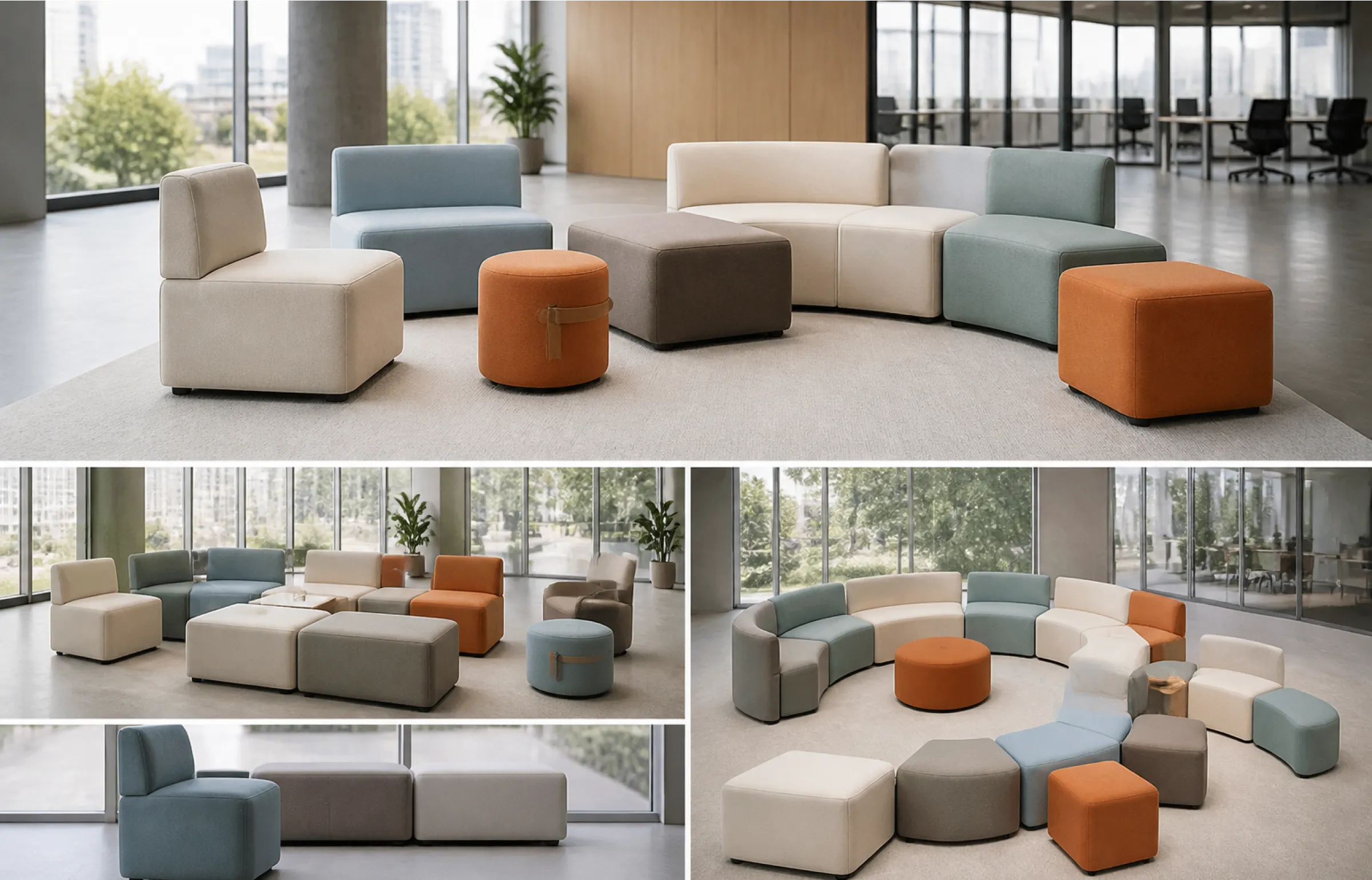
Engineering for High-Traffic Durability
Unlike residential breakout furniture, commercial-grade collaborative zones experience continuous, high-frequency utilization by diverse corporate personnel. Sourcing substandard retail sofas for these high-attrition spaces results in rapid frame warping and foam compression. Commercial breakout furniture must be engineered with kiln-dried hardwood frames, high-density molded foam cores, and reinforced steel connectors to withstand years of active repositioning.
Acoustic and Visual Partitioning in Open-Plan Breakouts
While breakout zones are designed for collaboration, placing them directly adjacent to quiet focus zones without proper architectural buffer zones introduces severe acoustic friction. Informal meetings can quickly generate ambient noise levels that disrupt nearby concentrated tasks.
Facility managers can solve this challenge by selecting architectural soft seating with integrated high backs or "alcove" designs. These high-back units act as acoustic sponges, trapping conversational frequencies and providing visual privacy without requiring the construction of permanent drywall. When paired with intelligent space planning principles—such as those outlined in a professional space planning guide for modern office sofas—informal breakout hubs integrate seamlessly into the broader office ecosystem.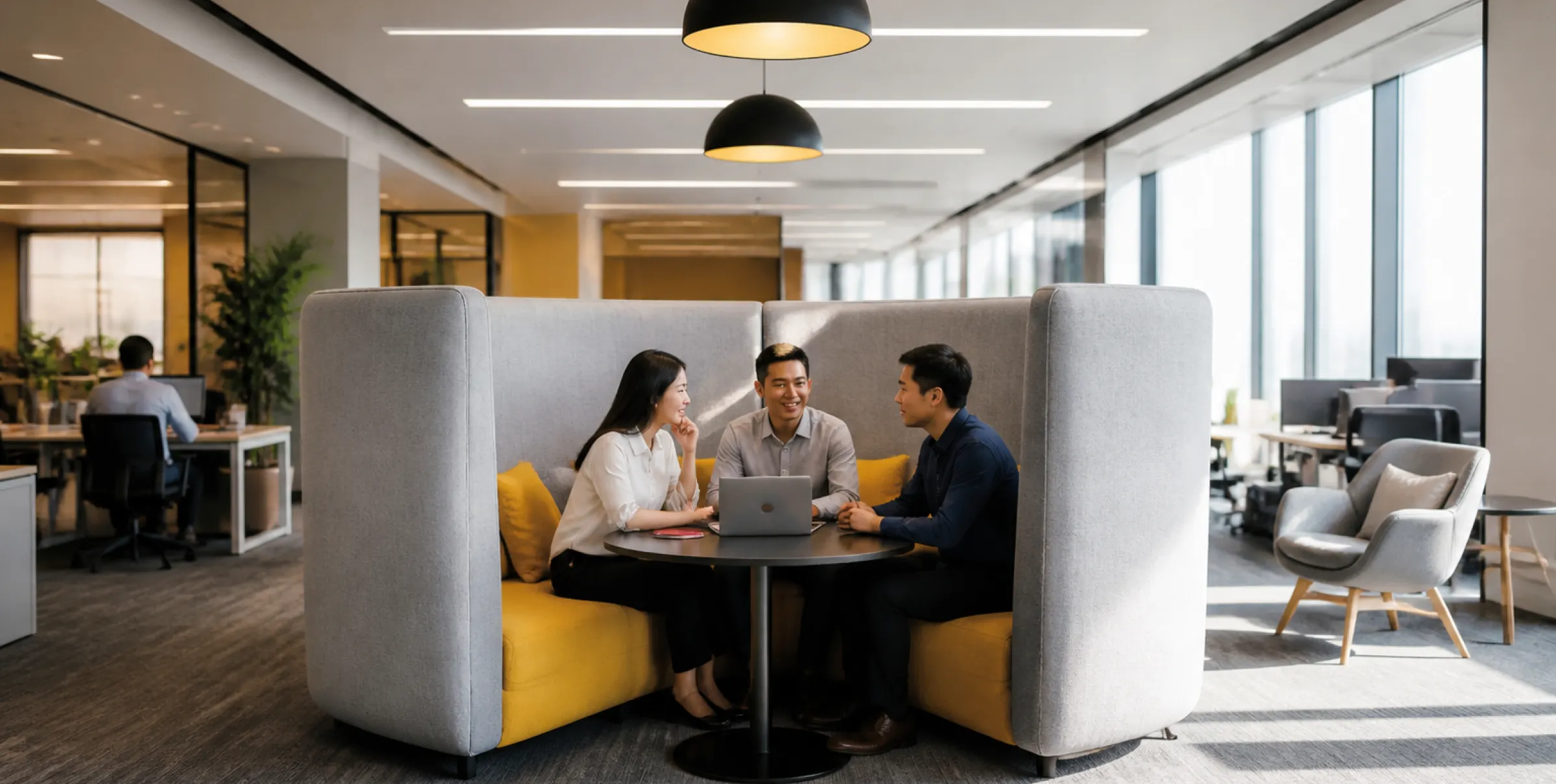
Calculating the ROI of Collaborative Architecture
Investing in high-end breakout architecture directly impacts an organization's bottom line through enhanced employee retention, cross-departmental innovation, and optimized real estate density. By providing diverse, comfortable environments tailored to different work modes, companies increase the psychological "pull" factor for return-to-office (RTO) initiatives, replacing mandatory attendance policies with genuinely attractive workspace destinations.
When corporate procurement officers prepare to scale these collaborative zones across multi-floor headquarters, partnering directly with an OEM manufacturer like Aston Office ensures absolute material consistency and cost-efficiency. Sourcing wholesale office furniture factory-direct allows organizations to outfit sprawling breakout hubs with custom-upholstered, commercial-grade soft seating while protecting their capital expenditure budgets.
Frequently Asked Questions
What is a "Third Space" in modern corporate office design?
A Third Space is an informal, flexible environment within the office—separate from home and the assigned desk—designed for spontaneous collaboration, social connection, relaxed meetings, and individual "unplugged" focus work.
Why is modular furniture essential for breakout spaces?
Modular furniture consists of independent, interchangeable components that can be easily rearranged. This allows facility managers and employees to reconfigure the breakout zone instantly to suit different group sizes, meeting formats, and changing company workflows.
How do breakout sofas help manage office acoustics?
High-back and alcove commercial sofas feature dense internal foam cores and thick upholstery fabrics that absorb human speech frequencies and block lateral sound transmission, serving as functional acoustic barriers in open-plan offices.
What are the financial benefits of sourcing breakout furniture wholesale?
Sourcing commercial breakout seating directly from an OEM manufacturer eliminates distributor markups, ensures rigorous adherence to commercial durability standards (such as BIFMA testing and high-density foam ratings), and protects long-term asset value.
