
An office chair is one of the few pieces of furniture that directly affects your physical health, your focus, and your productivity every single working day. The average office worker spends over 1,700 hours per year seated at their desk. Over a 5-year period, that adds up to more than 8,500 hours in the same chair. Yet most people spend more time researching their next phone than the chair they will sit in for a third of their waking life.
The problem is not a lack of options — it is the opposite. The market is flooded with chairs labeled "ergonomic" at every price point from $50 to $2,000, and the marketing language is nearly identical across all of them. Without knowing what actually matters and what is just noise, it is easy to either overspend on features you do not need or underspend on a chair that causes more problems than it solves.
This guide cuts through the confusion. We break down the specific features, materials, and construction details you should evaluate before purchasing an office chair — whether you are buying one chair for a home office, outfitting a team of 50, or sourcing thousands of units as a furniture distributor. Every recommendation is grounded in how the chair is actually built, not how it is marketed.
1. Lumbar Support Is the Single Most Important Feature in Any Desk Chair
If you only check one thing before buying an office chair, make it the lumbar support. The lumbar region — the five vertebrae at the bottom of your spine — naturally curves inward. When you sit without support for this curve, your pelvis tilts backward, your lower back flattens, and the muscles and ligaments in your lower spine bear weight they are not designed to handle for extended periods. This is the primary mechanical cause of the lower back pain that affects an estimated 619 million people globally, according to the World Health Organization.
There are three types of lumbar support systems found in office chairs. Fixed lumbar support is a molded curve built into the backrest — it provides basic support but cannot be adjusted to fit different body types. Adjustable lumbar support allows the user to move the lumbar pad up, down, and sometimes in and out to match their specific spine curvature. Adaptive or dynamic lumbar support — found on higher-end chairs — uses a flexible mechanism that automatically adjusts pressure based on the user's sitting position and weight distribution.
For commercial office environments where multiple users may share the same chair — such as hot-desking setups, training rooms, or shared workstations — adjustable lumbar support is the minimum standard you should accept. Fixed lumbar works only if every user happens to have the same torso length, which in practice never happens. Chairs designed for general office use, like Aston's mesh office chair collection, feature 3D adaptive lumbar systems that adjust support strength based on the user's weight and sitting posture, accommodating a wide range of body types without manual adjustment.
2. Seat Height and Depth Adjustment: Why One-Size-Fits-All Seating Fails
The correct seated position requires your feet to rest flat on the floor, your thighs parallel to the ground, and your knees bent at approximately 90 degrees. Achieving this position depends entirely on the chair's seat height range matching the user's leg length — and human leg lengths vary enormously. A chair with a fixed seat height, or an adjustment range that is too narrow, forces shorter users to dangle their feet (causing pressure behind the knees and reduced circulation) and taller users to sit with their knees above their hips (increasing pressure on the lower spine).
A standard pneumatic gas lift provides a seat height range of approximately 16 to 21 inches from the floor. This range accommodates most users between 5'2" and 6'2". For users outside this range, look for chairs with extended gas lift cylinders — tall cylinders for users over 6'2" and short cylinders for users under 5'2". The quality of the gas lift matters as much as its range. SGS-certified Class 3 or Class 4 gas cylinders provide smooth, reliable height adjustment and are rated for 100,000 or more cycles. Cheaper Class 1 cylinders may start sinking within a year of daily use.
Seat depth adjustment — also called a seat slider — is an often-overlooked feature that has a significant impact on comfort. The seat pan should support your thighs without pressing into the back of your knees. If the seat is too deep for your leg length, the front edge digs into the area behind your knees, restricting blood flow. If the seat is too shallow, your thighs lack support and you slide forward. A seat depth adjustment of 2 to 3 inches allows the chair to accommodate users with different thigh lengths. This feature is particularly valuable in commercial environments where chairs are shared among users of varying body sizes, such as wholesale office chair deployments for corporate offices and co-working spaces.
3. Backrest Design: High Back vs. Mid Back and What Actually Supports Your Spine
The height and shape of the backrest determine how much of your spine the chair supports. Mid-back chairs support the lumbar and thoracic regions (lower and middle back) and are suitable for most general office tasks where the user sits primarily upright. High-back chairs extend up to the shoulder blades or higher, and often include an integrated headrest — these are better suited for environments where users spend long periods reclined, such as executive offices, call centers, and monitoring stations.
The backrest material affects both comfort and durability. Mesh backrests are the standard choice for breathable, all-day seating — the mesh conforms to the user's back shape, distributes pressure evenly, and allows air circulation to prevent heat buildup. This makes mesh particularly well-suited for warm climates, shared workspaces, and any environment where the user sits for extended periods. High-quality mesh maintains its tension and shape for years without sagging, while cheap mesh stretches and loses support within months.
Upholstered backrests — with foam padding covered in fabric, PU leather, or genuine leather — provide a softer, more cushioned feel. Leather backrests convey a premium, executive aesthetic and are commonly specified for boardrooms, private offices, and client-facing reception areas. For environments that prioritize professional appearance alongside comfort, leather office chairs offer the right balance between visual authority and seated support. The trade-off is reduced breathability compared to mesh — leather and PU surfaces retain more body heat and can become uncomfortable in warm conditions without adequate air conditioning.
The recline mechanism is another critical backrest feature. A synchronized tilt mechanism — where the seat and backrest recline together at a calibrated ratio (typically 1:2 or 1:3) — is the most ergonomically sound design because it maintains the correct angle between your torso and thighs throughout the recline range. Simpler tilt mechanisms that only recline the backrest can create an uncomfortable gap between the seat and the user's lower back. Multi-position tilt lock allows the user to lock the backrest at several preset angles, enabling transitions between upright focused work and a more relaxed reclined posture for reading, phone calls, or thinking.
4. Armrest Types and Adjustability: More Dimensions Mean Better Fit
Armrests are one of the most polarizing features in office chair design. Some users love them, others remove them entirely. The key insight is that bad armrests are worse than no armrests at all — armrests set at the wrong height or width force your shoulders into an unnatural position, causing tension in your neck, shoulders, and upper back.
Armrest adjustability is described in "dimensions" — the more dimensions, the more ways the armrest can be positioned to fit the user. Fixed armrests offer no adjustment and are suitable only for environments where the chair is rarely used for extended periods, such as guest seating or conference rooms. 1D armrests adjust height only. 2D armrests adjust height and pivot angle. 3D armrests adjust height, pivot angle, and width (in/out). 4D armrests add forward/backward sliding to all of the above, providing the most comprehensive positioning for users of different body widths, arm lengths, and desk heights.
For general commercial office use, 3D armrests represent the best balance of adjustability and cost. For executive and ergonomic premium seating, 4D armrests are the standard expectation. The armrest pad material also matters — soft PU-coated pads are significantly more comfortable for all-day use than hard plastic pads, especially if the user rests their forearms on the armrests while typing. Some chairs offer armrests with flip-up functionality, which allows the armrests to be folded upward and out of the way when not needed — a useful feature for conference settings where users need to push the chair close to a table.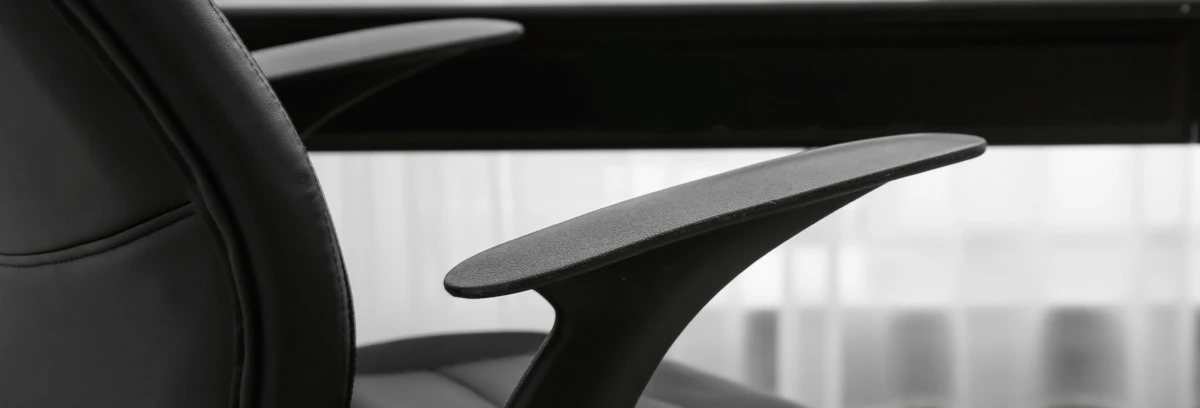
5. Frame and Base Construction: The Hidden Quality Indicators That Determine Durability
Most buyers evaluate an office chair by sitting in it for 30 seconds and deciding if it feels comfortable. But the structural components that determine whether the chair will still feel comfortable — and still function safely — after 3 years of daily use are largely invisible to the casual observer.
The chair base — the five-star platform at the bottom — is the structural foundation. Nylon (reinforced plastic) bases are the standard for mid-range chairs and are adequate for users up to approximately 120 kg. Aluminum or polished metal bases are heavier, more rigid, and support higher weight capacities — they are the standard for executive and heavy-duty office chairs rated for users over 120 kg. The base diameter also matters: a wider base provides better stability and reduces the risk of tipping during recline.
Casters are a small component with an outsized impact on daily user experience. Standard hard nylon casters work well on carpet but scratch and slide on hard floors. Soft PU (polyurethane) casters are the better universal choice — they roll quietly, grip hard floors without scratching, and glide smoothly on carpet. Caster diameter affects rollability: 60mm PU casters are the current commercial standard, providing smooth movement with enough grip to stay put when the user is seated.
The tilt mechanism — the metal assembly that connects the seat to the gas lift — is the most mechanically complex component in the chair and the one most likely to differentiate a quality chair from a cheap one. A multi-function mechanism with independent seat angle adjustment, backrest tilt, tilt tension control, and tilt lock gives the user complete control over their seated posture. A basic single-lever mechanism provides only rudimentary tilt and height adjustment. The mechanism housing should be thick steel (minimum 2mm) with smooth-operating levers and no detectable play or wobble when the user shifts weight.
6. Upholstery Materials Compared: Mesh, Fabric, PU Leather, and Genuine Leather
The upholstery material is the part of the chair your body contacts directly for thousands of hours, so its properties have a disproportionate impact on comfort, hygiene, maintenance, and longevity. Each material has clear advantages and trade-offs.
| Material | Breathability | Durability | Maintenance | Aesthetic | Best For |
|---|---|---|---|---|---|
| Mesh | Excellent | High (quality mesh) | Easy — vacuum, wipe | Modern, minimal | Warm climates, shared desks, all-day sitting |
| Fabric | Good | Moderate | Moderate — stains possible | Wide color range | General office, budget-friendly |
| PU Leather | Low | Moderate (may peel over time) | Easy — wipe clean | Professional | Reception, conference, guest seating |
| Genuine Leather | Low-Moderate | Very High (improves with age) | Requires conditioning | Executive, premium | Executive offices, boardrooms |
For high-traffic commercial environments — offices, training rooms, co-working spaces — mesh is the dominant choice for good reason. It is breathable, durable, hygienic, and requires minimal maintenance. For executive and client-facing environments where appearance is as important as comfort, genuine leather or high-quality PU leather is the appropriate choice. Budget-conscious buyers furnishing general office areas often find that fabric offers the widest color selection at the lowest cost, though it requires more cleaning attention than mesh or leather.
One important consideration for buyers in hot climates — particularly in the Middle East, Southeast Asia, and Africa — is that PU leather and genuine leather chairs become noticeably warm after extended sitting in environments without strong air conditioning. In these markets, ergonomic mesh office chairs with breathable back and seat surfaces consistently outperform leather options in user satisfaction surveys.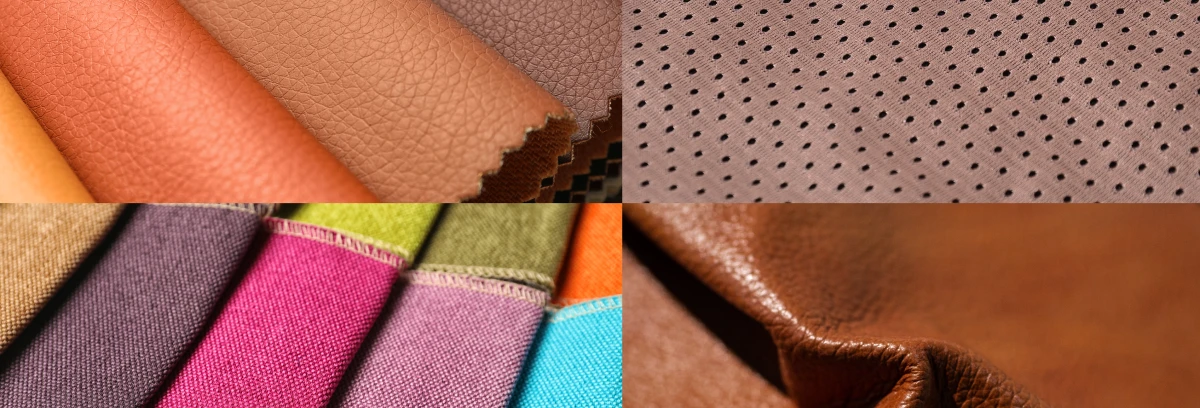
7. Weight Capacity and Body Type Considerations That Most Buyers Overlook
Every office chair has a maximum weight capacity, but many buyers either do not check it or do not take it seriously. Exceeding the rated weight capacity does not cause the chair to collapse immediately — it accelerates wear on every component. The gas cylinder loses pressure faster, the tilt mechanism develops play and wobble, the foam compresses permanently, the casters crack, and the base flexes beyond its design tolerance. A chair rated for 100 kg that is used daily by a 130 kg user may fail within 12 to 18 months instead of the expected 5 to 7 years.
Standard commercial office chairs are typically rated for 100 to 120 kg (220 to 265 lbs). For users above this range, dedicated big and tall office chairs are engineered with reinforced frames, wider seats, deeper cushions, Class 4 gas cylinders, and heavy-duty casters to accommodate users up to 150 kg (330 lbs) or more. These are not just regular chairs with a higher weight sticker — the structural engineering is fundamentally different.
Height is equally important. Users over 6'2" (188 cm) often find that standard chairs do not provide adequate thigh support (seat depth too shallow), head support (backrest too short), or leg clearance (seat height range too low). Tall-user chairs address these issues with extended seat pans, higher backrests, taller gas cylinders, and wider armrest spacing.
Conversely, petite users under 5'4" (163 cm) often struggle with standard chairs that are too deep, too high, and too wide. If your workforce includes a significant number of petite users, look for chairs with shorter minimum seat height, shallower seat depth, and narrow seat width — or specify chairs with seat depth adjustment to accommodate the widest range of body types.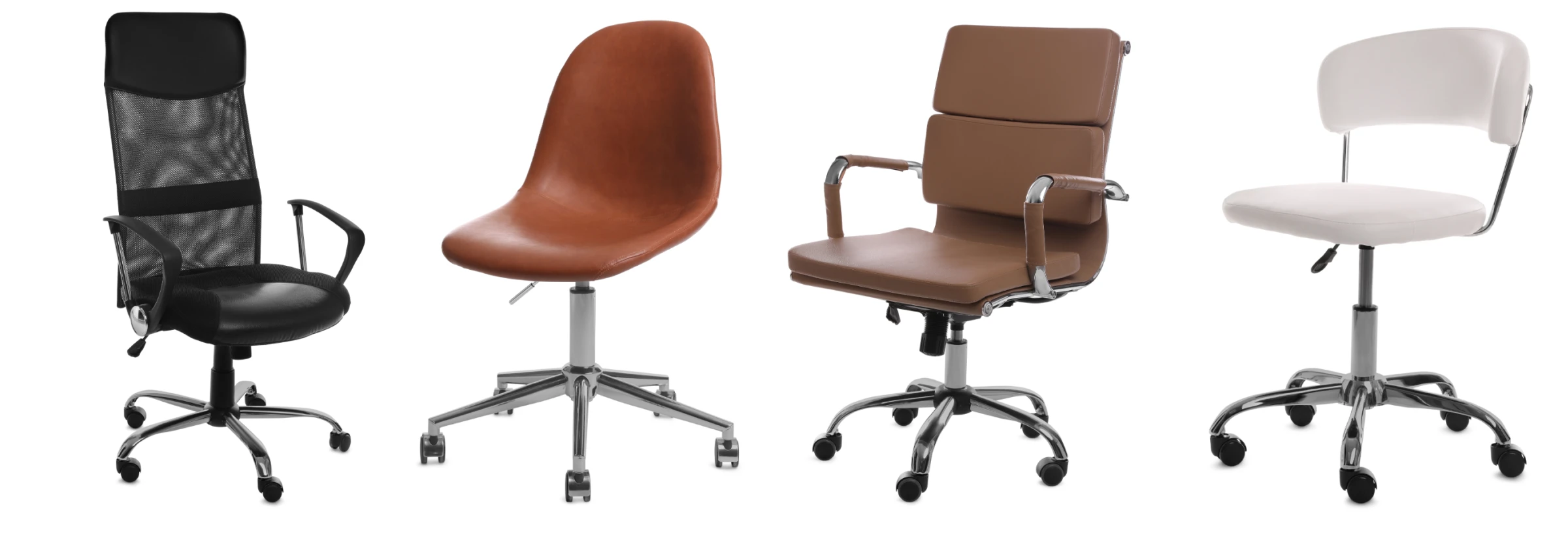
8. Warranty, Certification, and Total Cost of Ownership: Thinking Beyond the Price Tag
The purchase price of an office chair is only the beginning of its cost story. The total cost of ownership includes purchase price, maintenance and cleaning costs, replacement parts over the chair's lifespan, productivity impact (positive or negative) on the user, and the expected number of years before replacement is needed.
A practical way to evaluate cost is to calculate the daily cost of the chair. A chair purchased for $300 that lasts 5 years costs $0.16 per day. A chair purchased for $150 that needs replacement after 2 years costs $0.21 per day — more expensive despite costing half as much upfront. When you factor in the administrative cost of procurement, delivery, assembly, and disposal, the "expensive" chair is significantly cheaper over its lifetime.
Warranty terms are the most reliable indicator of how long the manufacturer expects their chair to last. A 3-year comprehensive warranty covering the frame, mechanism, gas cylinder, and upholstery signals that the manufacturer has tested these components to last well beyond that period. A 1-year warranty — or a warranty that excludes the gas cylinder and mechanism — signals that the manufacturer anticipates early failure of these components.
Quality certifications add an independent layer of verification. BIFMA (Business and Institutional Furniture Manufacturers Association) certification means the chair has been tested for structural integrity, stability, durability, and ergonomics according to standardized protocols. SGS certification specifically validates the safety of the gas cylinder. Look for these certifications when comparing options — they separate chairs that have been independently tested from those that simply claim to meet standards without third-party verification.
For commercial buyers sourcing chairs for offices, training rooms, reception areas, or hospitality projects, working directly with a manufacturer that combines quality certification with competitive wholesale pricing and full OEM support eliminates the markup of intermediary distributors. Aston's wholesale office chair program provides BIFMA-compliant, SGS-certified seating backed by a 3-year warranty and shipped directly from a 10,000㎡ factory with an annual capacity of over 200,000 units.
Conclusion
Knowing what to look for when buying an office chair transforms the purchasing process from a guessing game into a structured evaluation. The checklist is straightforward: prioritize lumbar support above all else, ensure the seat height and depth accommodate your body or your user population, choose a backrest height and material appropriate for the use case, verify that the base and mechanism are built for commercial-grade durability, match the upholstery material to the environment, confirm the weight capacity covers your users with margin to spare, and evaluate the total cost of ownership rather than just the sticker price.
Whether you are buying a single chair for a home office or sourcing hundreds of units for a corporate project, these fundamentals apply equally. The difference between a chair that supports your body for 8 hours a day and one that causes discomfort after 30 minutes comes down to engineering decisions that are invisible in a product photo but immediately apparent in daily use.
For end users, this checklist helps you invest in a chair that protects your health and supports your productivity for years. For procurement professionals and furniture distributors, it provides the technical framework to evaluate suppliers, compare specifications objectively, and make sourcing decisions that minimize return rates and maximize long-term client satisfaction. In both cases, the principle is the same: buy based on engineering, not marketing. The right chair is not the one with the best advertisement — it is the one that fits your body, matches your environment, and is built to last.
