
Procuring furniture for higher education campuses and enterprise training centers is fundamentally different from standard corporate office outfitting. Lecture halls and seminar rooms are high-attrition, high-density environments. Facility managers must balance aggressive seating capacity requirements with extreme mechanical durability, daily sanitization protocols, and strict adherence to life safety and fire egress codes.
At Aston Office, our OEM engineering teams specialize in the unique structural demands of institutional environments. This technical guide examines the procurement logic behind eliminating traditional desks and specifying commercial seating with integrated writing tablets. We will decode the mechanical tolerances of aluminum-alloy hinges, the chemical resilience of polymer shells, and the critical spatial geometry required for campus safety.
The Spatial Economics of the Integrated Tablet
In modern university lecture halls and corporate auditoriums, floor space is a premium asset. Deploying standard freestanding desks and chairs dramatically reduces the maximum occupancy of a room. By specifying integrated polypropylene table and chairs, facility planners eliminate the desk footprint entirely. This transition allows for high-density tiered or flat-floor seating arrangements, maximizing the return on investment (ROI) for every square foot of real estate.
Aluminum-Alloy Load-Bearing Mechanics
The writing tablet is the most vulnerable failure point on an institutional chair. In a university setting, students frequently lean heavily on the tablet, use it as a structural support to stand, or drop heavy textbooks onto the surface. Substandard chairs utilize plastic rotary hinges that undergo rapid fatigue, snapping under torsional stress within the first semester.
Commercial-grade educational seating mandates a die-cast aluminum-alloy rotary mechanism. This heavy-duty metallic core provides immense shear strength and load-bearing capacity, ensuring the tablet mechanism survives years of continuous, high-impact mechanical actuation without structural degradation or drooping.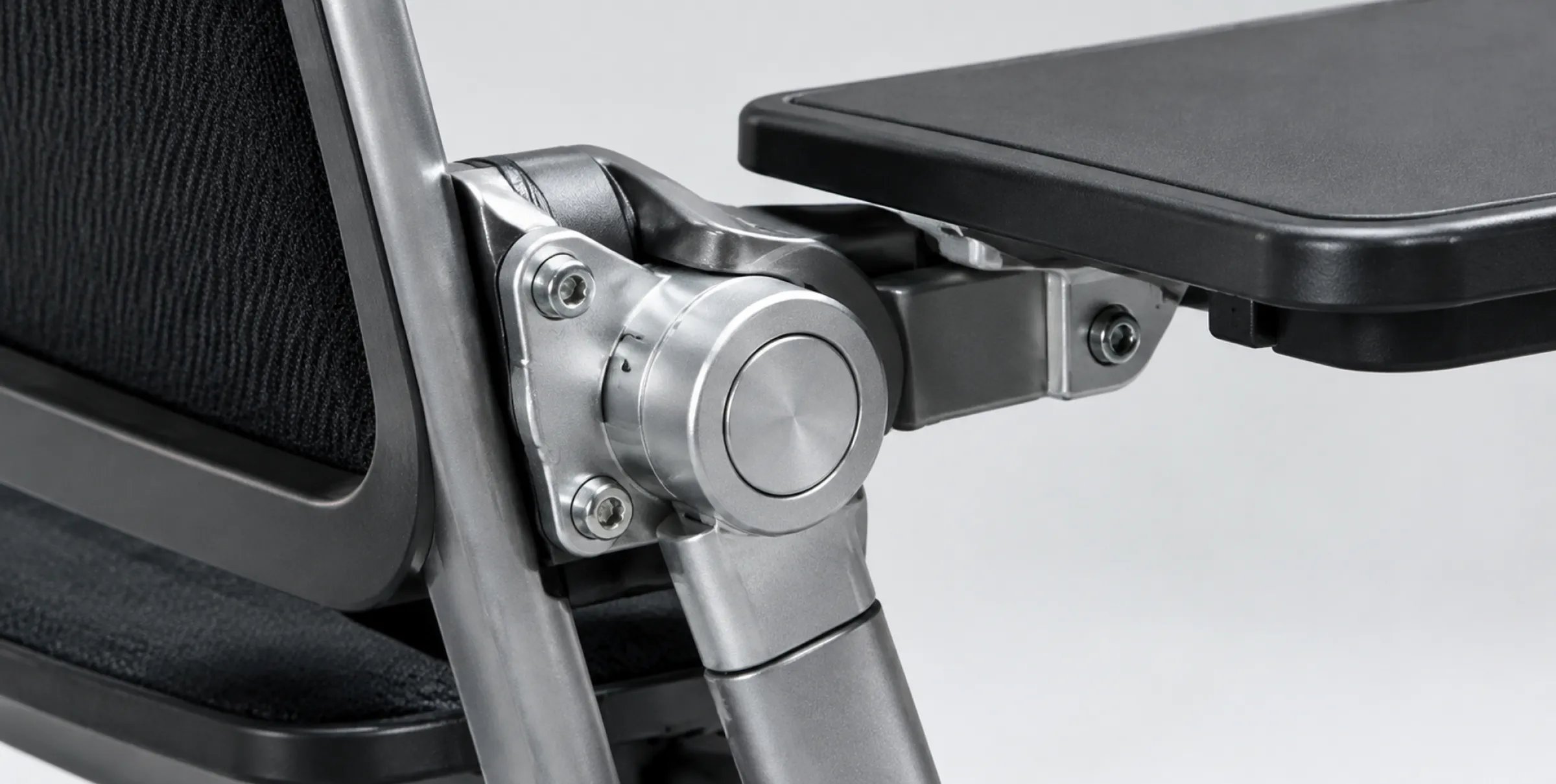
Material Science: Anti-Graffiti and Sanitization
Educational furniture is subjected to ink spills, marker graffiti, and aggressive daily cleaning. When sourcing seating for these environments, the substrate material is just as critical as the frame.
Specifying moulded polypropylene chairs guarantees a non-porous, chemically inert surface. Unlike painted wood or porous ABS plastics, virgin polypropylene (PP) resin completely resists liquid and ink penetration. Graffiti and stains remain superficial and can be rapidly eradicated by facility maintenance teams using industrial solvents without bleaching or weakening the shell. For a deeper understanding of this polymer's resilience, procurement officers can review our engineering brief on why polypropylene is the professional standard for commercial seating.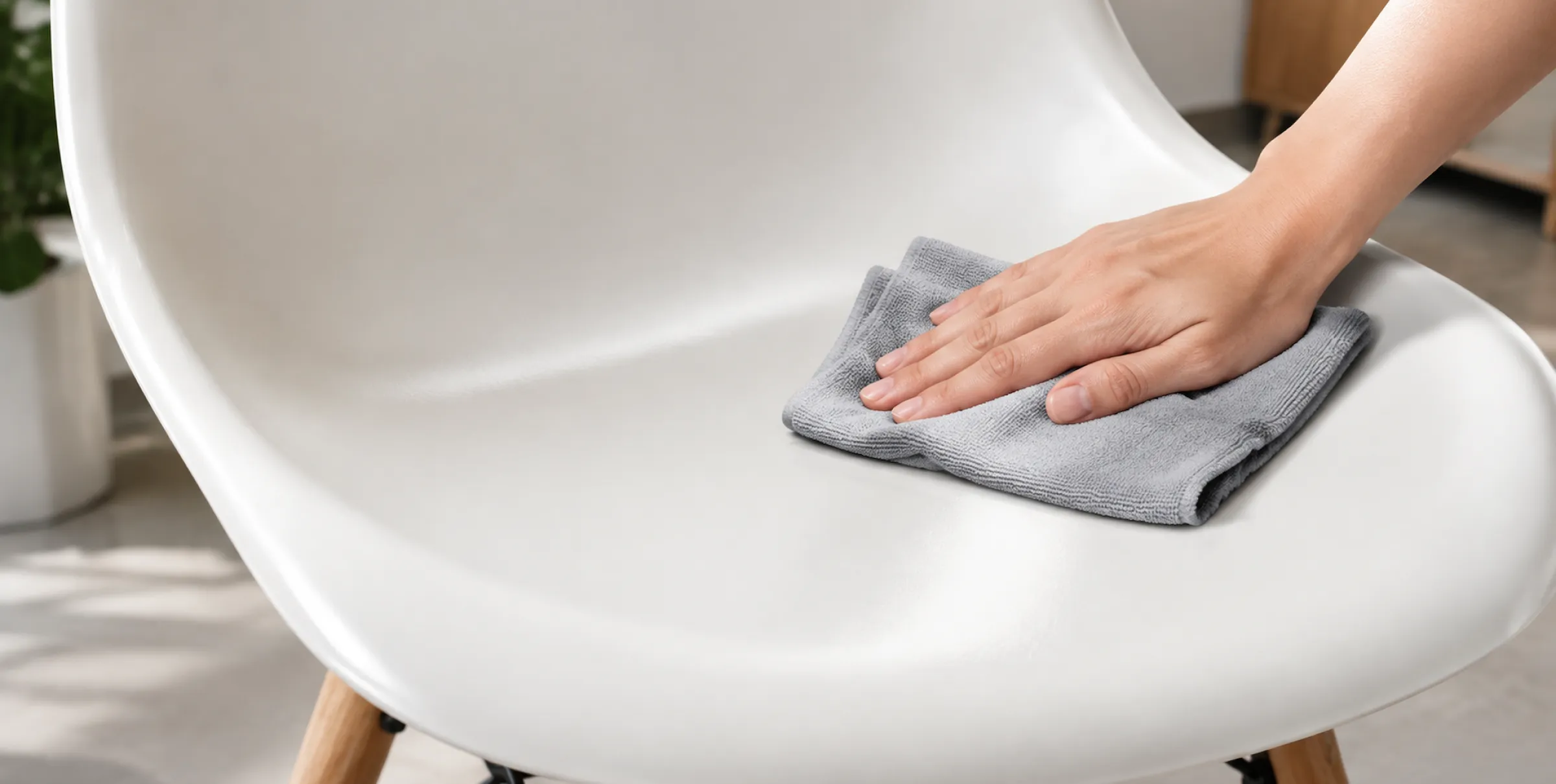
High-Density Layouts and Fire Egress Codes
Packing hundreds of individuals into a lecture hall requires rigorous architectural oversight. Facility planners mapping out office space calculations for high-density environments must prioritize rapid evacuation paths.
The Anti-Panic Folding Mechanism
Fire and life safety codes strictly prohibit any physical obstructions in the egress corridor between seating rows. Consequently, writing tablets must feature a gravity-driven "anti-panic" or auto-return folding mechanism. In the event of an emergency evacuation, the moment a user stands and applies forward pressure, the tablet must instantly and smoothly drop out of the way. This mechanical compliance ensures that the critical kinetic pathway remains unobstructed.
Modular Clearing and Storage
Training facilities often require rapid reconfiguration from a lecture setup to a clear floor space. Procuring polypropylene stackable chairs with fold-away tablets allows facility teams to nest the chairs tightly together and stack them vertically on dollies, minimizing the storage footprint when the room is repurposed.
Strategic OEM Sourcing for Institutional Campuses
Outfitting a university building or a global training center requires massive inventory scale. Relying on retail distributors introduces the risk of mixed batches, inconsistent fire-retardant certifications, and inflated pricing.
Understanding the strict factory quality controls—such as how a plastic chair is made using BIFMA-tested injection molding—is crucial for institutional buyers. By partnering directly with Aston Office for your wholesale office furniture procurement, universities and training centers secure a direct pipeline to the factory floor. This ensures that every chair features exact color-matching, verified aluminum mechanisms, structural warranties, and customized fire-retardant (FR) additives mandated by local institutional building codes.
Frequently Asked Questions
Why is aluminum required for the writing tablet hinge?
The hinge connecting the writing tablet to the chair frame absorbs immense leverage and downward force. Die-cast aluminum alloy prevents the joint from fracturing or fatiguing under heavy weight, unlike plastic hinges which routinely snap in high-attrition educational environments.
What is an anti-panic folding mechanism?
It is a crucial safety feature mandated by fire codes for high-density seating. The mechanism allows the writing tablet to automatically drop or fold away seamlessly when the user stands up, ensuring the row exit (egress path) is never blocked during an emergency evacuation.
How does polypropylene resist graffiti and stains?
Polypropylene is a chemically inert and non-porous thermoplastic. Because it lacks microscopic pores, inks, markers, and spills cannot penetrate the surface. They sit on top of the plastic, allowing custodial staff to wipe them away easily with standard commercial cleaning agents.
Can chairs with writing tablets be stacked for storage?
Yes, provided they are engineered correctly. Commercial training chairs are designed with fold-down tablets and specific frame geometry that allows them to nest and stack vertically, conserving valuable storage space in multi-purpose facility rooms.
