
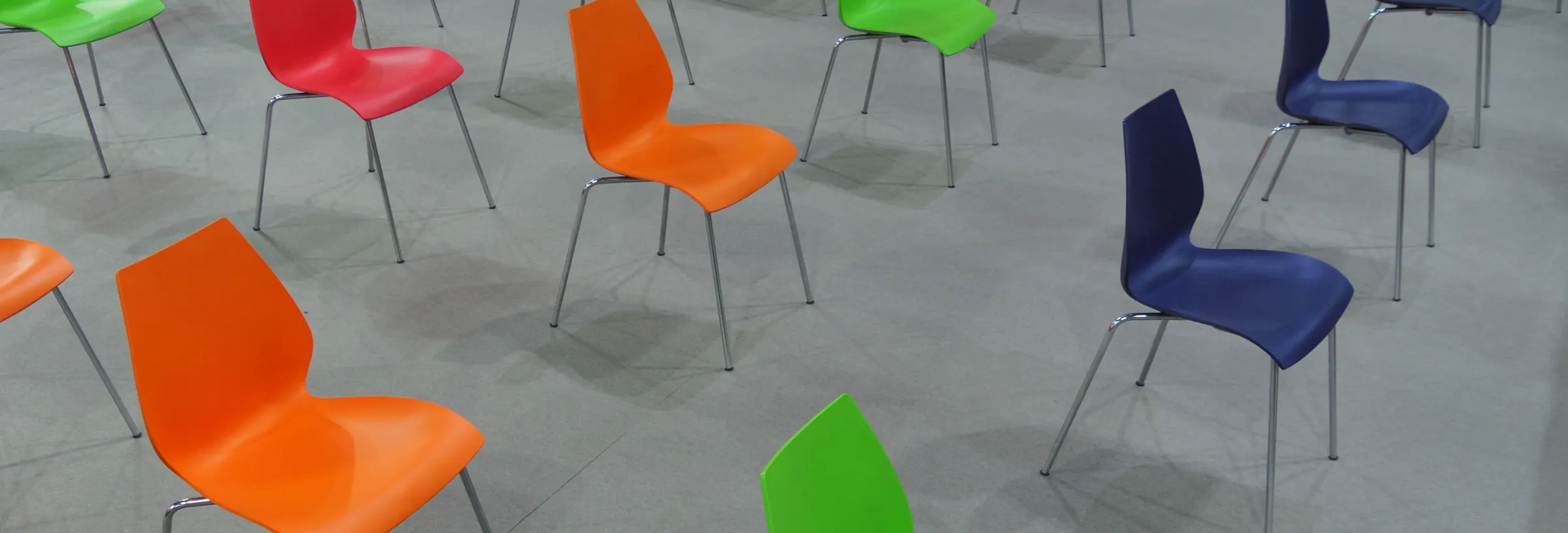
In my decade of experience operating within the cross-border furniture industry, I’ve seen countless projects fail prematurely—not because of poor design, but because of poor material selection. When you are sourcing for large-scale commercial, educational, or hospitality environments, the choice between materials like ABS and Polypropylene (PP) is not just a specification detail; it is a financial decision that impacts your maintenance budget for the next five to ten years.
This analysis provides procurement managers and project designers with the technical clarity required to make informed decisions. We move beyond marketing buzzwords to examine the polymer science that defines the longevity of a high-quality .
Polymer Science: The Structural Difference
To understand why industry experts prioritize Polypropylene, we must distinguish how it reacts under the stresses of a commercial office.
The Problem with ABS (Acrylonitrile Butadiene Styrene)
ABS is often chosen for consumer electronics and low-cost residential items because of its high surface hardness and scratch resistance. However, in an office environment, ABS has two critical flaws:
- Brittleness: ABS is relatively rigid. When subjected to the constant micro-movements of an office chair—shifting weight, reclining, and impact—ABS tends to experience stress cracking over time.
- Environmental Sensitivity: ABS is highly susceptible to degradation when exposed to UV light (common in office spaces with large windows) and reacts poorly to many standard industrial cleaning chemicals.
The Advantage of High-Grade Polypropylene (PP)
Polypropylene is a semi-crystalline thermoplastic, which gives it an inherent, superior “fatigue resistance.”
- Elasticity under Load: Unlike ABS, PP has the ability to undergo significant deformation without failing. High-end commercial chairs use PP because the material naturally absorbs the movement of the user, providing "active" ergonomic support that ABS cannot replicate.
- Chemical Inertness: PP is chemically resistant to a broad spectrum of acids and bases. In a post-pandemic environment where surfaces are sanitized multiple times a day, the ability of PP to maintain its structural integrity after repeated contact with chemicals is a significant asset for facility management.
Technical Benchmarking: The BIFMA Standard
As professionals, we do not guess at durability; we measure it against the BIFMA (Business and Institutional Furniture Manufacturers Association) standards.
| Feature | Polypropylene (PP) | ABS Plastic |
| Fatigue Resistance | Excellent (Flexes under stress) | Low (Prone to cracking) |
| Chemical Resistance | High (Inert) | Moderate to Low |
| UV Stability | High | Low (Yellows/Degrades) |
| BIFMA Certification | Standard for Commercial Grade | Generally Not Suitable |
When sourcing, demand the BIFMA test reports for the specific model. A certified must pass the "Drop Test" and "Backrest Fatigue Test," which simulate thousands of cycles of use. If a manufacturer cannot provide these, you are likely looking at residential-grade plastic that will not survive a commercial lifecycle.
The Professional’s Procurement Guide: Spotting Quality
Beyond technical data sheets, you can perform a physical assessment if you have a sample.
The "Flex Test"
Perform a "Flex Test" on the backrest. A high-quality PP shell should show visible, controlled flex in the upper third of the backrest without producing any white stress marks or audible cracking noises. If you see white stress marks after bending, the material contains excessive fillers or is a low-grade recycled mix, indicating a future point of failure.
The Surface Finish Analysis
Look at the mold injection point (usually hidden under the seat). High-quality injection molding results in a smooth, clean gate finish. If the surface appears "cloudy" or has inconsistent texture, the manufacturer is likely using lower-temperature injection processes, which prevents the polymer chains from fully bonding, leading to a weaker structure.
Scenario-Specific Selection: Choosing the Right PP Chair for Your Space
Not all commercial environments have the same requirements. Using the wrong chair model in a high-intensity zone will lead to maintenance costs that far outweigh the initial savings.
Collaborative Workspaces & Agile Offices
In dynamic offices where configurations change daily, your priority is Stackability and Weight.
- Recommendation: Look for Polypropylene chairs with integrated stacking bumpers. These bumpers prevent the shells from scratching each other during the stacking process, ensuring that even after 100+ reconfigurations, the chairs remain visually pristine.
Educational & Training Facilities
These environments involve high-frequency sitting and rising, often leading to structural fatigue at the base-to-shell connection.
- Recommendation: Opt for models with a reinforced "box-seat" connection. In these settings, we recommend testing the chairs for lateral stability—if the chair wobbles when a user leans to the side, it will not withstand the long-term rigors of daily training sessions.
Cafeterias & High-Traffic Common Areas
The primary concern here is Sanitation and Fluid Resistance.
- Recommendation: Ensure your Polypropylene outdoor chairs have an antimicrobial additive integrated into the resin. Unlike a topical spray that wears off, an integrated additive remains active for the lifespan of the chair, providing an essential layer of hygiene for public-use furniture.
FAQ: Professional Insights
- Is "Polypropylene" just a fancy name for plastic?No. While all PP is plastic, not all plastic is PP. The distinction is in the molecular chain; PP is engineered to withstand mechanical stress, whereas common low-cost plastics (often found in residential items) are designed for low-cost, high-speed production.
- Can these chairs be used in high-traffic outdoor areas?Yes, provided they are made of UV-stabilized PP. Polypropylene outdoor chairs are widely preferred in commercial settings because they handle thermal expansion and contraction without snapping, unlike rigid plastics.
- Why is the price range for PP chairs so wide?The variation comes from the resin purity. Virgin PP resin is significantly more expensive than recycled or "reground" plastic. We always recommend Virgin PP for professional commercial environments to ensure consistent performance.
Strategic Call to Action
Commercial seating is a long-term commitment. Whether you are outfitting a collaborative meeting zone or a high-traffic cafeteria, prioritize material longevity over initial acquisition cost.
Review our full range of durable seating solutions and request technical specifications for your next project.
