
For administrative managers and startup founders outfitting their first corporate spaces, navigating a tight capital expenditure budget is a primary directive. In an attempt to reduce initial overhead, many procurement teams fall into a dangerous financial trap: purchasing retail, business-to-consumer (B2C) furniture for a commercial environment. This is a profound false economy.
At Aston Office, our OEM engineering teams routinely assist enterprises in replacing failed retail furniture just months after deployment. Retail furniture is engineered for occasional residential use (2 to 3 hours a day). When subjected to the kinetic demands of an 8-hour workday—or worse, a 24/7 multi-shift environment—B2C furniture undergoes rapid structural degradation. This technical guide performs a dimensional strike on retail seating, outlining the engineering failures and warranty blind spots that plague substandard procurement.
The Engineering Divide: Class 3 vs. Class 4 Pneumatics
The most frequent and dangerous failure point in retail office seating is the pneumatic gas cylinder. When a user queries what to look for when buying an office chair, the class rating of the lift mechanism is often the most critical, yet overlooked, specification.
B2C retail chairs almost exclusively utilize Class 2 or Class 3 gas lift cylinders to cut manufacturing costs. These components have thinner steel walls and are rated for a maximum load of 200 to 250 lbs under light duty. In a commercial setting, the repetitive kinetic impact of users sitting down creates intense hydraulic pressure. A Class 3 cylinder will rapidly blow its pneumatic seal, resulting in a "sinking" chair.
By contrast, true commercial procurement requires specifying heavy duty office chairs equipped with Class 4 nitrogen-filled gas cylinders. These commercial-grade mechanisms feature thickened casing walls (often exceeding 2.5mm) and are independently tested to withstand repeated vertical impact loads, safely supporting 350 to 400 lbs without failure.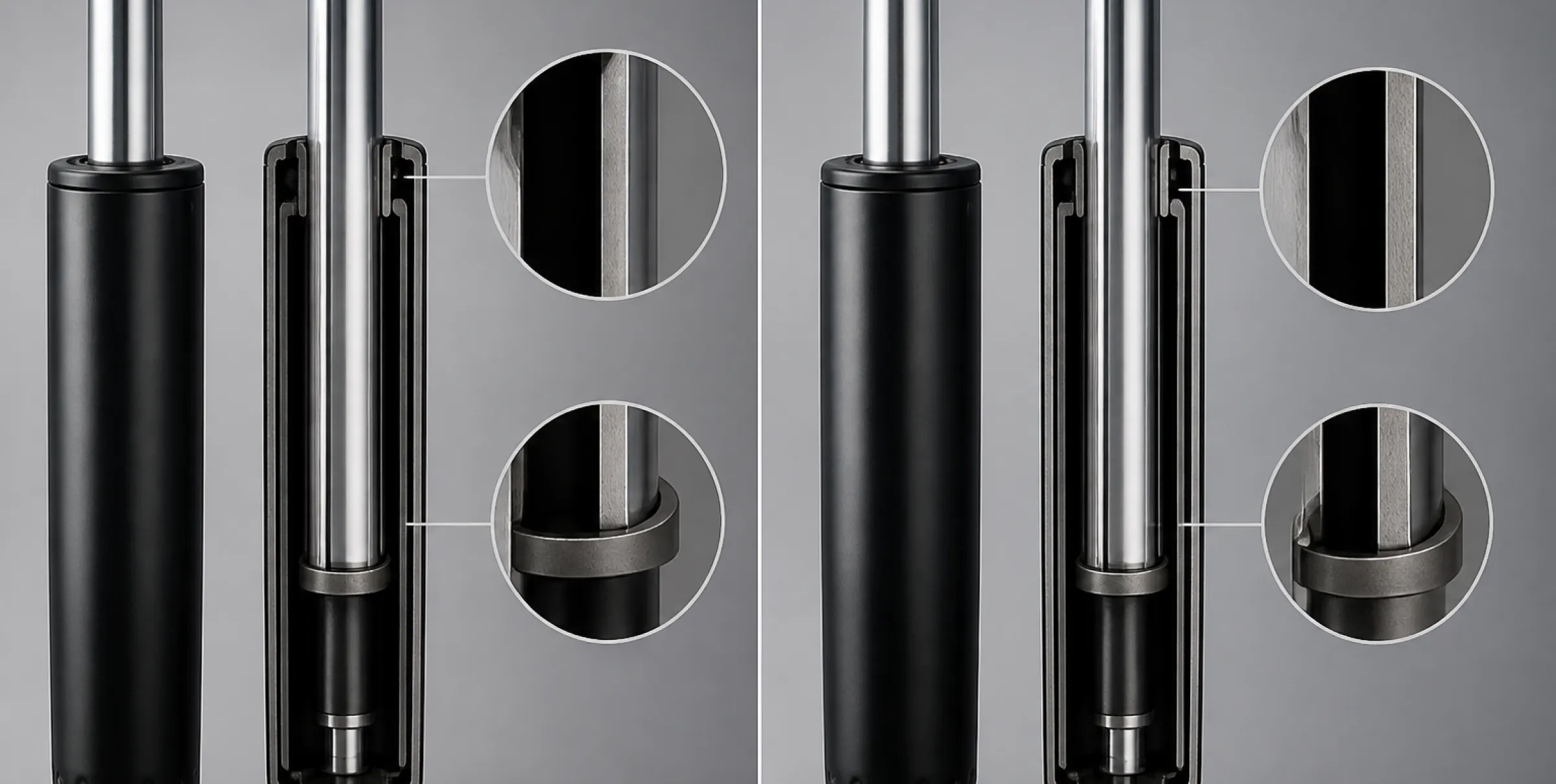
Foam Density (kg/m³): The Mechanics of Structural Collapse
The immediate "plushness" of a retail chair on a showroom floor is a deceptive metric. B2C manufacturers typically use low-density polyurethane foam (under 25kg/m³). While this feels initially comfortable, low-density foam lacks structural resilience. After just three to four months of 8-hour daily compression, the air pockets within the foam burst and collapse. The cushion bottoms out, forcing the user's tailbone to rest directly against the rigid plastic or plywood chassis beneath.
Commercial B2B seating mitigates this through high-density molded foam (typically 35kg/m³ to 50kg/m³ or higher) or high-tension elastomeric mesh. When facility admins calculate how often should office chairs be replaced, the density of the seat pan is the primary determining factor. High-density foam retains its shape and supportive rebound memory for years, preventing the localized pressure points that lead to severe musculoskeletal disorders in employees.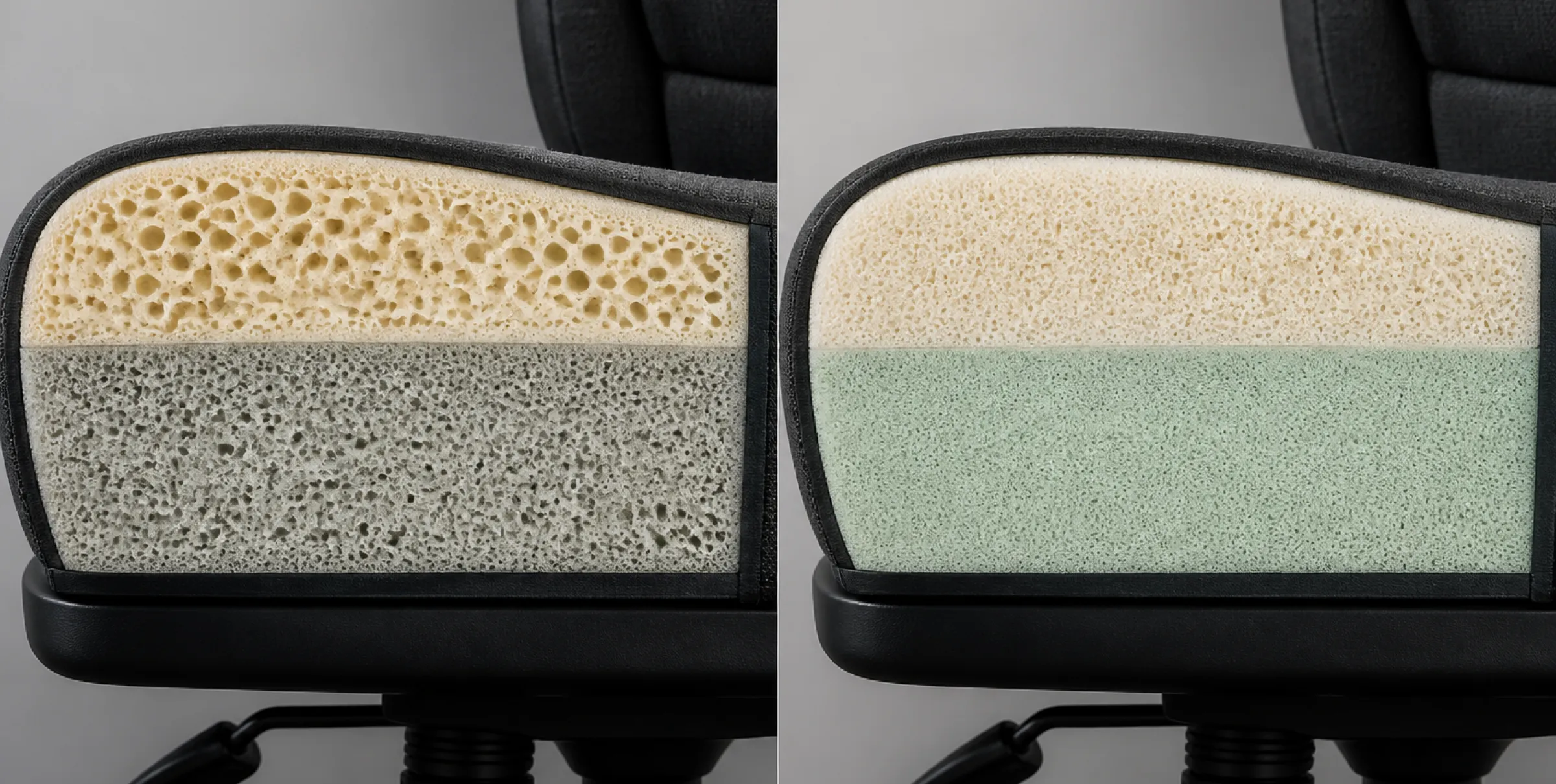
The Executive Suite: Aesthetics vs. Endurance
Startups frequently attempt to replicate the look of a premium executive suite by purchasing inexpensive "bonded" or faux leather chairs from retail outlets. Bonded leather is essentially polyurethane sprayed over paper or fabric backing. Under daily commercial friction and body heat, this material will inevitably peel, crack, and flake within the first year, destroying the professional aesthetic of the office.
For executive zones, procurement must pivot to genuine commercial durability. Sourcing a genuine leather executive chair from an OEM manufacturer ensures top-grain hides that breathe naturally and develop a protective patina over time. To understand the thermal and structural differences between upholstery tiers, procurement teams should review a technical mesh vs leather office chair comparison before allocating budget.
The Multi-Shift Blind Spot: Instant Warranty Voidance
The most catastrophic risk of retail procurement is legal and financial. Startup admins often assume their B2C furniture is protected by a 1-year or 3-year retail warranty. This is a severe blind spot.
Read the fine print: virtually all retail warranties contain explicit clauses that instantly void the guarantee if the product is deployed in a commercial, non-residential setting. Furthermore, if a facility operates a multi-shift (24/7) environment—such as a customer support call center or a dispatch room—even standard commercial warranties are voided.
For high-turnover desks, admins must consult a heavy duty office chair guide to source specialized "24/7 rated" seating. These assets are explicitly engineered and legally warrantied by the manufacturer for continuous, multi-shift utilization.
Strategic Corporate Sourcing: The OEM Advantage
To eliminate the replacement cycle of failed retail furniture, startups and corporate admins must transition from a consumer mindset to an enterprise supply chain strategy.
By partnering with Aston Office for your wholesale office furniture requirements, you bypass the false economy of retail. We provide factory-direct access to seating and desking systems engineered with Class 4 pneumatics, commercial-grade foam, and heavy-duty mechanisms. This OEM partnership guarantees actual BIFMA-compliant performance, protecting both your employees' biomechanical health and your company's capital expenditure.
Frequently Asked Questions
Why does an office chair "sink" after a few months of use?
Sinking is caused by the failure of the internal pneumatic seal inside the gas lift cylinder. Retail chairs use inferior Class 2 or Class 3 cylinders that cannot withstand the continuous hydraulic pressure of an 8-hour commercial workday, leading to rapid seal blowouts.
What foam density is required for a commercial office chair?
For a standard 8-hour workday, the seat cushion foam density should be an absolute minimum of 35kg/m³, with 45kg/m³ to 50kg/m³ highly recommended for task seating. Anything lower will flatten permanently under prolonged body weight.
Can I use consumer furniture in my startup's commercial office?
While physically possible, it is highly inadvisable. Using residential furniture in a commercial space voids the manufacturer's warranty immediately. It also exposes the company to liability, as B2C furniture is not tested to BIFMA safety standards for commercial environments.
What makes a chair "24/7 multi-shift" rated?
A 24/7 rated chair is engineered with reinforced steel base plates, Class 4 gas cylinders, and ultra-high abrasion resistant upholstery. Crucially, the manufacturer's warranty explicitly covers continuous, round-the-clock usage by multiple different operators without voiding the terms.
