
Standard commercial office furniture is strictly engineered to accommodate the 5th to 95th percentile of the human population. While this statistical standardization streamlines mass procurement for corporate facility managers, it inherently marginalizes users who exceed 6 feet 2 inches in height or require larger weight capacities. When a tall individual is forced to operate within a standard-scale workstation, the resulting biomechanical misalignment almost inevitably leads to chronic musculoskeletal disorders. These disorders primarily manifest as severe lower lumbar compression, thoracic kyphosis, and cervical neck strain.
The solution is not merely finding a chair that "feels bigger." Mitigating spinal degradation requires a precise, mathematical approach to seating mechanics. Facility managers, procurement officers, and the users themselves must understand the fundamental physical forces acting upon a taller skeletal frame. This technical guide outlines the biomechanical hazards tall individuals face in standard seating and provides the exact architectural specifications required to procure safe, symptom-reducing ergonomic seating.
The Biomechanics of Back Pain in Tall Individuals
Why does height inherently cause back pain when using standard corporate chairs? The issue stems from skeletal leverage, surface area distribution, and localized tissue pressure.
Femur Length and Seat Depth Mismatch
Tall individuals possess proportionally longer femurs (thigh bones). A standard commercial office chair features a seat pan depth of approximately 18 to 19 inches. When a tall user sits on this standard surface, their thighs extend far beyond the front edge of the cushion. Because the distal end of the leg is unsupported, the mechanical load of the lower body cannot be distributed evenly across the thigh tissue. Instead, the entire weight of the torso is forced backward and concentrated directly onto the ischial tuberosities (the sit bones) and the lowest discs of the lumbar spine (L4 and L5). Over an eight-hour corporate shift, this highly concentrated pressure compresses the spinal discs, leading to localized inflammation, sciatica, and chronic lower back pain.
The "Lever Arm" Effect on the Lumbar Spine
In physics, a longer lever amplifies torque. A tall person has a significantly longer torso than an average-height individual. When a tall person leans backward in an office chair, their elongated upper body acts as a massive lever arm against the pivot point of their lower back. If the chair's tilt-tension mechanism is weak or standard-rated, it cannot adequately resist this amplified torque. The user is forced to engage their core and lower back muscles continuously just to maintain stability, leading to rapid muscle fatigue and lumbar spasms by the end of the workday.
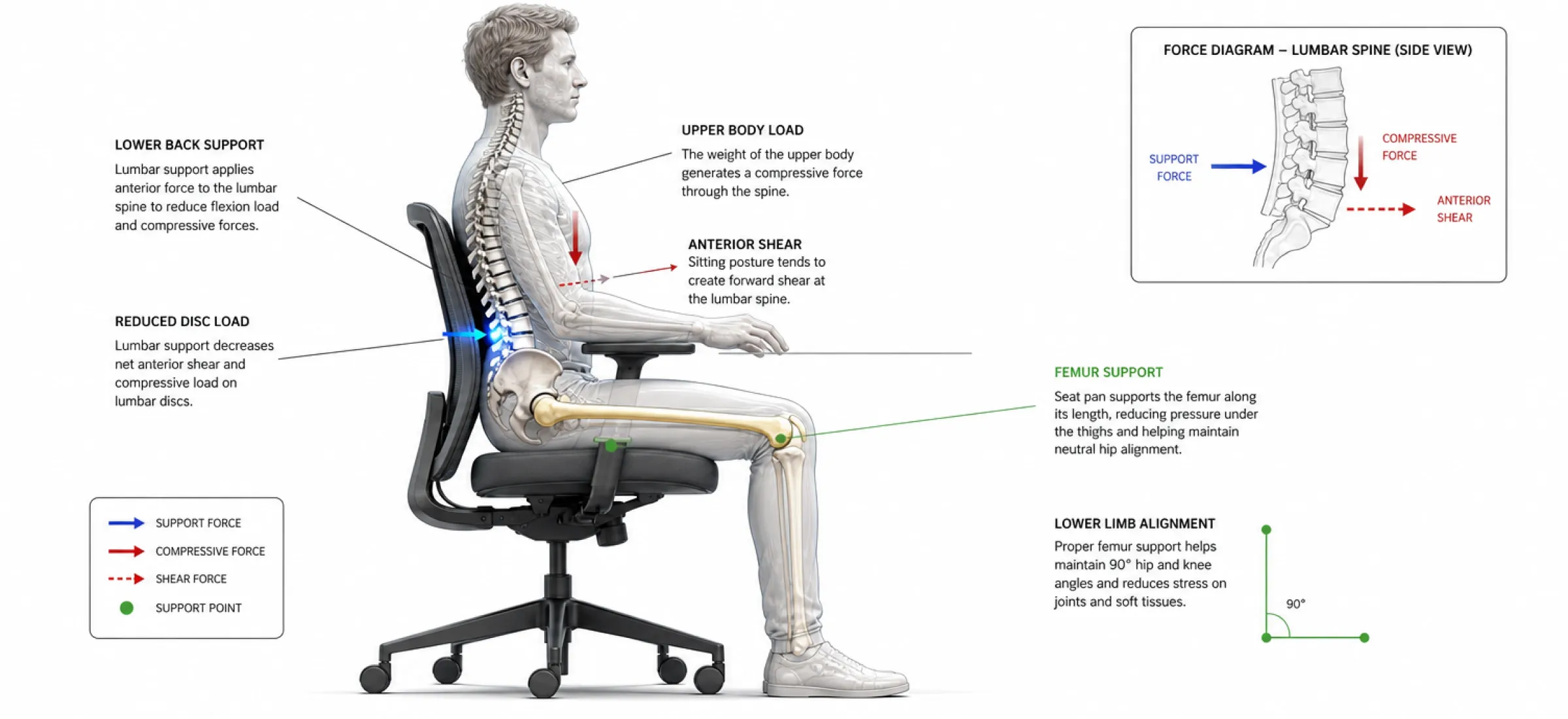
Critical Specifications: Seat Pan Depth and Gas Cylinder Elevation
To eliminate these biomechanical hazards, facility planners must evaluate very specific mechanical tolerances when sourcing the best office chairs for tall people.
Adjustable Seat Sliders: The 3-Finger Rule
A static, non-adjustable seat pan is categorically unacceptable for a tall user. A commercial-grade chair designed for height must feature an integrated seat slider mechanism, allowing the seat pan to extend forward by a minimum of 2.5 to 3 inches independently of the backrest. The ergonomic gold standard dictates that there should be exactly two to three fingers of space between the popliteal fold (the back of the knee) and the front edge of the seat pan. This exact tolerance ensures maximum femoral support and weight distribution without impinging upon the major blood vessels and nerves running behind the knee, preventing deep vein thrombosis (DVT) and lower leg numbness.
Extended Pneumatic Cylinders and Pelvic Tilt
Standard Class 3 pneumatic gas cylinders offer a maximum seat height of roughly 19.5 to 20 inches from the floor. For a user over 6'2", this is insufficient. If a chair bottoms out too low, the tall user's knees will sit higher than their hips, creating an acute hip angle of less than 90 degrees. This posture physically forces the pelvis to rotate backward (posterior pelvic tilt), which completely flattens the natural lordotic curve of the lumbar spine. A flattened lumbar spine removes the body's natural shock absorption, immediately causing pain. To prevent this, tall users require an extended Class 4 cylinder capable of achieving a seat elevation of 21 to 23 inches. This allows the feet to rest flat on the floor while maintaining an open hip angle of 95 to 105 degrees, naturally rotating the pelvis forward and preserving the lumbar curve.
Vertical Lumbar Tracking and Backrest Height
The placement of the lumbar support pad is arguably the most critical variable in mitigating structural back pain.
The Misaligned Lumbar Hazard
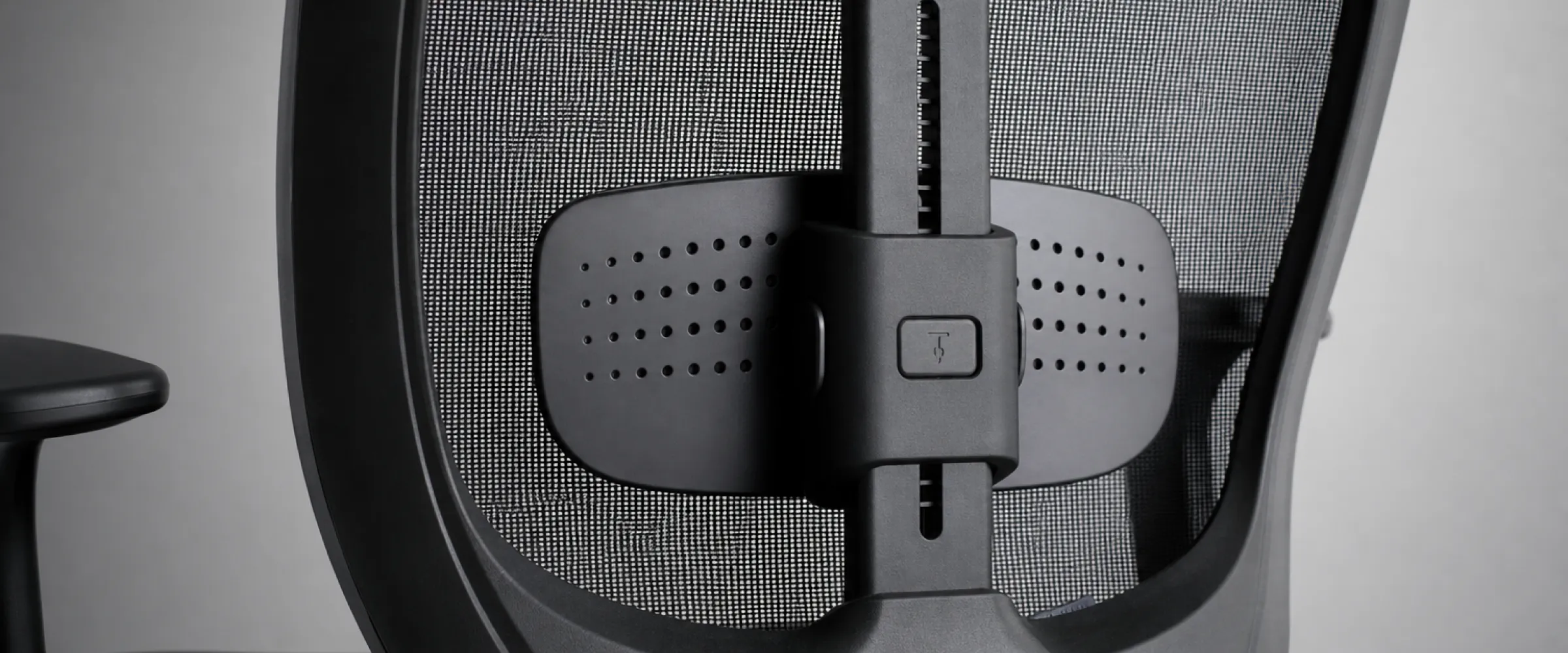
In a standard, non-adjustable chair, the apex of the lumbar curve is permanently molded to hit an average user in the lower back. For a tall person, this fixed lumbar protrusion hits them far too low—often in the upper pelvis or sacrum. Instead of supporting the spine, the hard plastic pad pushes the user's buttocks forward, forcing them to slide down the seat and collapse into a destructive C-curve posture. For an extensive medical breakdown of how this curvature degrades the spine, consult our comprehensive guide on ergonomic office chairs for back pain.
Height-Adjustable Backrests and Independent Tracking
To safely accommodate an elongated torso, an ergonomic mesh office chair must feature an independently height-adjustable backrest. If the backrest is fixed, the chair must possess a dynamic lumbar support system with a minimum of 4 inches of vertical travel. This mechanical adjustability allows the user to slide the apex of the lumbar pad upward until it aligns perfectly with the natural inward curve of their L1 to L5 vertebrae, providing targeted support exactly where the skeletal frame requires it.
Cervical Support: The Headrest Dilemma
Upper back, shoulder, and cervical (neck) pain frequently plague tall corporate workers due to inadequate backrest height. A standard backrest usually terminates just below the shoulder blades of a tall user. When leaning back to review a monitor or rest, the upper torso lacks structural support, causing the shoulders to roll forward and placing extreme tension on the trapezius muscles and cervical spine.
If an organization opts to provide headrests, they must be highly sophisticated. A fixed, static headrest on a standard chair will press painfully into the shoulder blades or the base of the neck of a tall user, physically pushing their torso forward and out of ergonomic alignment. Specifying a mesh office chair with headrest that features dual-pivot articulation (both height and angle adjustments) is mandatory. This mechanical freedom allows the tall user to elevate the headrest out of the shoulder zone entirely and angle it precisely to cradle the occipital bone at the base of the skull during reclined rest.
Weight Capacity and Structural Integrity for Big and Tall Users
In human biometrics, height is frequently correlated with increased body mass. When evaluating search data and procurement trends, queries for tall seating consistently parallel the demand for heavy-duty support. A tall, heavy user applies significantly more leverage, shear force, and torsion to a chair's structural frame than a shorter user of the exact same weight, simply due to the higher center of gravity.
Reinforced Mechanics and Wheelbase Diameters
A standard BIFMA-rated office chair is tested to support 250 lbs. This is critically insufficient for the "big and tall" demographic. Facility managers outfitting these individuals must specify heavy duty office chairs engineered to support a minimum of 350 to 400 lbs. This necessitates a reinforced synchro-tilt mechanism milled from hardened steel plates rather than brittle die-cast aluminum. Furthermore, to prevent backward tipping when a heavy, tall user reclines to 135 degrees, the chair must possess an enlarged five-star base (with a minimum diameter of 700mm) to widen the footprint and maintain a safe center of gravity.
High-Tension Elastomeric Suspension
The upholstery material itself must be calibrated for higher dynamic loads. Standard mesh will stretch and "bottom out" under a heavier user, allowing their tailbone to strike the hard plastic chassis beneath the seat pan. A true big and tall mesh office chair utilizes a high-tension, multi-layered elastomeric matrix. This commercial-grade woven matrix retains its tensile memory, suspending the user effectively and preventing localized pressure points even after years of continuous multi-shift utilization.
Strategic B2B Procurement and Corporate Auditing
When a corporate enterprise engages in office chair wholesale procurement for a new facility, purchasing departments often default to a "one-size-fits-all" model to streamline inventory and maintenance. This is a profound ergonomic and financial error. An internal audit of standard workforce demographics will routinely reveal that roughly 10% to 15% of the staff fall outside the 95th percentile in either height or weight.
Failing to provide these individuals with properly scaled architectural seating directly results in increased absenteeism, costly workers' compensation claims related to musculoskeletal injuries, and severe degradation in daily productivity. Corporate procurement protocols must proactively isolate and allocate specialized budgets for big and tall seating to ensure a universally supported, healthy workforce.
Call to Action: For facility managers and corporate procurement officers seeking to standardize ergonomic excellence across their organization, partnering with an experienced manufacturer is critical. Contact the commercial seating specialists at Aston Office today to audit your current floor plan, analyze your workforce demographics, and request technical specifications for our complete range of specialized, heavy-duty ergonomic solutions.
Frequently Asked Questions
Why do standard office chairs cause back pain for tall people?
Standard chairs possess a seat pan that is too short, leaving a tall person's thighs unsupported and concentrating all body weight onto the lower spine. Additionally, the fixed lumbar support hits them too low (in the sacrum rather than the curve of the back), forcing a slouched posture that compresses spinal discs.
What is the most important feature in an office chair for a tall person?
An adjustable seat slider is the most critical feature. It allows the user to extend the depth of the seat pan forward, ensuring the entire length of their longer femurs (thighs) is supported, which prevents the lower back from absorbing the entirety of the body's mechanical load.
How high should an office chair be for someone over 6'2"?
For a user exceeding 6'2", the seat height must typically be able to reach between 21 and 23 inches from the floor. This requires a Class 4 extended pneumatic gas cylinder to ensure the user's knees remain at or slightly below hip level, maintaining a healthy, forward pelvic tilt.
What is the difference between standard chairs and big and tall office chairs?
Big and tall chairs feature a wider seat pan, a deeper (and adjustable) seat depth, a taller backrest, and heavily reinforced steel mechanisms. While standard chairs support up to 250 lbs, a big and tall chair utilizes a wider 700mm wheelbase and supports 350 to 400+ lbs safely.
Can a tall person use an office chair without a headrest?
Yes, provided the backrest is tall enough to support the upper shoulders. However, if a tall person prefers to recline while working or resting, an articulating headrest (adjustable in height and angle) is highly recommended to prevent cervical strain and keep the neck muscles relaxed.
Are mesh or padded chairs better for heavy and tall people?
Both can be highly effective if engineered correctly. High-tension elastomeric mesh is excellent for heavy users because it offers superior thermal regulation (cooling) and dynamic suspension. However, the mesh must be commercial-grade to prevent sagging and "bottoming out" against the hard frame underneath.
