
In corporate facility management and architectural planning, furniture specification is a strict exercise in hierarchy, spatial geometry, and operational function. A frequent point of confusion during corporate procurement involves differentiating between high-tier administrative workstations. Facility managers, purchasing officers, and interior architects must draw a precise technical line between a standard executive desk and a top-tier director table.
While layman terminology often uses these descriptors interchangeably, commercial manufacturing standards separate them into distinct categories. The distinction dictates the spatial footprint of the office, the material science applied to the finishes, the integrated wire management systems, and the psychological signaling to visiting stakeholders. This guide delineates the functional, dimensional, and material differences required to accurately specify these primary corporate assets.
Functional Intent and Operational Workflows
The core difference between these two assets stems from the daily operational workflow of the user. Furniture engineering follows corporate function.
The Executive Workflow: Task and Storage Density
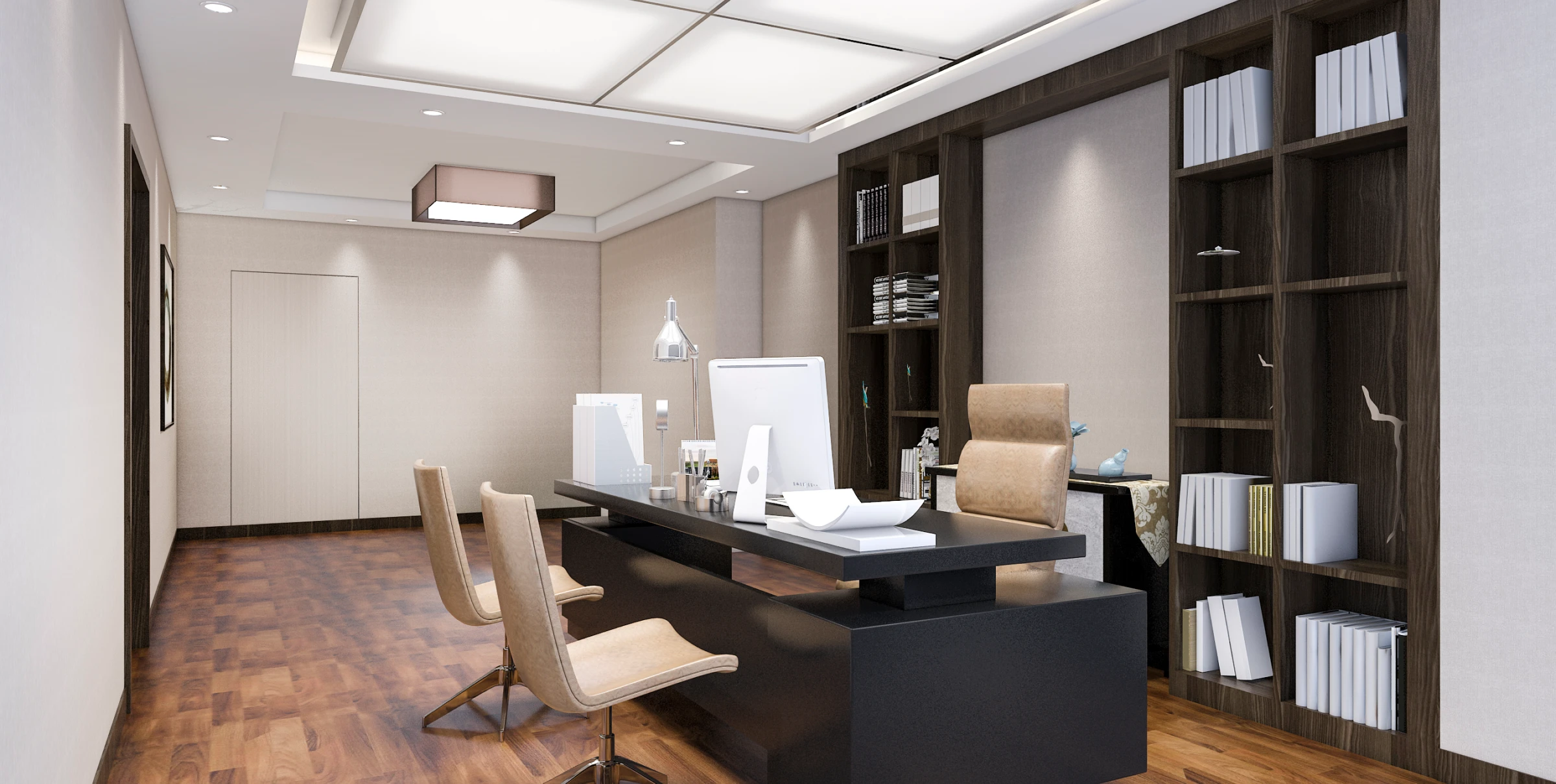
An executive office desk is fundamentally a high-level task station. Executives, department heads, and senior managers process dense operational data, review physical files, and manage daily departmental logistics. Consequently, the executive desk prioritizes accessible storage and expansive primary work zones. These desks are typically configured as L-shapes or U-shapes with integrated pedestals, lateral file drawers, and overhead storage hutches. The architectural intent is to keep the executive centered in a highly efficient cockpit of information, with all necessary hardware and documentation within an arm's reach.
The Director Workflow: Collaboration and Strategic Hosting
Conversely, a C-suite executive or corporate director operates on a different axis. Their primary function shifts from daily administrative processing to strategic planning, board-level communication, and high-stakes stakeholder hosting. A director table reflects this by functioning less as a workstation and more as an authoritative meeting hub. The term "table" rather than "desk" is intentional. Director tables prioritize completely unencumbered legroom across all sides, allowing the user to host informal meetings, review large-format architectural blueprints, or sit face-to-face with investors directly across the primary surface without structural barriers like integrated drawer pedestals blocking the guests' knees.
Spatial Geometry and Dimensional Tolerances
Specifying furniture for a private office requires strict adherence to clearance tolerances. The scale of the furniture directly dictates the minimum required square footage of the private cabin.
Standard Executive Dimensions
The commercial standard for an executive desk footprint is typically 72 inches wide by 36 inches deep for the primary surface. When specifying for a mid-level management suite, facility planners refer to a how to choose an executive office desk framework, which allocates a minimum clearance of 42 inches behind the desk for chair maneuverability and 36 inches for the guest approach. These dimensions fit comfortably within a standard 10x12 foot commercial office grid.
Director Table Scale and Egress
A director table commands a significantly larger spatial envelope. Widths frequently scale to 84, 96, or even 108 inches, effectively classifying the unit as a huge office desk. Many director tables feature a "bullet" or "D-shape" peninsula on one end, explicitly designed to act as a localized conference table for 3 to 5 people. Because guests pull chairs directly up to the table, the clearance tolerances change drastically. Planners must allocate a minimum of 48 inches of clearance on all host and guest sides to ensure ADA compliance and allow for fluid ingress and egress during collaborative sessions. A director table cannot be specified for an office smaller than 15x20 feet without violating spatial flow principles.
Material Science, Visual Weight, and Aesthetic Signaling
Corporate hierarchy is communicated visually through the specification of materials and the thickness of the horizontal planes.
Commercial Laminates vs. Premium Veneers
A modern executive desk heavily utilizes High-Pressure Laminate (HPL) or Thermally Fused Laminate (TFL). These synthetic materials offer extreme durability, scratch resistance, and cost-effective scalability for outfitting entire management floors. The visual weight is often lighter, incorporating metal O-legs or A-frame structures to reflect a fast-paced, contemporary corporate culture.
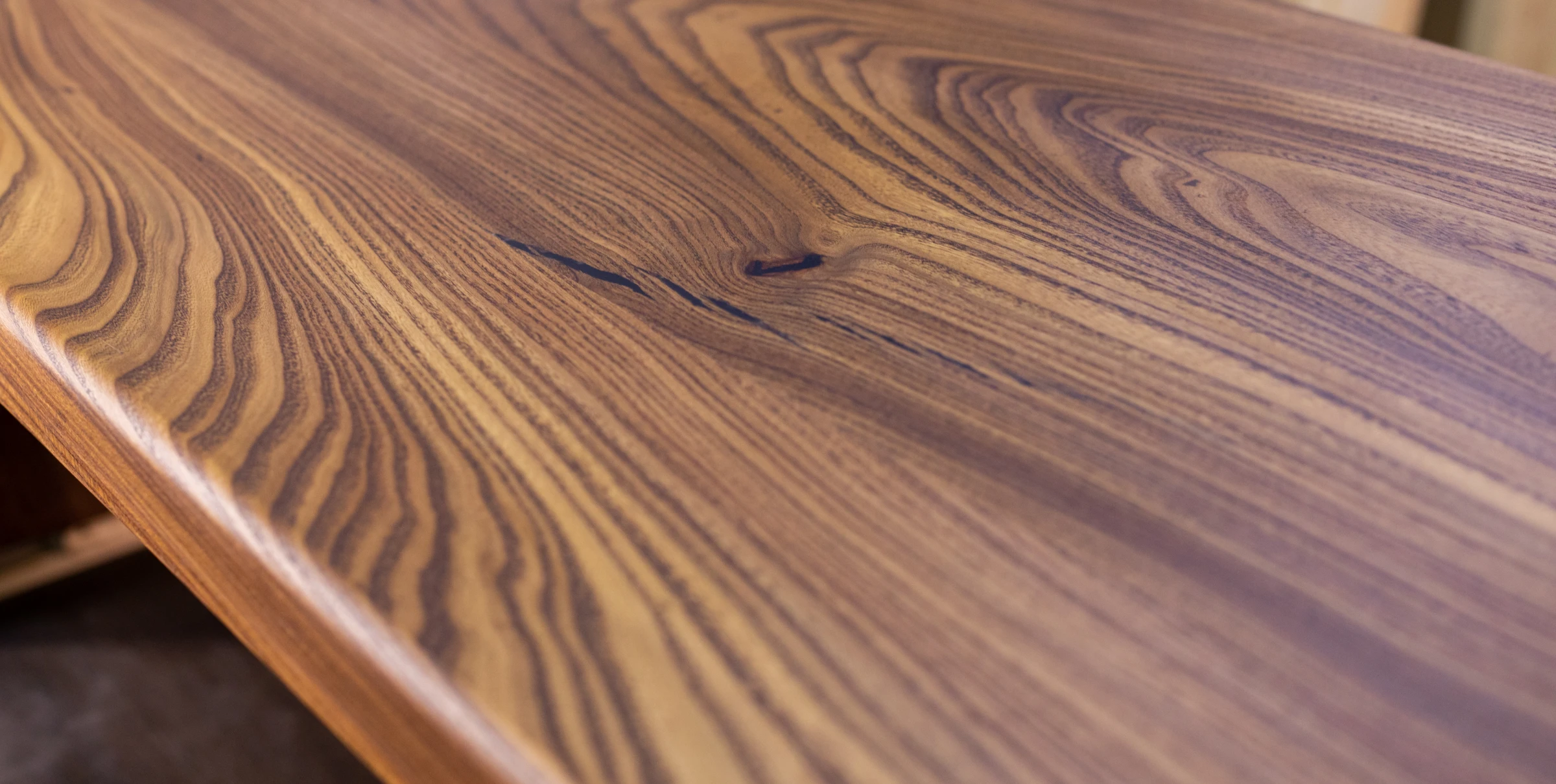
Director tables operate on a premium material tier. They are defined by the use of architectural-grade wood veneers or solid timber construction. A true wooden office desk specified for a director will feature book-matched grain patterns, where the natural wood grain aligns perfectly across the expansive surface. The worktops are heavily thickened, often reaching 2 to 3 inches in depth, presenting massive visual weight. Additionally, director tables frequently incorporate mixed-material inlays, such as natural stone, tempered glass transaction surfaces, or integrated leather writing pads, signaling permanence and institutional stability.
The Modesty Panel Distinction
The modesty panel (the vertical board shielding the user's legs) is treated differently across both tiers. Executive desks typically utilize full-height, structural modesty panels made of matching laminate, which act as the main load-bearing spine of the desk. On a director table, the modesty panel is often recessed deeper or suspended, utilizing contrasting materials like frosted acrylic, perforated steel, or stitched leather. This suspended design reduces the monolithic blockiness of the massive table, giving it a cantilevered, architectural aesthetic while still providing visual privacy.
Technology Integration and Storage Decoupling
How a workstation manages power, data cables, and physical storage defines its classification.
Decoupled Storage Architecture
Because a director table must maintain open legroom for guest hosting, storage is completely decoupled from the primary work surface. Instead of attached drawer pedestals, a director suite utilizes a secondary freestanding credenza positioned against the wall behind the user. This creates an "executive bridge" setup. The table remains pristine and sculptural, while the messy reality of physical storage and active filing is hidden behind the user's primary line of sight.
Concealed vs. Accessible Cable Management
An executive desk requires high-density data ports and accessible power grommets for multiple monitors, charging stations, and peripherals. The cable management is functional and visible. A director table requires absolute technological invisibility. Power and data modules are typically hidden beneath motorized or flush-mounted veneer flippers that match the exact grain of the table. When a board member sits across the table, no trailing wires or plastic grommets break the visual plane of the wood surface.
The Suite Ecosystem: Ancillary Furniture Specification
Specifying a director table is never an isolated procurement event; it dictates the specification of the entire room's ecosystem.
The seating paired with a director table must match its scale. A standard mesh task chair looks disproportionately small behind a massive 96-inch wood surface. Therefore, it mandates the specification of a high-back, genuine leather executive chair with polished aluminum or wood-capped armrests to anchor the visual weight of the host.
Furthermore, because the director table serves as the formal interaction zone, the secondary zone of the office must accommodate informal discussions. Facility managers must specify a dedicated lounge area within the same room. Deploying a high-end sofa for office cabin environments, paired with low-profile club chairs and a glass coffee table, completes the transition from a standard private office into a comprehensive director-level executive suite. This dual-zone layout allows the director to shift the psychological dynamic of a meeting from the authoritative desk to the collaborative sofa.
Frequently Asked Questions
What is the defining structural difference between a director table and an executive desk?
The defining structural difference is legroom and storage integration. An executive desk features integrated, structural storage (drawers and pedestals) directly beneath the work surface. A director table decouples storage, utilizing a separate rear credenza to leave the underside of the table completely open for hosting guests comfortably.
Are the dimensions of a director table larger than a standard executive desk?
Yes. Standard executive desks range from 60 to 72 inches in width. Director tables typically start at 72 inches and frequently expand to 84, 96, or 108 inches in width to accommodate architectural presence and localized conference meetings.
Can I put a director table in a standard 10x10 foot office?
No. A 10x10 foot office cannot accommodate the minimum clearance tolerances required for a director table. These tables require at least 42 to 48 inches of clearance on all sides for chair movement and guest seating. Placing one in a small room violates egress codes and creates a claustrophobic environment. A minimum of 15x20 feet is recommended.
What materials are exclusively used on high-end director tables?
While executive desks often use High-Pressure Laminate (HPL), director tables utilize premium architectural materials. This includes book-matched natural wood veneers, solid hardwood edge banding, Italian leather writing inlays, and natural stone or quartz accents.
How does cable management differ on a director table?
Cable management on a director table is designed to be invisible. Instead of exposed plastic grommets, power and data modules are concealed beneath flush-mounted, motorized, or soft-close panels covered in the matching wood veneer. All cabling routes through hollow structural legs directly into floor cores.
Why do director suites require a separate sofa or lounge area?
Director suites function as dual-purpose environments. The director table serves as the zone for formal, authoritative meetings and strategic planning. A separate office cabin sofa creates an ancillary zone for informal discussions, private investor relations, and collaborative brainstorming, allowing the executive to control the psychological tone of the meeting.
