
The integration of restorative rest periods within corporate environments has shifted from a progressive perk to a standard operational requirement. Organizations recognize that brief periods of horizontal rest reduce cognitive fatigue and alleviate spinal compression accumulated during prolonged sitting. This operational shift necessitates ergonomic seating solutions capable of supporting both focused task work and physiological recovery. The office recliner chair with an integrated footrest serves this exact dual purpose.
Procuring these specialized chairs for a commercial workspace requires a distinct set of evaluation criteria compared to standard task seating. When a user reclines, the chair's center of gravity shifts drastically. The structural integrity, mechanism durability, and material quality must accommodate this dynamic load over years of continuous use. This guide outlines the critical technical specifications and material considerations necessary for facility managers and corporate buyers when sourcing reclining office seating.
The Kinematics of Commercial Office Recliners
Standard office chairs utilize a basic tilt mechanism allowing a 15-to-20-degree recline. In contrast, purpose-built swivel recliner chairs engineered for corporate rest require a recline angle between 135 and 150 degrees.
Achieving this angle safely requires an advanced synchro-tilt mechanism. In a standard tilt mechanism, the backrest and seat pan move at a 1:1 ratio, which lifts the user's feet off the floor and cuts off blood circulation at the thighs. Advanced synchro-tilt mechanisms operate at a 2:1 or 3:1 ratio. As the backrest reclines, the seat pan tilts upward only slightly, keeping the user's pelvis in a neutral position and preventing the body from sliding forward.
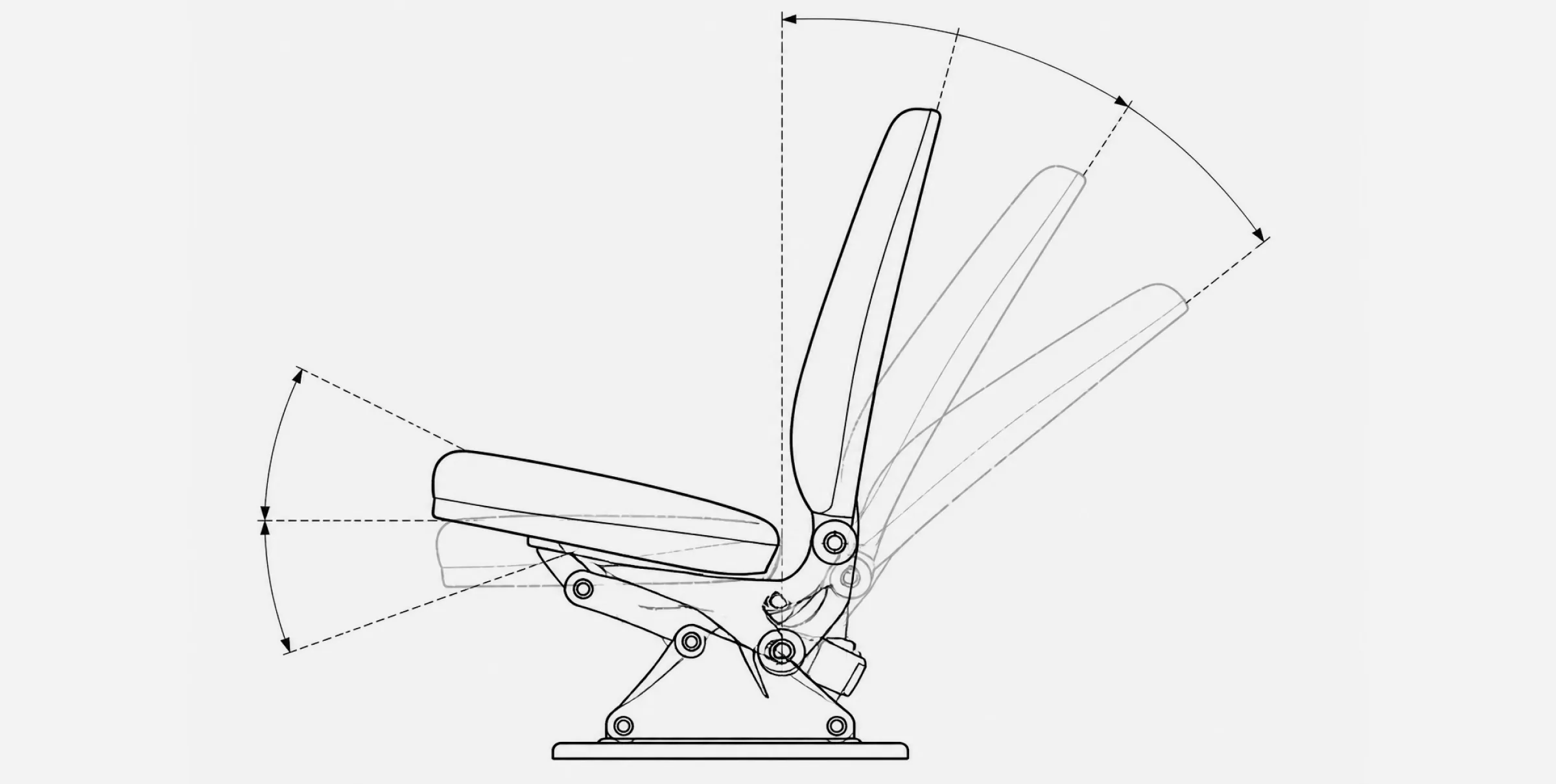
For commercial applications, the tilt mechanism must feature multi-position locking. Users require the ability to lock the chair at 90 degrees for intensive typing, 110 degrees for reading or meetings, and maximum recline for resting. The locking mechanism utilizes steel tension plates that must withstand high torsion forces. Buyers should verify that the tilt lock is constructed from hardened steel rather than high-density plastic, as plastic components will shear under the repeated stress of a reclining user.
Evaluating Footrest Mechanics and Structural Integrity
The footrest is the defining feature of a nap-capable office chair, but it is also the most common point of failure in low-quality models. The footrest must support approximately 15% to 20% of the user's total body weight while extended on a cantilevered axis.
Retractable Rail Systems
Commercial-grade footrests utilize a slide-out rail system stored beneath the seat pan. The structural rails must be manufactured from tubular steel or extruded aluminum. Chrome-plated steel offers superior bend resistance. Buyers must inspect the rail housing; friction-fit plastic housings will degrade rapidly, leading to a sagging footrest. A high-quality assembly utilizes steel ball-bearing tracks or heavy-duty nylon bushings to ensure smooth extraction and retraction over thousands of cycles.
Base Stability and Anti-Tip Design
When a user extends the footrest and reclines to 150 degrees, the center of gravity moves precariously close to the rear casters. To prevent tipping, the chair base must have a larger diameter than standard task chairs. A minimum base diameter of 700mm (27.5 inches) is mandatory for reclining models. Furthermore, the base material should be die-cast aluminum. Nylon bases, while sufficient for standard chairs, exhibit too much flex under the extreme angular loads generated during full recline.
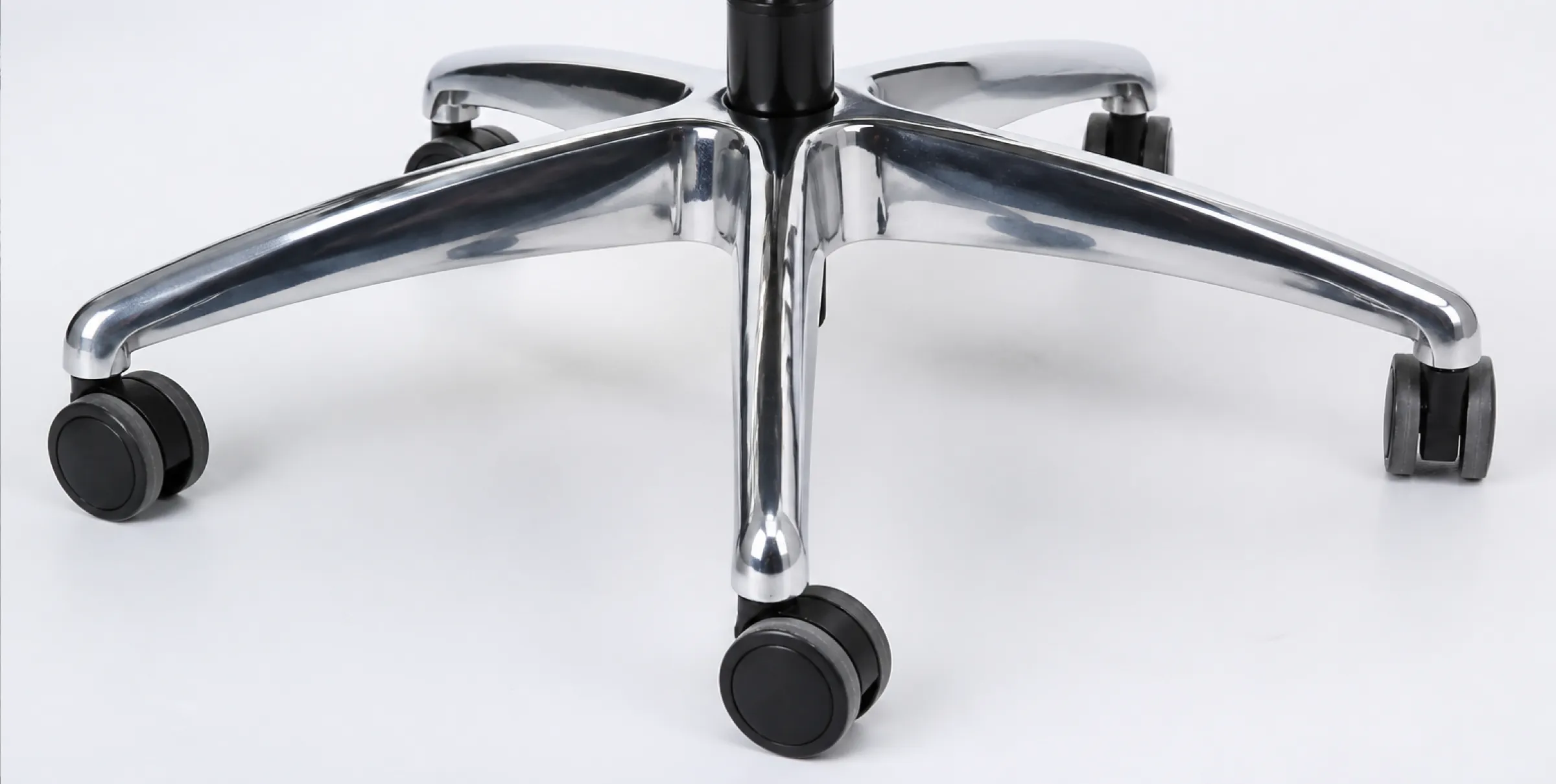
For environments accommodating diverse employee demographics, procurement teams should prioritize heavy duty office chairs equipped with Class 4 pneumatic gas cylinders. A Class 4 cylinder ensures vertical stability and supports weights exceeding 300 lbs, preventing the slow vertical sinkage commonly associated with inferior gas lifts under heavy load.
Material Selection: Thermal Management and Maintenance
The choice of upholstery directly impacts user comfort during rest periods and determines the long-term maintenance costs for the facility.
Elastomeric Mesh
Mesh is the dominant material in modern ergonomic seating due to its thermal regulation properties. An ergonomic mesh office chair prevents heat and moisture buildup, which is particularly beneficial when a user remains stationary in a reclined position for 20 to 30 minutes. Commercial mesh consists of a woven matrix of nylon and elastomer threads. When evaluating mesh recliners, buyers must check the tension retention rate. Inferior mesh stretches and sags under the concentrated weight of a reclining user's lower back. High-grade elastomeric mesh retains its memory and tension, providing continuous lumbar support regardless of the recline angle.
Commercial Leather and Polyurethane
For executive environments or climate-controlled offices, leather remains a standard. A high-quality leather office chair offers superior durability against abrasion and spills. However, genuine leather requires periodic conditioning to prevent cracking. In large-scale deployments, commercial polyurethane (PU) leather or silicone-based faux leathers offer a highly durable, low-maintenance alternative. These synthetic materials are inherently antimicrobial and can be sterilized with standard commercial cleaning agents, an essential factor for multi-shift environments or shared rest areas.
Lumbar and Cervical Support in Recline
Ergonomic support must function seamlessly across all angles of recline.
Dynamic Lumbar Support
When seated upright, the lumbar spine requires forward pressure to maintain its natural lordotic curve. When reclined, gravity pulls the torso downward, changing the pressure dynamics. A fixed lumbar pad often becomes uncomfortable in the reclined position, acting as a fulcrum against the spine. Reclining office chairs must feature depth-adjustable or dynamic lumbar support that pivots and retracts slightly as the user leans back, ensuring constant, distributed contact rather than concentrated pressure.
Cervical (Neck) Support
A headrest is non-negotiable for a reclining chair. Without head support, the neck muscles must actively contract to hold the head upright while reclined, defeating the purpose of the rest period. The headrest must be adjustable in both height and pivot angle. As the chair reclines, the user's line of sight shifts. An articulating headrest allows the user to angle their head forward slightly if they are reading a monitor while reclined, or tilt it back fully for rest.
Strategic Procurement for Corporate Deployments
Deploying specialized reclining seating across a corporate facility requires careful supplier vetting. Purchasing managers should look for manufacturers that provide clear technical specifications regarding cycle testing. BIFMA (Business and Institutional Furniture Manufacturers Association) compliance is a baseline indicator of commercial durability. Specifically, the chair must pass backrest durability and drop tests.
When engaging in office chair wholesale procurement, buyers should request component-level warranties. A standard 1-year warranty is insufficient for commercial seating. Look for manufacturers offering 5-to-10-year warranties on the structural frame and gas cylinder, and a minimum of 3 years on mechanisms and upholstery. Facility managers should also verify the availability of replacement parts, specifically footrest rails and casters, to extend the lifecycle of the deployment rather than replacing entire units due to localized wear.
Investing in high-quality reclining office chairs directly correlates with employee productivity. By providing the infrastructure for brief, high-quality rest, companies can reduce afternoon fatigue slumps, mitigate ergonomic injuries, and optimize the overall efficiency of their workforce. The initial capital expenditure is rapidly offset by the reduction in musculoskeletal complaints and the resulting increase in sustained employee output.
Frequently Asked Questions
What is the optimal recline angle for an office rest chair?
The optimal recline angle for restorative rest in an office environment is between 135 and 150 degrees, allowing for spinal decompression without posing a tipping hazard.
How much weight can a standard retractable footrest hold?
Commercial-grade retractable footrests are typically engineered to support 40 to 60 lbs, accommodating the weight of an adult's legs (roughly 15-20% of total body weight) without bending the steel rails.
Are mesh or leather recliners better for office environments?
Mesh offers superior thermal regulation and breathability, making it ideal for standard office floors. Leather or high-grade PU leather offers high abrasion resistance and is easier to sanitize, making it suitable for executive offices or high-turnover shared spaces.
What is a synchro-tilt mechanism?
A synchro-tilt mechanism allows the backrest and seat pan to recline at different ratios (usually 2:1). This keeps the user's feet flat on the floor and prevents the front edge of the seat from cutting off leg circulation during recline.
Why do reclining office chairs need a larger wheelbase?
A reclining user shifts the chair's center of gravity significantly backward. A larger wheelbase (minimum 700mm diameter) is mandatory to widen the footprint and prevent the chair from tipping over backward.
Can I replace the gas cylinder on a reclining office chair?
Yes, commercial reclining chairs use standard pneumatic cylinders (usually Class 3 or Class 4). They can be knocked out of the base and mechanism with a rubber mallet and replaced if they begin to sink.
