
For international office furniture distributors and regional wholesalers, the profitability of an import cycle is determined long before the products ever reach local distribution warehouses. While negotiating factory-gate unit prices is a standard operational priority, the true margin killer often hides within the supply chain architecture: freight inefficiencies, sub-optimal container volumetric utilization, and unpredictable shipping delays. Navigating international shipping requires a strategic approach to cargo consolidation.
At Aston Office, our logistics and OEM export teams work directly with global supply chain partners to streamline cross-border distribution. This technical guide cuts past basic furniture specifications, analyzing the operational mechanics of FCL versus LCL shipping, 40HQ volumetric optimization through knockdown packaging, factory lead times, and the mathematical calculation of Landed Cost.
The Structural Divide: FCL vs. LCL for Furniture Cargo
When importing commercial seating and desking systems, choosing the correct container mode is the foundational decision for margin protection.
Less than Container Load (LCL) and Its Hidden Dangers
LCL shipping allows smaller distributors to share container space with other cargo. While initially appearing flexible for lower-volume orders, LCL introduces severe operational risks for commercial furniture. Office chairs and desking components feature irregular geometries, metallic frames, and upholstered surfaces. In a shared LCL container, cargo is frequently handled multiple times, consolidated at intermediate freight stations, and subjected to heavy cross-stacking pressure from third-party goods. This significantly increases the risk of crushed cartons, torn upholstery, and scratched structural finishes upon arrival.
Full Container Load (FCL) as the Professional Standard
For established enterprises scaling their inventory, FCL (typically utilizing 40-Foot High Cube containers, or 40HQ) is the undisputed professional standard. Sourcing wholesale office furniture on an FCL basis ensures exclusive container occupancy. Cargo is loaded directly at the factory gate, sealed, and rarely opened until it reaches the destination port. This eliminates intermediate handling friction and protects the structural integrity of high-end assets like executive office desks.
Maximizing 40HQ Volumetric Utilization via Knockdown Packaging
Shipping air is the fastest way to erode profit margins. Because international ocean freight is billed primarily on volumetric space rather than absolute deadweight, maximizing the cubic capacity of a 40HQ container is an exact engineering science.
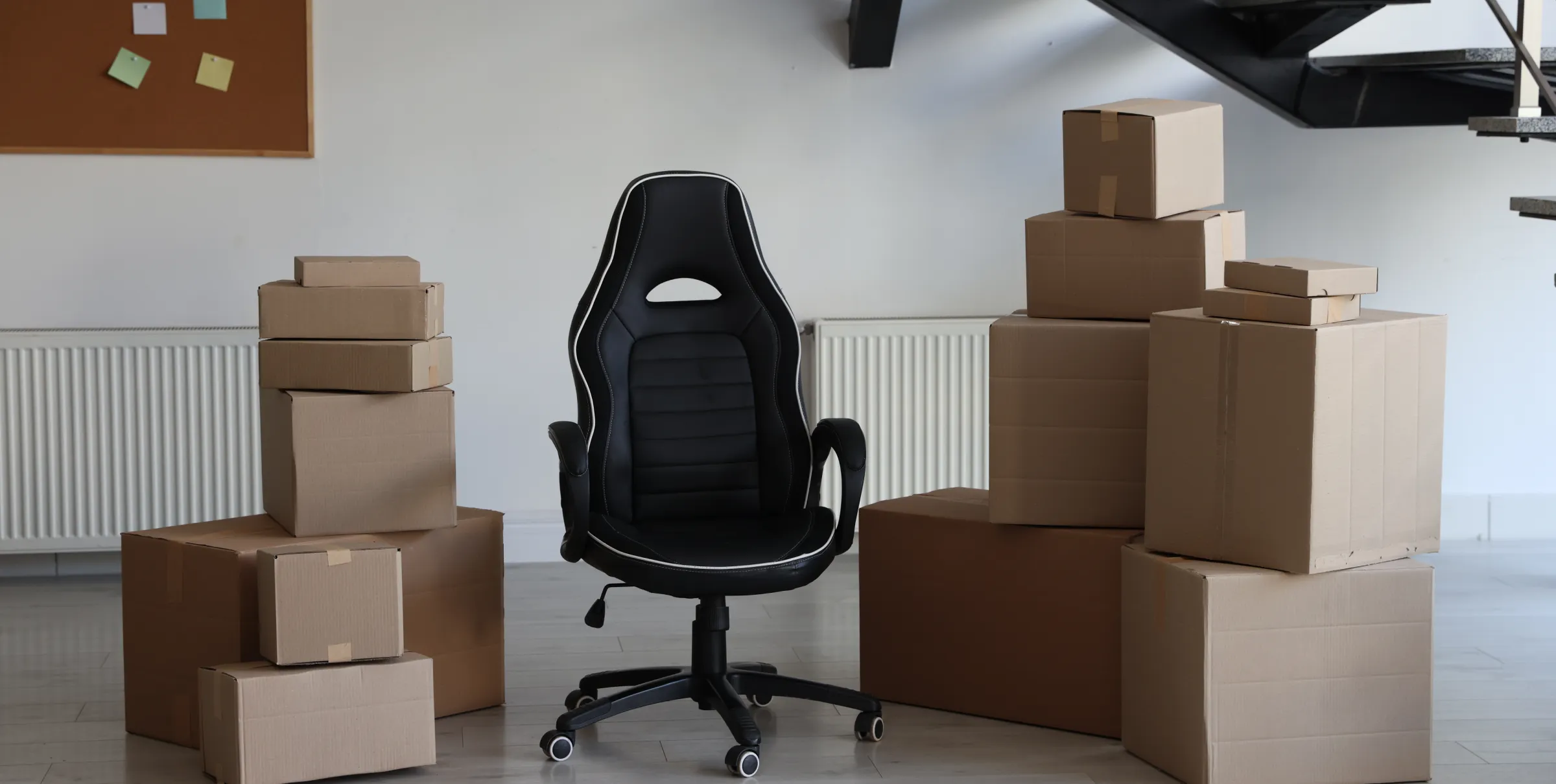
Commercial furniture manufacturers achieve this through Knockdown (KD) packaging design. Instead of shipping fully assembled task chairs or rigid desk frames—which leaves vast pockets of empty air inside the boxes—factory engineering teams dismantle the product into its core geometric components. Backrests, mesh assemblies, multi-layer seat pans, 5-star bases, and gas cylinders are boxed separately and stacked interlockingly.
For high-density product lines like mesh office chairs, optimized KD packaging allows distributors to pack thousands of individual units into a single 40HQ container. By eliminating wasted interior carton space, the freight cost per individual chair drops dramatically, optimizing the distributor's competitive pricing structure in their local market.
Managing Factory Production Cycles and Lead Times
Logistics planning must account for the reality of manufacturing timelines. A common mistake among new distributors is calculating lead times solely from the moment the container departs the origin port, ignoring the crucial upstream production phase.
Factory lead times encompass raw material sourcing (such as procuring high-grade aluminum, E1-grade wood panels, and fire-retardant mesh), component injection molding, frame welding, surface powder-coating, assembly, and final quality control testing. Working directly with a specialized office chair wholesaler ensures transparent production scheduling. Experienced OEM partners provide synchronized shipping schedules that align factory output directly with vessel cut-off dates, preventing costly demurrage and storage fees at the port of origin.
Calculating and Lowering Landed Cost
The true financial metric of international trade is not the FOB (Free on Board) factory price; it is the Landed Cost. Landed Cost represents the total financial outlay required to deliver a product to the distributor's warehouse floor, encompassing:
- Factory-gate production cost
- Export documentation and inland trucking to the origin port
- Ocean freight tariffs and port handling fees
- Customs duties, import tariffs, and local value-added taxes
- Destination port drayage and final-mile warehouse delivery
Distributors can systematically lower their Landed Cost by mastering container consolidation. When sourcing supplementary inventory—such as pairing primary task seating orders with matching office guest chairs or modular breakout seating—distributors should utilize the remaining cubic gaps in the 40HQ container to maximize payload value without triggering additional freight tier charges.
Strategic OEM Partnerships for Global Distribution
Global supply chain volatility requires more than a transactional vendor; it demands a stable, integrated manufacturing partner. Fragmented supply chains introduce communication gaps, packaging errors, and customs clearance hurdles.
By partnering directly with Aston Office, international distributors secure a reliable, factory-direct pipeline. Our export logistics team oversees every phase of the supply chain—from structural KD packaging optimization and rigorous BIFMA quality checks to precise container stowage. This comprehensive oversight guarantees that your wholesale furniture inventory arrives safely, on schedule, and optimized for maximum market profitability.
Frequently Asked Questions
Why is FCL preferred over LCL for importing commercial office furniture?
FCL ensures your cargo occupies a dedicated container loaded directly at the factory and sealed until port arrival. This minimizes handling touchpoints, drastically reduces the risk of transit damage, and provides a lower cost-per-unit freight ratio compared to shared LCL shipments.
How does Knockdown (KD) packaging improve shipping efficiency?
KD packaging disassembles furniture into flat, interlocking components. By eliminating empty air space inside cartons, factories can pack significantly more units into a single container, lowering the freight cost apportioned to each individual product.
What factors influence the total Landed Cost of imported furniture?
Landed Cost includes the factory purchase price, inland transport, ocean freight charges, terminal handling fees, customs duties, import tariffs, and final-mile delivery to your warehouse. Optimizing container volume is the most effective way to reduce the freight component of this total.
What are the benefits of sourcing directly from an OEM furniture manufacturer?
Direct OEM sourcing eliminates middleman distributor markups, ensures precise control over packaging and container loading geometry, and provides reliable communication regarding production lead times and compliance certifications.
