
Buying office chairs in bulk is rarely about finding the cheapest unit price. It is about finding a wholesaler whose factory output, quality control, and lead times match your project schedule. After more than a decade exporting to over 50 countries from our 10,000㎡ facility in Foshan, we have seen the same procurement mistakes repeat across markets — buyers paying retail multiples for bad mesh, distributors locked into trading companies they thought were factories, project managers blindsided by gas lift recalls.
This guide walks through what an office chair wholesaler actually does, how to vet one, and what specifications to lock down before you place an order. It is written for distributors, project buyers, facility managers, and online resellers. No fluff, no sales theater — just the questions you should be asking before sending a deposit.
1. What an Office Chair Wholesaler Actually Does
An office chair wholesaler sells in volume to businesses, not to end consumers. The role can look very different depending on who you are dealing with:
• Direct manufacturer (factory): Owns the production lines, R&D team, and tooling. Sets MOQs, controls quality, and handles OEM/ODM. This is where pricing and customization are most flexible.
• Trading company: Buys from factories and resells. Convenient for one-stop sourcing but adds 10–25% to the unit cost and slows down engineering changes.
• Distributor / dealer: Holds inventory locally and ships to retailers or end clients. Useful for short lead times but limited on customization.
• Online B2B platform: Alibaba, Merkandi, Made-in-China, and similar marketplaces aggregate suppliers. Good for discovery; you still need to verify each vendor independently.
If unit cost and customization matter to your business, working directly with a factory beats every other option. If speed and small reorders matter more, a regional distributor can make sense. Most growing brands eventually move from a distributor to a factory once their order volume justifies it.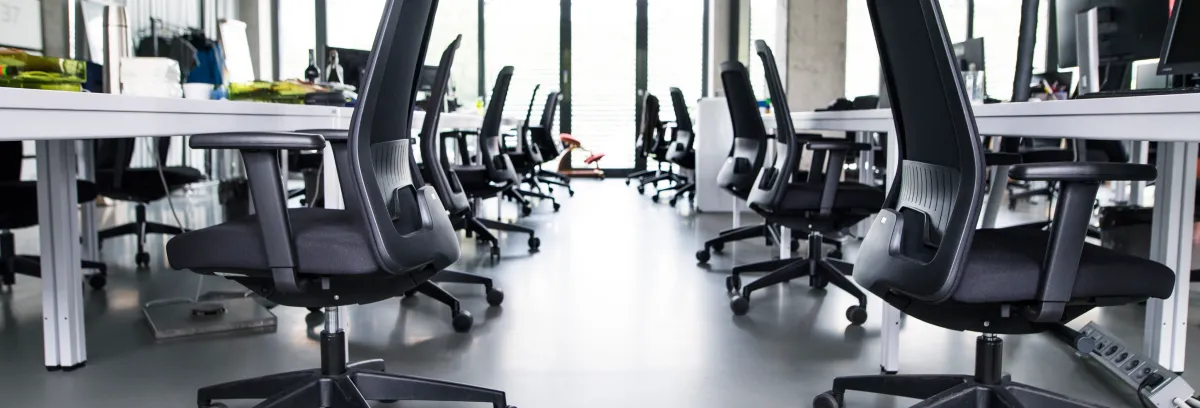
2. Why Buying Wholesale Beats Retail for Business Buyers
Retail pricing on a single ergonomic mesh chair runs $180–$450 in the US market. The same chair, sourced wholesale from the factory, lands at $45–$120 FOB depending on configuration. The price gap is real, but it is not the only reason wholesale wins:
• Lower per-unit cost. Bulk pricing typically runs 30–50% below retail because you skip retailer markups and consolidate freight.
• Visual consistency. All 80 chairs in the same office come from the same production batch with matched fabric, color, and mechanism. Mismatched chairs look unprofessional and signal poor planning to clients walking through the space.
• Predictable replenishment. A wholesaler can hold tooling for your spec and produce identical units in 2026, 2028, and beyond. Retail SKUs change every season.
• Fewer logistics headaches. One container, one bill of lading, one customs entry. Compare that to placing 40 separate retail orders.
• Direct technical support. Factories can ship spare gas lifts, casters, or armrests without forcing you through a retail returns process.
The honest counter-argument: wholesale only pays off if you have somewhere to put the chairs. Holding 200 units in a warehouse for 12 months erodes your savings. Match order quantity to actual demand.
3. How to Vet an Office Chair Wholesaler: 8 Criteria
Use this checklist when comparing suppliers. Skip any of these and you are accepting risk you do not need to.
| Criteria | What to Verify | Why It Matters |
| Business type | Factory vs trading company | Direct factory removes 10–25% middleman markup and gives faster engineering response. |
| MOQ flexibility | Minimum 10–50 pcs for stock; 100–300 pcs for OEM | Low MOQ lets you test the market before scaling. |
| Certifications | BIFMA X5.1, SGS gas lift, EN 1335, GREENGUARD | Required for B2B buyers in the US, EU, and Australia. |
| Lead time | 15–30 days stock; 30–45 days OEM | Longer than this signals capacity issues. |
| Warranty | 3 years on structural parts | Industry standard for commercial-grade chairs. |
| Sample policy | Paid sample, refundable on bulk order | Honest factories never push you to skip samples. |
| Export experience | DDP, FOB, customs documents | Avoids hidden fees and port delays. |
| After-sales | Spare parts inventory, English support | Post-shipment support is where most suppliers fall short. |
Always run a sample test before bulk
Order one sample per model you are considering. Sit in it for two weeks. Check the gas lift on day 14 — if it has dropped more than 1 cm, the cylinder is undersized. Lean back hard against the lumbar 50 times. Pull the armrests up and down 30 times. Cheap mechanisms fail in this window. Suppliers who refuse paid samples or push you to skip them are not worth the risk.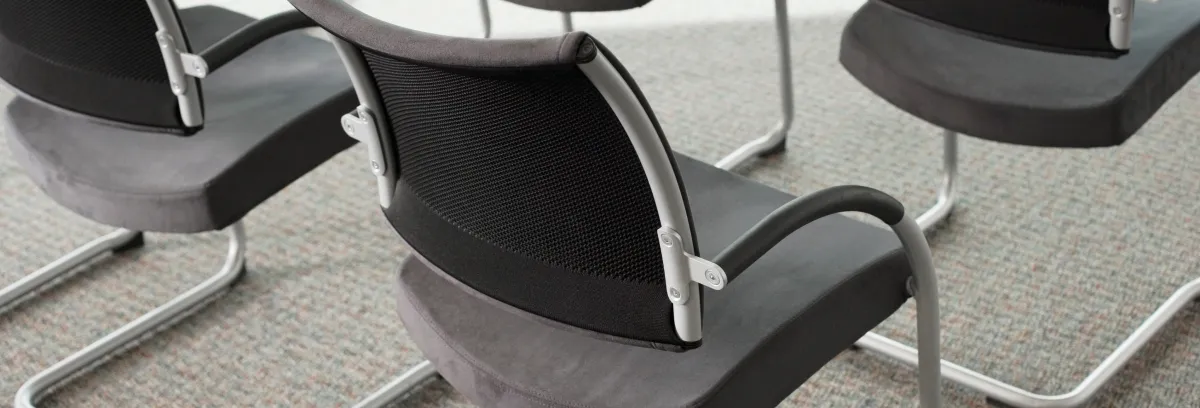
4. Chair Types to Specify Before You Quote
Wholesalers price by configuration. Sending a quote request without specifying these variables produces useless quotes:
By back type
• Mesh back: Best for warm climates and shared workstations. Look for high-tension elastomeric mesh, not loose nylon.
• Leather (PU or genuine): Executive offices and boardrooms. Genuine leather costs 2–3x more but ages better.
• Fabric upholstery: Call centers, classrooms. Specify Martindale rub count above 50,000 for commercial use.
By function
• Task chair: Daily 8-hour use. Adjustable seat height, basic tilt, optional lumbar.
• Ergonomic chair: Adjustable lumbar, headrest, 3D/4D armrest, synchro-tilt mechanism. Standard for knowledge workers.
• Executive / high-back: Padded, leather, often with footrest. Premium aesthetics, usually placed in private offices.
• Big & tall: Reinforced frame, 350–500 lb capacity, wider seat. Required for North American spec sheets.
• Conference / guest: Sled base or 4-leg, no casters. Often stackable.
• Training / nesting: Flip-up seats, mobile base, designed for room reconfiguration.
A practical mix for a 100-person office: 75% ergonomic task chairs, 15% executive chairs for managers, 10% conference and guest chairs. Order all from one wholesaler to keep the warranty unified.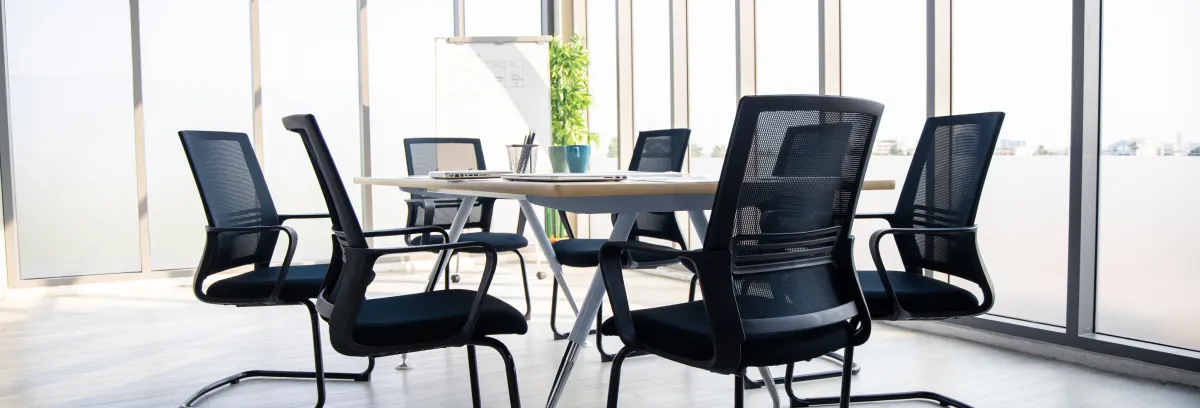
5. MOQ, Lead Time, and What Drives Both
MOQ is not a fixed number. It changes with the level of customization and how full the wholesaler's production schedule is.
| Order Type | Typical MOQ | Lead Time | Customization Level |
| Stock models, single SKU | 10–50 pcs | 15–25 days | Logo, packaging only |
| Stock models, mixed container | 300+ pcs (1 x 20'GP) | 20–30 days | Color, fabric, packaging |
| OEM with existing tooling | 100–300 pcs | 30–40 days | Mesh color, foam, armrest |
| Full ODM (new mold) | 500+ pcs | 45–70 days | Complete redesign |
Stock-model MOQs in the 10–50 piece range are realistic for most factories that take small B2B orders seriously. Aston accepts 10 pieces on standard models, which is unusual in the industry — most factories start at 50 or 100. Use this as your baseline when comparing quotes.
Lead-time honesty matters more than lead-time speed. A supplier promising 10-day production on a 500-piece custom OEM order is either lying or skipping QC. Quality control inspections (incoming materials, in-line, pre-shipment) add 3–5 days. Factor those in.
6. Certifications That Actually Matter
Certifications are often treated as a checkbox. They should not be. The wrong certification — or a forged one — can stop a shipment at customs or kill a corporate tender.
| Certification | Region / Use | What It Covers |
| BIFMA X5.1 | North America | Structural durability of office seating |
| EN 1335 | European Union | Office chair dimensions, safety, durability |
| SGS (gas lift) | Global | Class 3/4 pneumatic cylinder safety |
| GREENGUARD | North America, schools | Indoor air quality, chemical emissions |
| ISO 9001 | Global | Manufacturer quality management system |
| BSCI / SEDEX | EU retailers | Social compliance and ethical sourcing |
Ask for the actual test report PDF, not just a logo on the brochure. Cross-check the certificate number on the issuing body's verification portal (BIFMA, SGS, and UL all publish lookup tools). If a wholesaler hesitates to share the document, walk away.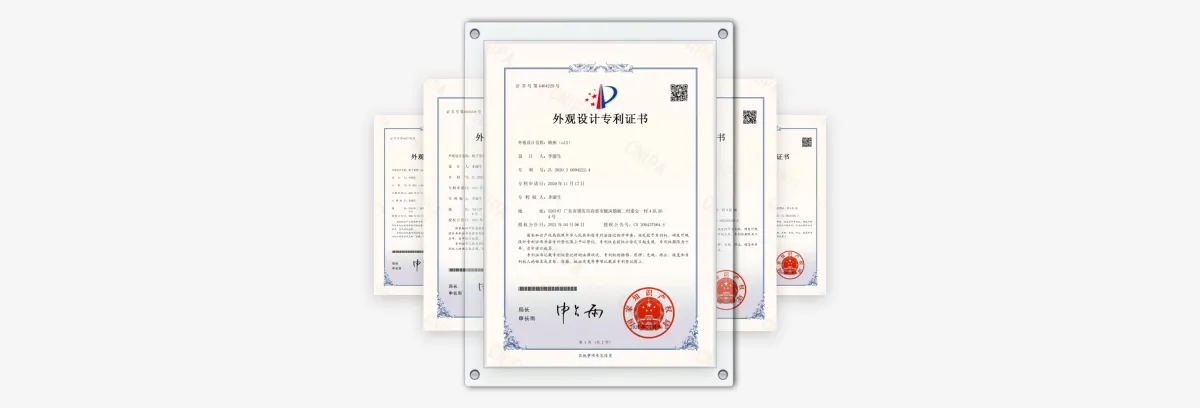
7. How Wholesale Pricing Is Built
A factory-quoted FOB price for an office chair breaks down roughly like this:
• Frame and base (steel, aluminum, nylon): 25–35%
• Mesh, foam, or upholstery: 15–25%
• Mechanism (synchro-tilt, gas lift, casters): 15–20%
• Labor and assembly: 10–15%
• Packaging (carton, foam protectors): 3–5%
• Factory overhead and margin: 10–15%
This is why a $35 chair cannot have an aluminum base, a Class 4 gas lift, and BIFMA-tested mesh — the bill of materials does not allow it. When a quote looks 30% cheaper than the rest of the market, ask exactly which line item was cut. The answer is almost always the gas lift, the casters, or the foam density.
Negotiation room: bulk volume discounts kick in at the 100, 300, and 500-piece breakpoints. Annual contracts unlock another 3–8%. Logo printing and custom packaging are usually free above 500 pieces. Tooling for ODM is amortized over your first 1,000–2,000 units.
8. Shipping, Incoterms, and Hidden Costs
A 20-foot container holds 250–320 office chairs depending on knockdown packaging. A 40-foot HQ holds 480–600. Pack-to-volume ratio is the single biggest unspoken variable in bulk chair sourcing — if your supplier ships fully assembled chairs, you are paying for shipping air.
Common incoterms for chair wholesale
• EXW: You arrange everything from the factory door. Cheapest quote, most logistics work for you.
• FOB: Supplier delivers to the port and clears export. Most common for experienced importers.
• CIF: Supplier covers freight and insurance to your destination port. You handle import customs.
• DDP: Supplier delivers to your warehouse, all duties paid. Best for first-time importers but the most expensive.
Hidden costs that surprise new buyers: destination port handling fees ($150–$400 per container), inland trucking ($0.50–$3.00 per mile), customs broker fees ($150–$300 per entry), and chassis usage charges. Ask for an all-in landed cost estimate, not just the FOB number.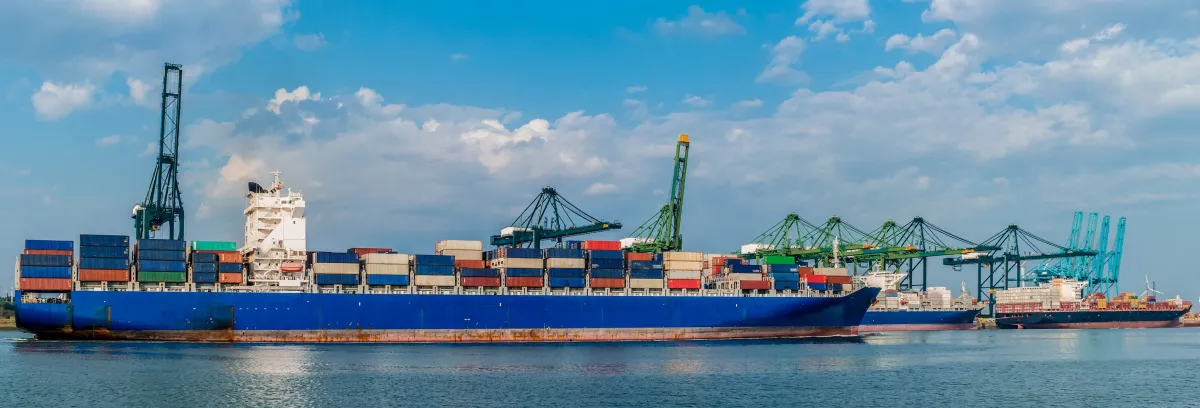
9. Red Flags When Evaluating Wholesalers
After ten years of supplier audits, these warning signs come up the most:
• No factory address on the website, only a city. Real factories list the full street address and welcome video tours.
• Stock photos pulled from competitor catalogs. Reverse-image search every product photo before quoting.
• Refuses to send a paid sample. Always a deal-breaker.
• Cannot produce a third-party test report on the gas lift. Class 3 SGS certification is non-negotiable.
• Pricing 25%+ below market without explanation. Look for cost cuts in mesh density, foam, or hardware.
• Pushes for 100% advance payment. 30/70 (deposit/balance) is the industry norm; mature factories accept LC for first orders.
• No English-speaking after-sales contact. Three months in, when you need a replacement caster, this becomes a real problem.
10. Why Buyers Work with Aston
We manufacture office chairs in Foshan, China — the largest office furniture cluster in the world. Our position is straightforward: factory-direct supply, BIFMA-tested mechanisms, low MOQ flexibility for project buyers, and a three-year warranty backed by spare-parts inventory.
• Production scale: 10,000㎡ facility, 300+ employees, vertically integrated from frame welding to final assembly.
• Certifications: BIFMA, SGS gas lift testing, ISO 9001 quality system. Test reports available on request.
• MOQ: 10 pieces on stock models; 100–300 pieces on OEM with existing tooling.
• Lead time: 15–30 days for stock orders, 30–45 days for OEM customization.
• Export coverage: Shipped to 50+ countries with FOB, CIF, and DDP options.
• Warranty: 3 years on structural parts, with replacement components held in stock.
If you are sourcing for a corporate fit-out, opening a coworking space, building a private-label seating line, or expanding your distribution catalog, we can quote against your spec within 24 hours.
Get a Wholesale Quote from Aston
Send us your target chair model, quantity, customization needs (logo, mesh color, packaging), and destination port. Our team will respond with a detailed quotation, lead time, and freight estimate within one business day.
Contact options: Send Your Inquiry · WhatsApp +86 18575882783 · Email KM@astonoffice.com
Browse our full office chair wholesale catalog or read our related guide on how to buy office chairs in bulk.
Frequently Asked Questions
What is the minimum order quantity from an office chair wholesaler?
Most factories set MOQ between 10 and 100 pieces for stock models. OEM customization with new colors, logos, or mesh raises the MOQ to 100–300 pieces. Full ODM projects with new tooling typically start at 500 pieces. Aston accepts 10-piece MOQs on standard models, which is lower than most factories in the industry.
How long does it take a wholesaler to produce a bulk office chair order?
Stock orders ship in 15–30 days. OEM orders with custom mesh, logo, or packaging take 30–45 days. New ODM models with original tooling can take 60–70 days because mold production adds 3–4 weeks. Anyone quoting under 15 days for a 500-piece custom order is either skipping QC or oversold and will miss the date.
How can I tell if a wholesaler is a real factory or a trading company?
Ask for the business license (it lists the registered scope), request a live video tour of the production line, and check the registered address on a satellite map. Trading companies usually have small office addresses with no industrial zoning. Factories have welding, foam-cutting, and assembly lines you can see in real time. Aston can schedule a video walkthrough on request.
What certifications should a B2B office chair wholesaler hold?
For North American buyers, BIFMA X5.1 is the baseline. For European markets, EN 1335 covers chair safety and durability. Globally, the gas lift should carry SGS Class 3 or Class 4 certification. ISO 9001 covers the manufacturer's quality system, and GREENGUARD covers indoor air emissions for school and healthcare projects. Always ask for the actual test report PDF, not just the logo.
Is it cheaper to buy office chairs wholesale from China?
Yes, in most cases. A mid-range ergonomic chair that retails in the US for $250–$350 typically costs $50–$90 FOB Foshan. After freight, duties, and inland trucking, the landed cost lands around $90–$160. The savings hold up only if you order at least one 20-foot container; smaller orders lose the freight advantage. Always compare landed cost, not FOB price.
How do I check the quality of office chairs before shipping?
Standard practice is a third-party pre-shipment inspection (SGS, Bureau Veritas, or QIMA) that costs $250–$400 per visit. The inspector checks BIFMA-relevant points: gas lift function, mechanism cycling, weight load, and packaging. For repeat orders with a trusted factory, you can drop to random spot checks. For first orders with a new wholesaler, third-party inspection is mandatory.
What payment terms are normal with a wholesale office chair supplier?
The industry standard is 30% deposit on order confirmation, 70% balance before shipment. Mature factories accept letter of credit (LC at sight) for orders above $30,000. Avoid suppliers demanding 100% advance — that is not normal and usually signals a fraud risk or cash-flow problem. PayPal and Alibaba Trade Assurance are common for first samples or trial orders.
Can a wholesaler customize office chairs with my logo and brand?
Yes — most factories offer OEM services covering logo embroidery on the headrest or back, custom packaging with your brand on the carton, mesh color matching, foam density, and armrest design. ODM goes further: you can commission a fully new chair design with your own tooling. OEM usually has no extra cost above 300 pieces; ODM tooling fees range from $1,500 to $8,000 depending on complexity.
