
Why are office chairs so expensive? Uncover the true costs behind it
When you compare an ordinary chair that costs $100 to an ergonomical mesh desk chair that costs more than $1000, the question "Why are office chairs so expensive?" comes to mind. The price difference is not arbitrary: it reflects the fundamental difference between ordinary seats and engineered work tools. This comprehensive analysis disassembles the cost structure of the ergonomical office chair and reveals the design value behind ergonomic design, high-quality materials, rigorous testing and long-term durability. By understanding what you are really paying for, it helps you make the right decisions and balance upfront costs with years of productivity and health.
Component level cost decomposition
A high-end mesh office chair (link to the mesh office chair collection page) is a complex assembly of professional components, each of which affects the price:
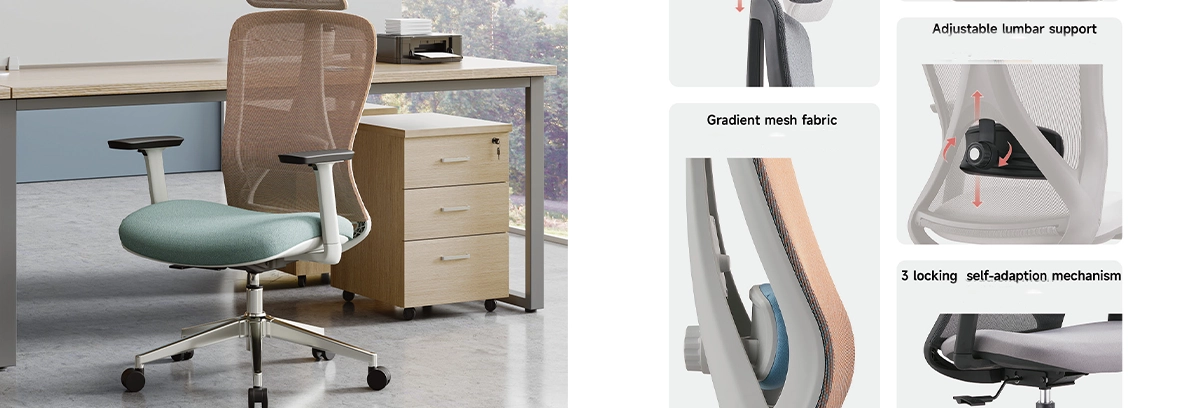
· Mechanism (tilt/recline system): The "brain" of the chair. A high-quality synchronous tilt mechanism with tension control and multiple locking positions involving precision machined steel parts, advanced bearings and complex engineering. The cost of this alone may exceed the cost of an entire budget chair.
· Pneumatic lift rods: Not all air rods are the same. BIFMA certified Class 4 air rods require extensive pressure and cycle testing (more than 100,000 cycles) and use high-quality seals and nitrogen. They are rated for higher load loads and have a longer service life.
· Frame and base: Reinforced steel or aluminum frames provide structural integrity. Five-star feet made of molded nylon or aluminum must withstand tremendous pressure without cracking. Most cheap chairs use materials that fail quality testing and will be damaged quickly when encountering some heavy external forces.
· Handrails: 4D adjustable handrails with memory foam pads and durable coating involve multiple moving parts and adjustment mechanisms that are not available in fixed hard plastic handrails.
· Castors: Two-wheel commercial casters with soft polyurethane treads protect the floor and roll smoothly. They are more expensive than hard plastic casters that can easily scratch floors and get stuck.
Supporting science: Ergonomic R & D costs
The "ergonomic" label on cheap chairs is often a marketing ploy; on high-end chairs, it is the result of a lot of investment. The development of ergonomic office chairs involves:
· Biomechanical research: Study spinal load, pressure distribution and motion patterns to provide basis for design.
· Prototyping and testing: Create multiple prototypes and test them for thousands of hours by ergonomics experts and different user groups.
· Adjustable engineering: Design intuitive, rugged controls for lumbar support, cushion depth, backrest angle and armrest. Each adjustment point increases material and engineering costs, but is critical to obtaining the right fit.
· Postural health research: Collaborate with healthcare professionals to verify health benefits. This R&D cost is spread across production, but is crucial to creating a chair that truly supports health, rather than just provides a supportive appearance.

Advantages of materials: from high-quality foam to commercial-grade fabrics
Materials account for a large part of the cost of the chair and directly determine its feel, durability and aesthetics.
· Foam density and quality: High-end chairs use highly resilient foam with a density of 1.8 to 2.5 pounds per cubic foot or higher. It retains its shape and support for years. Cheap chairs use low-density foam that compresses permanently within a few months, feeling hard and lacking support.
· Fabrics: Breathable mesh fabrics in premium chairs are specifically designed for tensile strength and durability (typically rated more than 100,000 two-way rubs). Full-grain leather or top leather is a high-quality, durable material. Budget chairs use light, airtight fabric or composite leather that cracks and flares.
· Structural materials: High-strength steel, high-quality polymers for the base and reinforced plastics, all of which cost more than sub-standard materials used in disposable chairs.
These materials ensure that the chair not only looks professional, but also can withstand 8-10 hours of use per day for ten years or more in a commercial office environment.

Precision manufacturing and strict quality control
The production environment itself increases costs. Manufacturing a BIFMA certified office chair involves:
· Specialized machinery: CNC machines for precision parts, robotic welding for consistent frame structures, and automatic foam forming lines.
· Multi-stage assembly: Skilled assembly, usually with manual finishing steps at each stage for quality inspection.
· Total quality control: Every component and finished chair must be inspected. This includes weight stress testing, functional inspections of each institution, and stability testing. Our chairs go through 23 different quality inspection points before packaging. This rigorous process can detect defects, but requires labor and time, increasing costs.

Certification, safety standards and liability assurance
Compliance is non-negotiable for commercial sales and incurs costs.
· BIFMA/ANSI standard: Testing safety, durability and performance is expensive. Chairs need to be tested for stability, air rod rupture, armrest strength and cycle number. BIFMA certification provides assurance that chairs meet strict benchmarks.
· Other certifications: GREENGUARD for low chemical emissions, EN standards for the European market and other regional certifications require third-party testing and fees.
· Product liability insurance: reputable manufacturers have extensive insurance to protect their customers. This cost is included in the product to ensure that you are not liable for damage caused by failure.
Unnamed chairs from online market platforms often bypass all these standards, transferring risk directly to buyers.

The economics of longevity and total cost of ownership
The most persuasive argument for expensive office chairs is their total cost of ownership. A chair priced at $1000 with a 12-year warranty and used by an employee for eight hours a day costs less than $0.11 per hour over its useful life. A $200 chair that is damaged and needs to be replaced after two years costs $0.12 per hour, which does not take into account lost productivity due to discomfort, maintenance time and procurement trouble.
· Warranty and Service: Providing a comprehensive 10-12-year warranty on frames and structures (as provided by leading brands) reflects confidence in durability and saves future replacement costs.
· Productivity impact: Research shows that appropriate ergonomic support can reduce discomfort and significantly increase productivity percentages. This financial return far exceeds the initial cost of the chair.
· Residual value: High-quality administrative office chairs from well-known brands retain residual value, while cheap chairs have no resale value.

Manufacturers 'perspective: Aston's investment in innovation
At Aston, our R & D process is an integral part of our value proposition. At our 10,000-square-meter R & D and production base, we invest in advanced prototyping and testing equipment. Our team focuses on ergonomic innovations in our office chair line-such as improving the dynamic lumbar support of our mesh office chairs-which is an ongoing cost investment to ensure that our products provide tangible comfort and durability to distinguish them from imitations.

Conclusion: Invest in the long term, not just one seat
So why are office chairs so expensive? Because a true ergonomic office chair is a precision-designed piece of health equipment, a durable capital asset and a productivity tool-not just a place to sit.
When evaluating the price, change the question from "How much will this chair cost?" Change it to "What is the cost of not having the right chair?", This involves your long-term health and focused work output. For companies, working with office chair manufacturers like Aston, trusted by customers in more than 50 countries, is your best choice. We focus on continuous ergonomic research and development while producing cost-effective office chairs that meet a variety of budgets.