
How often are office chair explosions? Distinguish between rumors and facts
First of all, although the saying about office chair explosion is rare, it still exists. Although the word "explosion" is quite dramatic, it usually refers to the catastrophic failure of the pneumatic lift lever of a chair, which can rupture under extreme pressure. Although this is an extremely rare incident, any business or home office user should be aware of its causes, risks and precautions. This guide will explore the engineering principles of pneumatic levers, outline international safety standards, and provide actionable recommendations to ensure that your ergonomical desk chair is a source of comfort, not risk.

Understanding the "explosion": What exactly is the fault in the office chair?
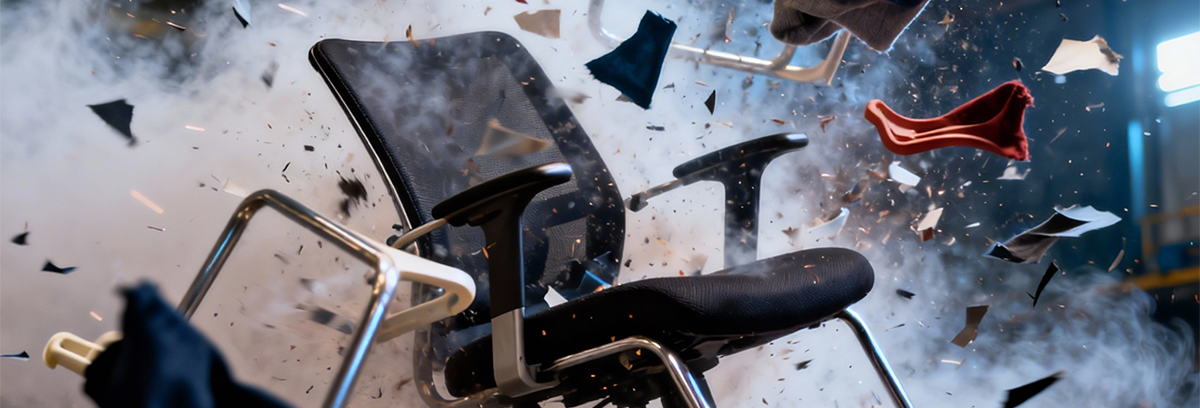
The core component of these events is the pneumatic lift bar (or barbar). The sealed metal tube contains pressurized nitrogen and a small amount of hydraulic oil. It is designed to achieve smooth height adjustment and reliably support the user's weight for many years. A catastrophic failure occurs when the structural integrity of a cylinder is compromised, causing it to rupture under pressure or "eject" from the housing. This is not a combustion explosion, but a mechanical failure that releases high-pressure gas. The main risks come from flying metal fragments and the sudden collapse of the chair, which can cause injury.
Statistical reality: How high is the actual failure frequency of the chair pneumatic lever?
Quantifying the exact frequency of catastrophic chair failures is challenging, but is inferior material used for the pneumatic rods? Were there any installation errors during the assembly process? Is there any accidental loss caused during use? These problems will affect the normal use of the pneumatic rod. Therefore, we try our best to choose office chairs assembled with pneumatic rods certified by SGS (Aston's office chair pneumatic rods all pass the SGS Level 3 test). In this way, in daily use, as long as external forces are avoided from damaging the pneumatic rod, the office chair will have almost no risk of explosion.

Root cause: What caused the catastrophic failure of the pneumatic rod?
The following factors, alone or in combination, can cause pneumatic rod failure:
1. Manufacturing defects and material non-conformities: the most common reasons. Cheap, uncertified pneumatic rods are made of inferior steel and are prone to failure due to welding defects or insufficient pressure levels.
2. Corrosion and wear: After years of use, exposure to humidity and environmental pollutants can cause internal or external corrosion, weakening cylinder walls. This is a long-term risk factor.
3. Physical damage: Falling the chair, overtightening during assembly, or using the chair as a ladder can dent or damage the pneumatic rod.
4. Excessive or dynamic overloading: Continuously exceeding the weight capacity of the chair, or subjecting it to sudden dynamic loads (e.g., sitting hard), will over time subject the pneumatic rod to pressures that exceed its design limits.
5. Seal failure and gas leakage: Slow leakage of internal nitrogen can lead to loss of lifting force. In some failure modes, this can create a power imbalance.

International safety standards: BIFMA and others
The main line of defense against office chair accidents is compliance with voluntary safety standards. In the office furniture industry, the BIFMA (Association of Commercial and Institutional Furniture Manufacturers) standard is the most widely recognized benchmark in North America and around the world. The main tests related to the safety of pneumatic rods include:
· Cycling testing: Simulate the entire service life cycle (more than 100,000 lift cycles).
· Overload test: Apply a load significantly higher than the rated capacity to the seat cushion and backrest.
· Burst testing: Deliberately failing a pneumatic rod in a controlled environment to ensure it fails in a predictable, less dangerous manner.
· Chair stability test: Prevent tipping.
Chairs that pass these tests can be labeled with BIFMA certification. Similar standards exist in other regions (such as the European EN standard). When purchasing commercial office furniture, be sure to look for certification labels.

How to prevent chair failure
Follow the following office chair maintenance and inspection checklist:
1. Buy wisely: Invest in office chairs produced by well-known brands or direct manufacturers. Avoid buying suspiciously cheap, unbranded chairs, especially online products that are abnormally cheap.
2. Perform regular visual inspections: Every few months, check the pneumatic rods for rust, visible scratches, dents, or oil stains (indicating leaks). Ensure that the five-star feet and casters are intact.
3. Listen and feel: Pay attention to the sound of the chair (the pneumatic lever hisses) or the feeling of sinking when sitting down, which indicates a loss of gas pressure.
4. Correct use: Do not exceed the weight limit. Avoid excessive rocking from side to side or using the chair for non-sitting purposes.
5. Correct assembly: Strictly follow the manufacturer's instructions during assembly. Do not overtighten the fasteners near the pneumatic rod housing.
6. Consider the environment: In humid or corrosive environments, inspections should be carried out more frequently. Use seat cushions to protect the casters and reduce stress.

What should I do if I suspect a problem or encounter a malfunction
1. Immediate action: If you hear a hissing sound, see visible damage, or the chair begins to sink uncontrollably, stop using it immediately. Mark it as "deactivated".
2. Don't try to repair: The pneumatic rod is a sealed unit. Do not attempt to weld, drill or tamper with suspicious pneumatic rods. The risk of uncontrolled release is high.
3. Contact the manufacturer or supplier: Have the model and serial number ready for assistance. Credible companies like Aston have after-sales support channels to deal with such issues, and all Aston products come with a three-year warranty. If the chair is under warranty, you are likely to receive replacement parts or chair.
4. Disposition: Aston does not recommend replacing the pneumatic rod by inexperienced people. If you must replace it, please contact a local professional.

The role of manufacturers in prevention: Aston's perspective
At Aston, safety has been integrated into our chairs from the beginning of design. The pneumatic rods we use are all SGS certified Level 3 pneumatic lifting rods. And each product we design will undergo thousands of stress tests before passing the test before being officially put into production. We have great confidence in our products, and we also promise that all products will enjoy a 3-year warranty. Regarding the question "how often do office chairs explosion", Aston is confident that if there is no external damage, Aston's office chair will not explode.

Conclusion: Ensure safety through quality and awareness
The risk of an office chair explosion is statistically very low, but not zero. The probability is related to the quality of the office chair components and whether they comply with safety standards, ensuring that you choose the right office chair manufacturer while following the above precautions can also allow you to detect chair problems in advance.
