
If you have ever adjusted the height of your office chair, you have used the cylinder underneath it — whether you realized it or not. That metal tube connecting the seat mechanism to the wheelbase is one of the most critical components in any office chair, yet it is also one of the least understood. It controls your seated height, absorbs your weight when you sit down, and supports your body for thousands of sit-stand cycles over its lifetime.
For facility managers purchasing chairs in bulk, distributors evaluating product quality, or end users trying to fix a sinking chair, understanding how this component works is essential. This guide explains exactly what the cylinder under an office chair is, how it functions, what causes it to fail, and what to look for when sourcing commercial-grade office seating with reliable gas lift systems.
The Office Chair Gas Lift Cylinder Explained: What It Is and What It Does
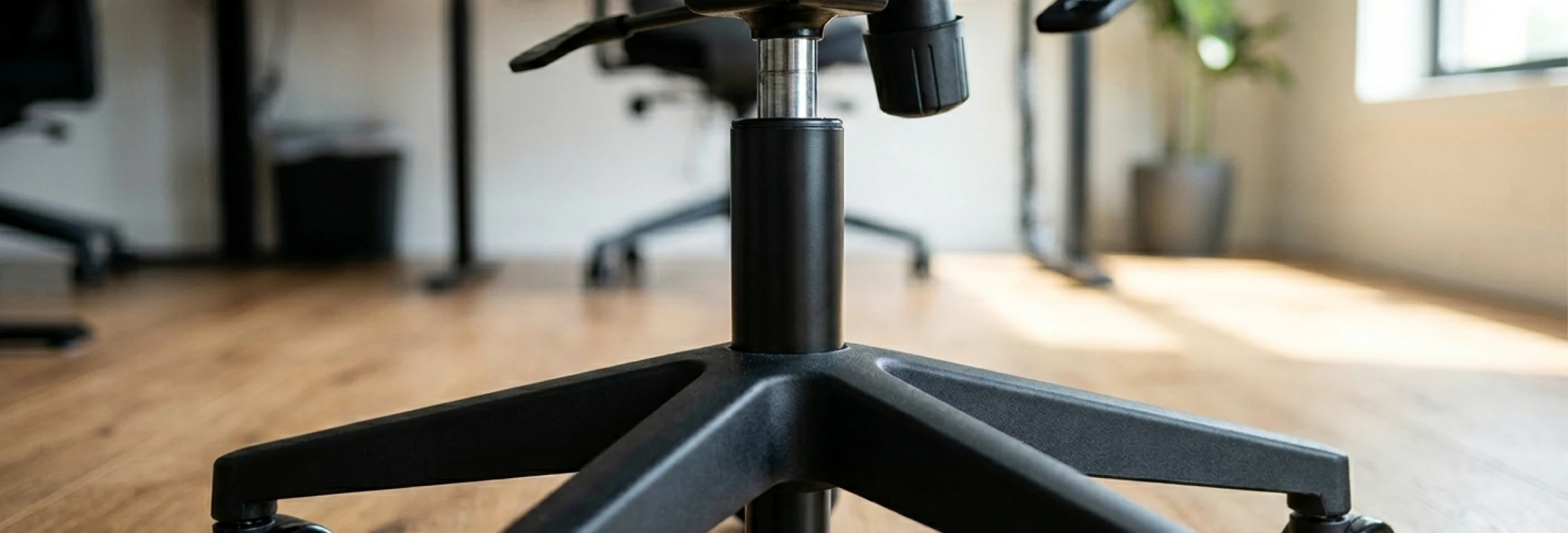
The cylinder under an office chair is officially called a pneumatic gas lift, gas spring, or gas cylinder. It is a sealed metal tube filled with compressed nitrogen gas that allows the user to raise or lower the chair seat by activating a lever mechanism. When you pull the lever while seated, your body weight pushes the gas inside the cylinder to compress, lowering the seat. When you pull the lever while standing or partially unweighted, the pressurized gas expands and pushes the seat upward.
The gas lift cylinder serves three primary functions in an office chair. First, it provides stepless height adjustment, meaning you can set the seat to any point within the adjustment range rather than being limited to fixed positions. Second, it acts as a shock absorber, cushioning the impact when you sit down and reducing stress on the chair mechanism and your spine. Third, it supports a swivel function — the cylinder acts as the central pivot point that allows the seat to rotate 360 degrees on the wheelbase.
A standard office chair gas cylinder has an adjustment range of approximately 3 to 5 inches (7.5 to 12.5 cm). The visible outer tube is typically made of steel, while the internal piston rod is precision-machined chrome-plated steel. The gas inside is nitrogen — chosen because it is inert, non-flammable, and maintains consistent pressure across a wide temperature range. The top of the cylinder connects to the chair's tilt mechanism via a tapered cone fitting, and the bottom inserts into the wheelbase column. No bolts or screws are used — the cylinder is held in place entirely by friction fit and the user's body weight.
How Does a Pneumatic Chair Cylinder Work? The Engineering Behind Height Adjustment
Understanding how the pneumatic cylinder operates helps explain both its reliability and its failure modes. The mechanism is elegantly simple but relies on precise engineering tolerances.
Inside the outer steel tube, there is a piston attached to a rod. The sealed chamber is filled with nitrogen gas at a specific pressure — typically between 100 and 150 bar for office chair applications. A valve mechanism at the top of the cylinder is connected to the chair's lever via a push button or actuator pin.
When the lever is not activated, the valve is closed and the gas pressure is locked in place, holding the seat at its current height. The chair can support the full weight of the user without sinking because the pressurized gas acts as a rigid column.
When the lever is pulled, it depresses the actuator pin, opening the valve. If the user is seated (applying downward force), the piston compresses the gas and the seat lowers. If the user is standing or lifting their weight off the seat, the compressed gas expands and pushes the piston upward, raising the seat. Releasing the lever closes the valve again, locking the seat at the new height.
The speed of height adjustment is controlled by the gas pressure and the valve opening size. Quality gas cylinders provide smooth, controlled movement in both directions. Cheap cylinders may exhibit jerky motion, slow response, or inconsistent travel speed — all signs of poor internal machining or inadequate gas charge.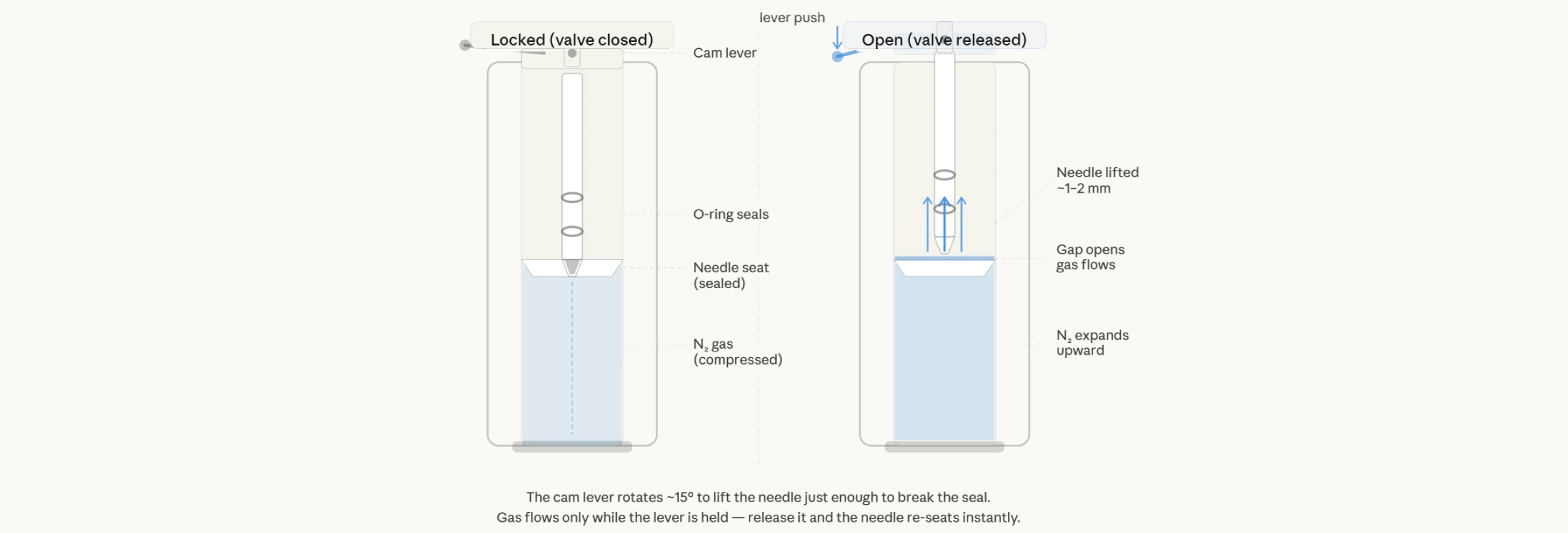
Gas Lift Safety Certification: What SGS and Class Ratings Mean for Office Seating
Safety is the most important consideration when it comes to the gas cylinder in an office chair. Because the cylinder contains compressed gas and supports the full weight of the user, a failure can range from a slowly sinking seat (annoying but harmless) to a sudden catastrophic rupture (extremely rare but potentially dangerous).
Commercial-grade office chair gas cylinders are classified by a standardized rating system. The most widely used classification in the global furniture industry is the German DIN 4550 standard, which divides gas cylinders into four classes:
| Class | Wall Thickness | Max Load | Cycle Life | Typical Use |
| Class 1 | 1.2 mm | ~80 kg | ~30,000 | Budget home chairs |
| Class 2 | 1.5 mm | ~100 kg | ~60,000 | Standard office chairs |
| Class 3 | 2.0 mm | ~120 kg | ~100,000 | Commercial office chairs |
| Class 4 | 2.5 mm | ~150 kg | ~200,000 | Heavy-duty / 24-hour chairs |
For commercial office environments — where chairs are used 8+ hours per day by multiple users — Class 3 is the minimum recommended specification. Class 3 gas cylinders use 2.0 mm wall thickness steel tubing and are rated for approximately 100,000 adjustment cycles, which translates to roughly 5 to 8 years of typical commercial use.
Third-party safety certification adds another layer of assurance. SGS certification is the most widely recognized global standard for gas cylinder safety testing. An SGS-certified gas lift has been independently tested for pressure resistance, cycle durability, static load capacity, and leak-proof integrity. When evaluating office chair suppliers, always ask whether the gas cylinder carries SGS or equivalent third-party certification — not just a manufacturer's self-declared rating.
Why Does an Office Chair Sink? Common Causes of Gas Cylinder Failure
A sinking office chair — one that gradually lowers itself even when the height lever is not being touched — is the single most common sign of gas cylinder failure. Understanding why this happens helps buyers make better purchasing decisions and helps facility managers diagnose problems efficiently.
Seal degradation is the most frequent cause. The internal piston has rubber or polyurethane seals that prevent nitrogen gas from leaking past the piston. Over time — accelerated by heat, friction, and heavy use — these seals wear down and allow microscopic gas leakage. The cylinder slowly loses pressure, and the chair gradually sinks under the user's weight. This is a normal wear process and is why gas cylinders have rated cycle lives.
Temperature extremes can also accelerate failure. Gas pressure increases in hot environments and decreases in cold ones. Chairs stored in unheated warehouses during winter or placed next to heating vents in offices may experience premature seal wear due to pressure fluctuations.
Overloading is another common cause. Every gas cylinder has a maximum weight rating. Consistently exceeding this rating — for example, using a Class 2 cylinder rated for 100 kg with a 130 kg user — compresses the gas beyond its designed operating range, accelerating seal wear and potentially bending the internal piston rod. This is why big and tall office chairs require Class 3 or Class 4 gas cylinders.
Manufacturing defects, while less common in reputable brands, do occur. Poor chrome plating on the piston rod creates micro-roughness that wears through seals faster. Inconsistent gas charging means some cylinders leave the factory with slightly less pressure than specified, resulting in premature sinking. Inadequate quality control during cylinder assembly can leave microscopic contaminants inside the chamber that damage seals from day one.
How to Replace the Gas Strut on a Desk Chair: Step-by-Step Process
Replacing a worn gas strut on a desk chair is a straightforward process that does not require specialized tools. For facility managers maintaining a fleet of office chairs, this is a routine maintenance task that can extend the useful life of otherwise functional chairs by several years.
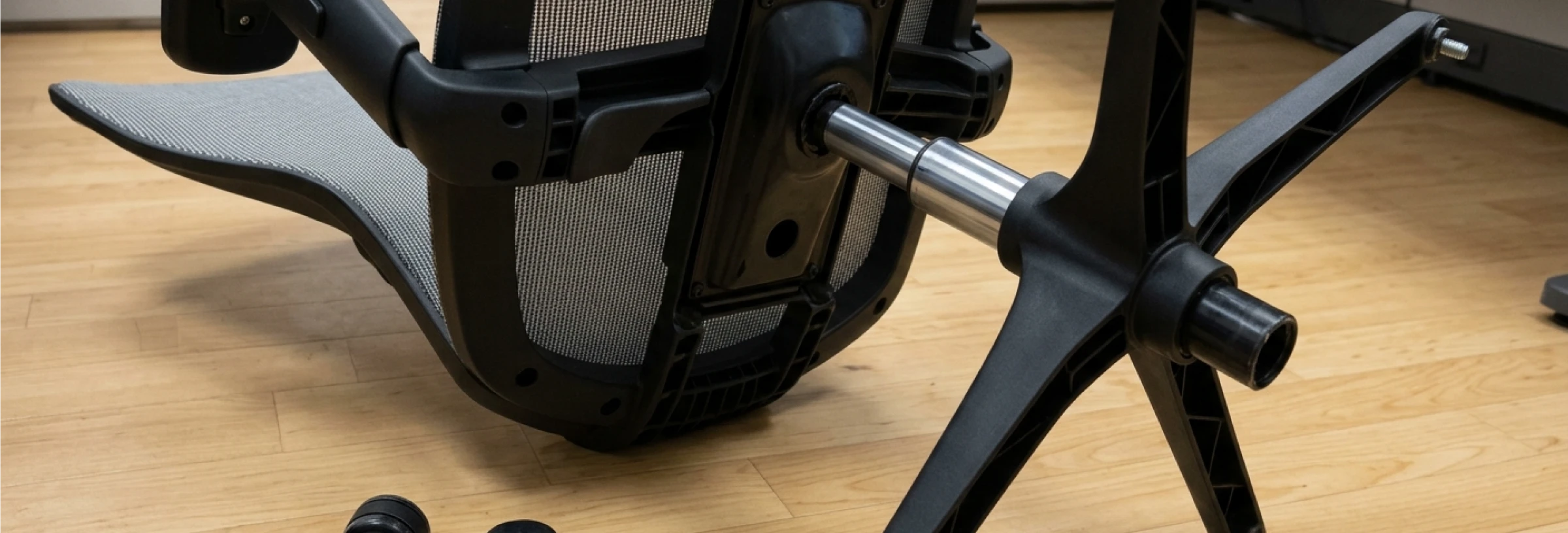
Step 1: Remove the chair seat from the gas cylinder. Flip the chair upside down. The seat mechanism sits on top of the gas cylinder's tapered cone. In most cases, you can separate them by twisting and pulling firmly. If the fit is too tight, use a rubber mallet to tap around the base of the mechanism housing while pulling upward. Do not use metal hammers directly on the mechanism — this can crack the housing.
Step 2: Remove the old gas cylinder from the wheelbase. With the seat removed, the gas cylinder remains inserted in the center column of the wheelbase. Again, this is a friction fit. Hold the wheelbase upside down and tap the cylinder downward with a rubber mallet. Applying a penetrating lubricant around the joint and waiting 10 minutes can make this easier if the cylinder is stuck.
Step 3: Insert the new gas cylinder. Drop the new cylinder into the wheelbase column — it should slide in smoothly with the narrow end (piston rod) facing upward. Then place the seat mechanism onto the tapered top of the new cylinder. Your body weight when you sit down will press-fit the connections tight.
Step 4: Test the chair. Sit in the chair and activate the height lever several times to verify smooth operation in both directions. Check that the chair holds its height when the lever is released. If the chair sinks slowly over the first few minutes, the replacement cylinder may be defective — contact the supplier for a warranty replacement.
When ordering replacement gas cylinders, verify the following specifications match your chair: overall length, stroke length (adjustment range), top fitting diameter, bottom fitting diameter, and weight rating. Most standard office chairs use a universal fitting size, but some proprietary designs require brand-specific cylinders.
How to Choose an Office Chair with a Reliable Hydraulic Lift Mechanism
For buyers sourcing office chairs for commercial projects — whether for a single office or a 500-seat corporate headquarters — the quality of the gas lift mechanism should be a key evaluation criterion alongside ergonomics, materials, and aesthetics.
Ask for the gas cylinder class rating. As outlined in the table above, Class 3 is the minimum for commercial use. If the supplier cannot tell you the class rating, that is a red flag — it likely means they are using the cheapest available cylinder without regard for durability.
Verify third-party safety certification. SGS certification is the gold standard. Some manufacturers also carry TUV, BIFMA, or EN 1335 certifications that include gas cylinder testing as part of the overall chair safety evaluation.
Check the warranty terms specifically for the gas cylinder. A manufacturer confident in their gas lift quality will include it in the product warranty. A 3-year warranty that covers the gas cylinder indicates the manufacturer expects it to last at least that long under normal commercial use. If the warranty excludes the gas cylinder or limits it to 1 year, the manufacturer knows it is a weak point in their product.
Aston offers a complete range of ergonomic office chairs with reliable gas lift systems, all backed by SGS safety certification and a comprehensive 3-year warranty.
Consider the user weight range. For general office populations, a Class 3 cylinder rated for 120 kg provides adequate margin for most users. For environments with heavier-than-average users — or for 24-hour use facilities like call centers and security monitoring rooms — specify Class 4 cylinders rated for 150 kg.
Evaluate the overall chair construction around the cylinder. The gas lift is only as reliable as the mechanism it connects to. A quality tilt mechanism with thick steel plates and secure lever actuation will transmit force to the gas cylinder cleanly, maximizing its lifespan. A flimsy mechanism with loose tolerances adds lateral stress to the cylinder that accelerates wear.

Office Chair Pneumatic Cylinder vs. Mechanical Lift: Which Is Better for Commercial Use?
While pneumatic gas cylinders dominate the modern office chair market, some chairs — particularly older models and very low-cost options — use mechanical height adjustment systems such as threaded spindles or ratchet mechanisms. Understanding the differences helps buyers make informed sourcing decisions.
Pneumatic gas cylinders offer stepless height adjustment, meaning the user can set the seat at any height within the range. Mechanical systems typically offer fixed positions — for example, 5 or 6 preset heights separated by 1-inch increments. For environments where multiple users share chairs (hot-desking, training rooms, shared workstations), stepless adjustment is significantly more practical because each user can dial in their exact preferred height.
Gas cylinders provide a shock absorption effect when the user sits down. Mechanical lifts have zero cushioning — the full impact of sitting is transmitted directly through the rigid mechanism to the user's spine. Over thousands of daily sit-down events across a year, this difference has measurable ergonomic implications.
Mechanical lifts have one theoretical advantage: they cannot leak gas and therefore do not gradually sink. However, they do wear mechanically — ratchet teeth round off, threaded spindles strip, and locking mechanisms loosen. When a mechanical lift fails, it typically fails completely and suddenly rather than gradually, which can be a safety hazard.
For modern commercial office environments, pneumatic gas lift cylinders are the clear standard. They are specified by virtually all major furniture standards (BIFMA, EN 1335, JIS) and are expected by end users who are accustomed to smooth, one-touch height adjustment. The only scenario where a mechanical lift might be acceptable is for very low-budget fixed-height stools where adjustment is not required.
Maintaining the Gas Cylinder: Tips to Extend the Life of Your Office Chair Lift
While gas cylinders are sealed units that cannot be serviced internally, there are several practical steps that facility managers and individual users can take to maximize their operational lifespan.
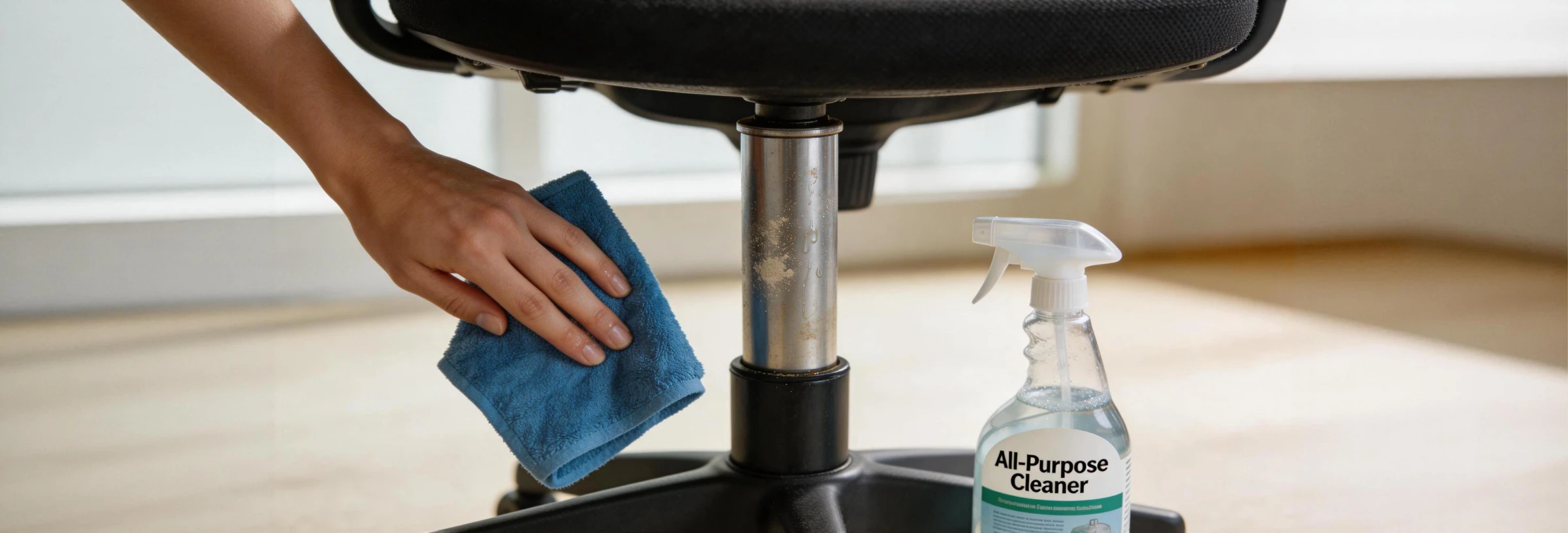
Keep the exposed piston rod clean. The chrome-plated rod that slides in and out of the cylinder is a precision surface. Dust, grit, and dried liquid spills that accumulate on the rod get dragged into the cylinder when the seat is lowered, abrading the internal seals. Periodically wipe the exposed rod with a clean, dry cloth — especially in dusty environments like construction offices or warehouse management stations.
Avoid sitting on the chair at its maximum lowered position for extended periods. When the cylinder is fully compressed, the internal seals are under maximum stress. If possible, set the chair height so that the cylinder operates in the middle third of its stroke range, where seal stress and friction are minimized.
Do not exceed the weight rating. This is the single most impactful factor in gas cylinder longevity. Inform users of the chair's weight capacity and ensure that big and tall users are assigned chairs with appropriately rated gas cylinders.
Store chairs properly when not in use. If chairs are stacked or stored for extended periods — common in training rooms and event spaces — avoid stacking heavy items on top of the seat. External force pushing the seat down while in storage compresses the gas cylinder continuously, accelerating seal fatigue.
Replace proactively, not reactively. In a commercial fleet, if one chair begins sinking, other chairs of the same age and model are likely approaching the same end-of-life point. Budgeting for batch replacement of gas cylinders every 5 to 7 years is more cost-effective than replacing them one at a time as they fail.
Conclusion
The cylinder under your office chair is a precision-engineered pneumatic component that directly affects your seated comfort, daily productivity, and long-term health. Whether you are troubleshooting a sinking chair, specifying gas lift requirements for a bulk purchase, or evaluating manufacturers for a commercial project, the information in this guide gives you the technical foundation to make informed decisions.
For commercial buyers sourcing office chairs with reliable, safety-certified gas lift systems, choosing a manufacturer that uses Class 3 or Class 4 SGS-certified gas cylinders — and backs them with a meaningful warranty — is one of the most important quality indicators you can verify before placing an order.
Browse Aston's office chair collection to find commercial-grade seating with certified gas lift cylinders designed for demanding business environments."
