
What Is Standard Office Desk Height? The Complete Ergonomic Guide for Modern Workspaces
Employee well-being, productivity, and long-term health often start with a single, overlooked factor: the dimensions of their furniture. For facility managers and business owners, selecting the right commercial office desk is not just about aesthetics; it is a strategic decision that impacts the daily comfort of the entire workforce.
Many companies spend substantial budgets outfitting their spaces, yet they adhere blindly to "standard" sizes without understanding the biomechanics behind them. Whether you are procuring a professional workstation for a new tech hub or upgrading the executive suite, understanding the ergonomics of desk height is crucial to preventing workplace injuries and maintaining high morale.
In this comprehensive guide, we will explore the industry standards for corporate office desk dimensions, why they exist, and how you—as a decision-maker—can ensure your office furniture supports a diverse range of employees.
The Industry Benchmark: What is the Standard Height?
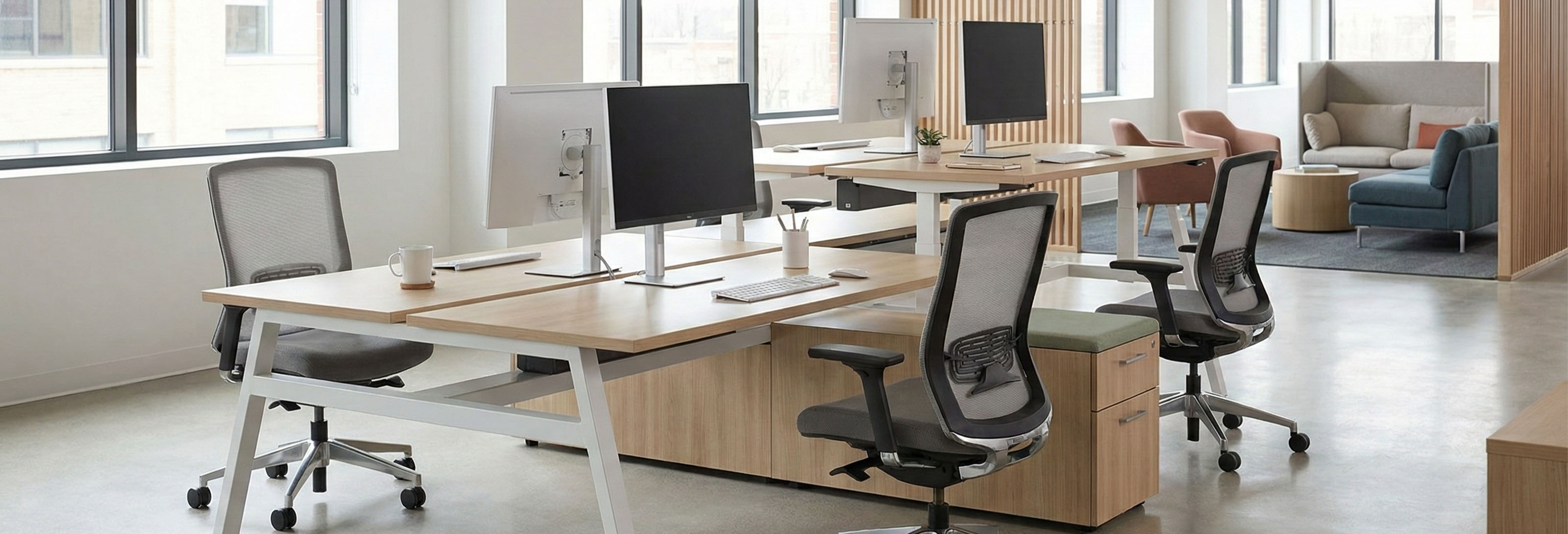
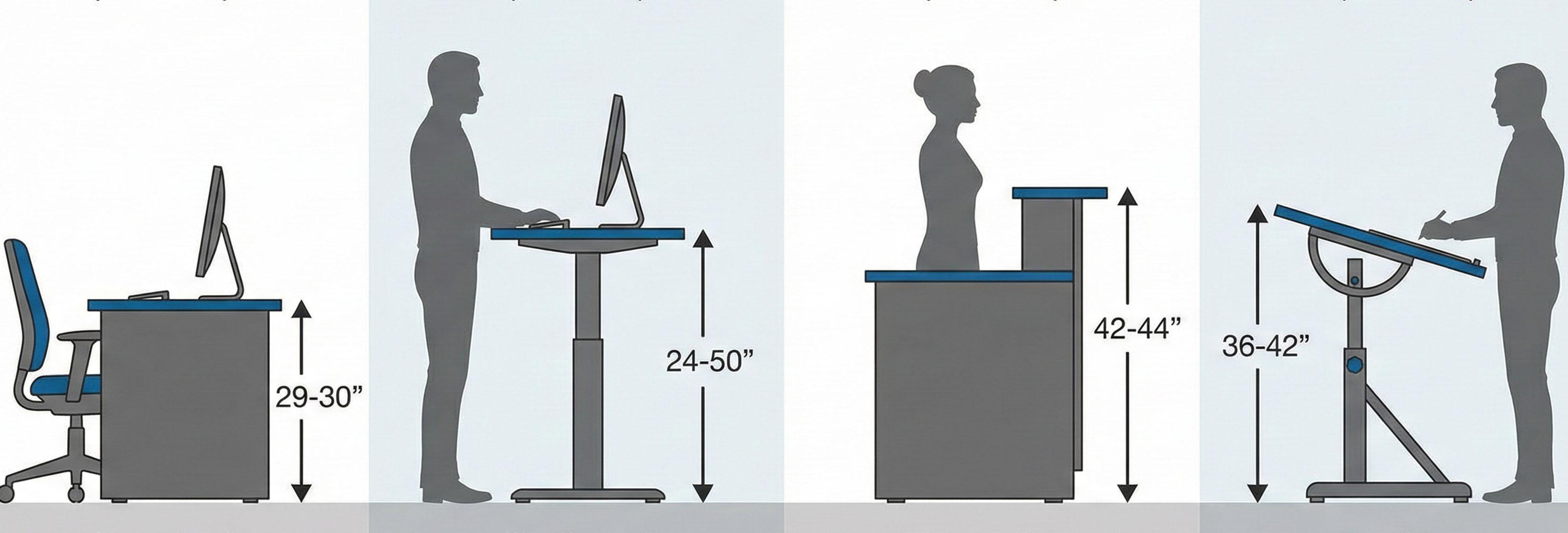
If you were to audit the furniture specifications across major global suppliers, you would find a consistent benchmark. The standard height for a standard office desk typically falls between 29 and 30 inches (73 to 76 cm) from the floor to the tabletop.
This dimension was established decades ago to accommodate the "average" male worker of that era (approx. 5'10"). The goal was to provide sufficient knee clearance while placing the work surface at a comfortable writing level.
However, in today's diverse modern workforce, a "one size fits all" approach to the commercial office desk can be limiting. While 29 inches works well for a 6-foot tall employee, it may force a 5'4" employee to raise their shoulders unnaturally to type, leading to the infamous "tech neck" and shoulder strain.
Understanding this baseline is essential. When you browse a catalog for a professional workstation, 29-30 inches is what you will encounter most often. Knowing this allows you to plan for necessary adjustments, such as keyboard trays or adjustable chairs, to accommodate your entire team.
Why Ergonomics Matters in Corporate Procurement
According to the Occupational Safety and Health Administration (OSHA), musculoskeletal disorders (MSDs) are among the most frequently cited causes of lost or restricted work time. A workstation that does not fit the user is a direct contributor to these issues.
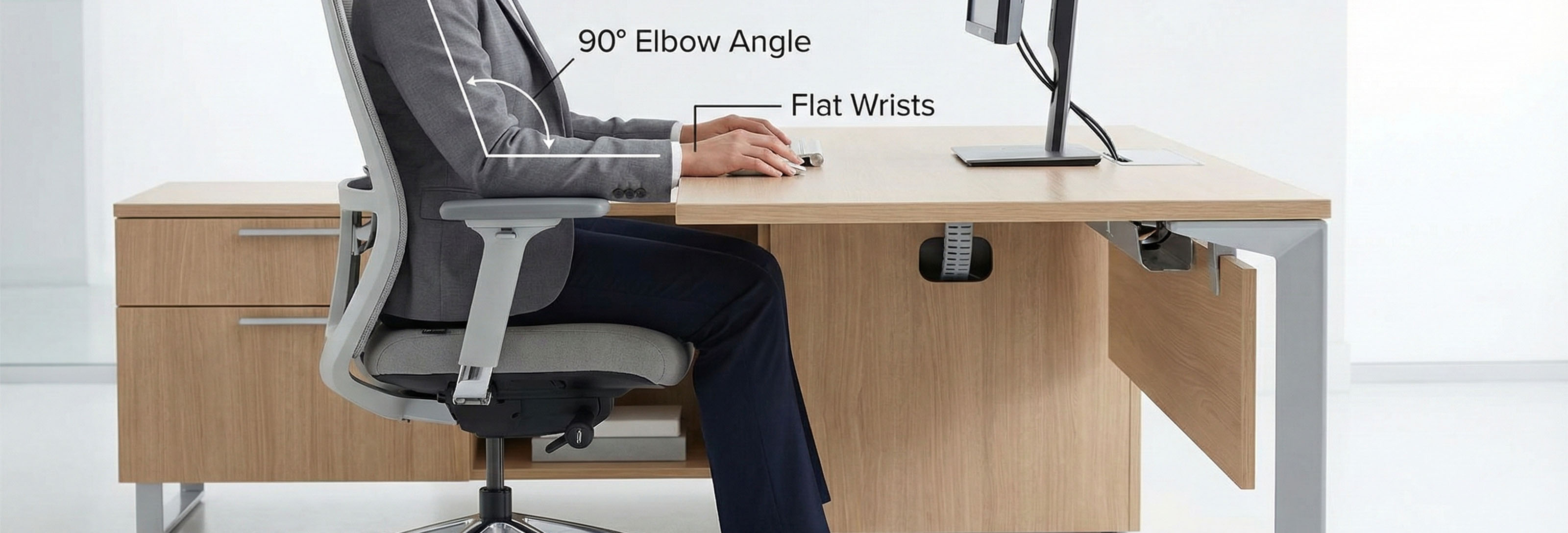
When sourcing a corporate office desk, the goal is to facilitate a "neutral body position."
- Shoulders: Relaxed, not hunched.
- Elbows: Bent at a 90-110 degree angle.
- Forearms: Parallel to the floor.
- Wrists: Flat, not bent upward.
If your chosen writing desks are too high for your staff, they will intuitively compensate by raising their chairs. If their feet then dangle off the floor, it cuts off circulation and destabilizes the lower back. This chain reaction of discomfort starts simply with the wrong desk height.
Types of Desks and Their Dimension Variations
While the 29-inch standard applies to general workstations, different zones in your office require different specifications. Understanding these nuances is key to a successful fit-out.
1. The Professional Workstation (General Staff)
For general open-plan areas, the professional workstation often needs to be versatile. Since these desks are often shared or assigned to different people over time, sticking to the 29-inch standard is usually the safest bet for mass procurement, provided they are paired with high-quality, height-adjustable chairs.
However, modern trends are shifting. Many businesses are now opting for adjustable systems that can lower to 27 inches or rise to standing heights, ensuring inclusivity for all body types.
2. The Executive Suite
When furnishing private offices, the focus shifts to presence and surface area. An executive office desk is often designed to be imposing and substantial. These desks strictly adhere to the 30-inch height standard to accommodate thicker tabletops and integrated storage pedestals.
Because an executive office desk is a long-term investment for senior leadership, it is vital to ensure the accompanying seating can be adjusted high enough to match the desk’s stature without compromising leg comfort.

3. Reception and Front of House
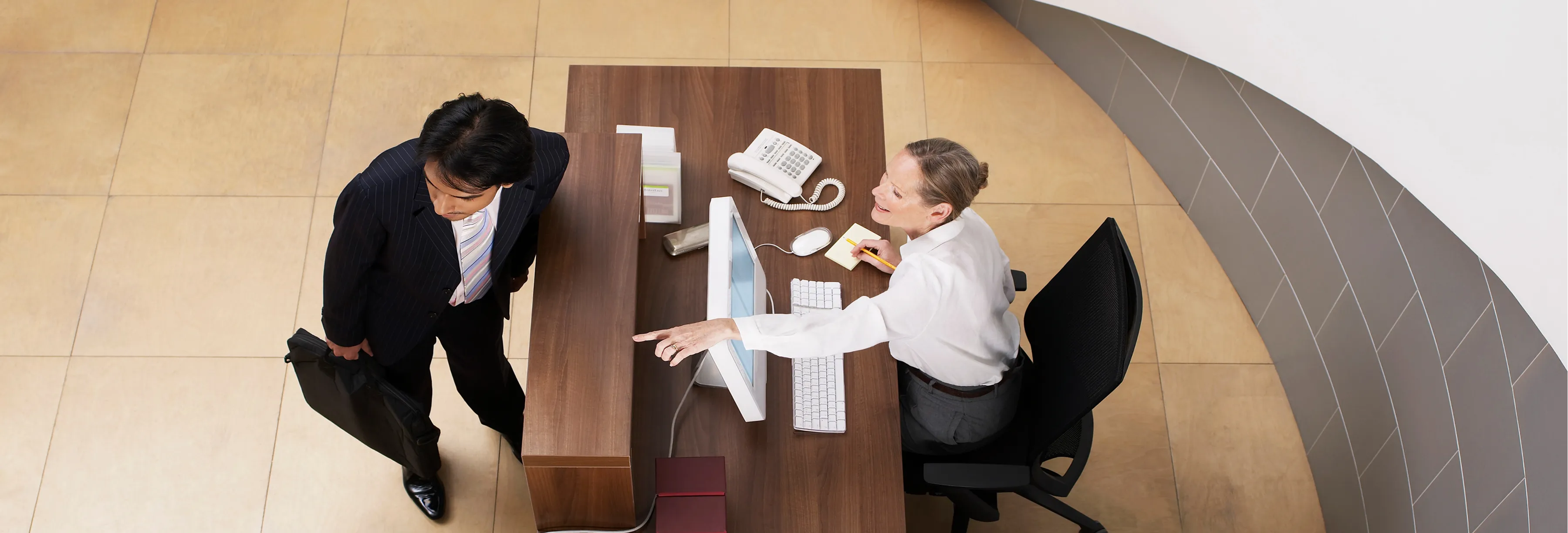
The reception area presents a unique dual-height challenge. It must serve the seated receptionist and the standing visitor simultaneously.
A well-designed wood reception desk typically features:
- The Work Surface (Internal): Standard 29-30 inches for the receptionist to type and manage calls comfortably.
- The Transaction Counter (External): Raised to 42-44 inches. This allows visitors to sign documents or converse without stooping, creating a professional first impression.
4. Collaborative and Standing Options
The integration of sit-stand desks into the corporate office desk environment is accelerating. These desks bypass the fixed-height debate by offering a range typically from 24 inches (for seated short users) up to 50 inches (for standing tall users).
The Manufacturer Advantage: Customization
This is where working with a direct manufacturer like Aston Office furniture offers a distinct advantage over buying from retail outlets.
If your office design requires specific dimensions—perhaps to fit into unique architectural alcoves or to meet specific ergonomic certifications—off-the-shelf products may fall short. A custom desk solution allows you to specify not just the material and finish, but the exact height and depth.
For example, if you are outfitting a call center where 90% of the work is typing (requiring a lower surface) rather than writing, you can order a batch of commercial office desk units at a fixed 27-inch height. This small adjustment can significantly reduce the risk of Repetitive Strain Injury (RSI) across your workforce, saving on healthcare costs in the long run.
Assessing Your Office Needs: A Facility Audit
Before finalizing a bulk order for writing desks or workstations, conduct a brief audit of your current environment and employee needs.
- Analyze Demographics: Is your workforce exceptionally tall or petite? A diverse team benefits more from adjustable solutions.
- Analyze Tasks: Does the team primarily type on laptops (lower height needed) or review large paper blueprints (higher, drafting height needed)?
- Check Leg Clearance: A thick commercial office desk might look premium, but check the "thigh gap." You generally need 24-26 inches of clearance under the desk. Thick apron drawers can reduce this, making the desk unusable for taller employees.
Comparison: Choosing the Right Desk for Corporate Spaces
To assist in your procurement process, here is a comparison of common desk types found in modern business environments.
| Desk Type | Typical Height | Best Application | Procurement Note |
| Standard Commercial Office Desk | 29" - 30" | General administrative work | The industry standard. Easy to match with standard file cabinets. |
| Typing / Keyboard Return | 26" - 27" | Data entry, Call centers | Often found as the side return on L-shaped desks; better for shoulders. |
| Sit-Stand Workstation | 24" - 50" | Agile workspaces | Higher upfront cost, but boosts employee health and retention. |
| Drafting / High Table | 36" - 42" | Creative zones, Break rooms | Requires drafting stools; encourages quick, standing meetings. |
| Custom Desk | Variable | Specific architectural needs | Ideal for maximizing space in unique office layouts. |
The Role of Accessories in Ergonomics
Even with a perfect standard office desk, accessories play a vital role in fine-tuning the experience.
- Monitor Arms: These decouple the screen height from the desk height. While the desk stays at 29 inches for writing, the monitor can be raised to eye level to prevent neck strain.
- Keyboard Trays: These can convert a standard corporate office desk into an ergonomic powerhouse by dropping the typing surface to a lap-friendly 26 inches.
Conclusion
The "standard" office desk height of 29 inches is a starting point for mass manufacturing, but it should not be the limit of your office design. A truly productive workspace adapts to the people who use it.
For business owners and facility managers, the goal is to select a commercial office desk system that offers durability, style, and—most importantly—ergonomic support. Whether you opt for adjustable units, standard writing desks with keyboard trays, or a fully custom desk solution from a manufacturer like Aston Office furniture, prioritizing the biomechanics of your team is an investment that pays dividends in productivity.
Don't settle for retail compromises. Ensure your office furniture meets the rigorous demands of the professional world.
Looking for a reliable Reception Desk or executive office desk? Click here to view our office desk
Frequently Asked Questions (FAQ)
Q1: What is the difference between a home desk and a commercial office desk?
A: A commercial office desk is built to withstand 8-10 hours of daily use, usually meeting BIFMA durability standards. They feature scratch-resistant surfaces (like high-pressure laminate), integrated cable management, and sturdier frames compared to lighter-duty residential desks.
Q2: Can I order a standard office desk with a different height?
A: If you buy from retailers, usually no. However, if you partner with an OEM manufacturer like Aston Office, you can request custom desk dimensions for bulk orders to specifically suit your operational needs.
Q3: How much space is needed for a professional workstation?
A: Apart from the desk height (29"), you should allow for at least 30 inches of depth for the desk surface to accommodate monitors, and at least 48 inches of space behind the desk for the chair to move freely.
Q4: Are wood reception desks standard height?
A: Wood reception desks are unique. They typically feature a 42-44 inch high transaction counter for guests to stand at, hiding a standard 29-30 inch work surface behind it for the receptionist.
Q5: Is a keyboard tray necessary for a corporate office desk?
A: For employees of average or below-average height (under 5'8"), a keyboard tray is highly recommended if using a fixed-height standard office desk. It lowers the typing platform to a neutral elbow position, preventing shoulder fatigue.
